On the 25th of April, 2026, Citizen consumer and civic Action Group (CAG) organised a focus group discussion with twenty women auto drivers from Veera Pengal Munnetra Sangam (VPMS) in Mathru Krupa, Virugambakkam, Chennai. CAG is currently undertaking a study on the electrification of three wheelers in Chennai, and the discussion aimed at adding women’s perspective to the same.
Given that women are just stepping into the profession of auto driving, their representation among all auto drivers in terms of public visibility as well as the proportion of survey respondents in our larger dataset is limited. Hence a focus group discussion with a group of women under the same roof was a more direct way of understanding the responses of women auto drivers to electrification. The intersections between gender, electrification and how one influences the other was a central theme in the conversation.
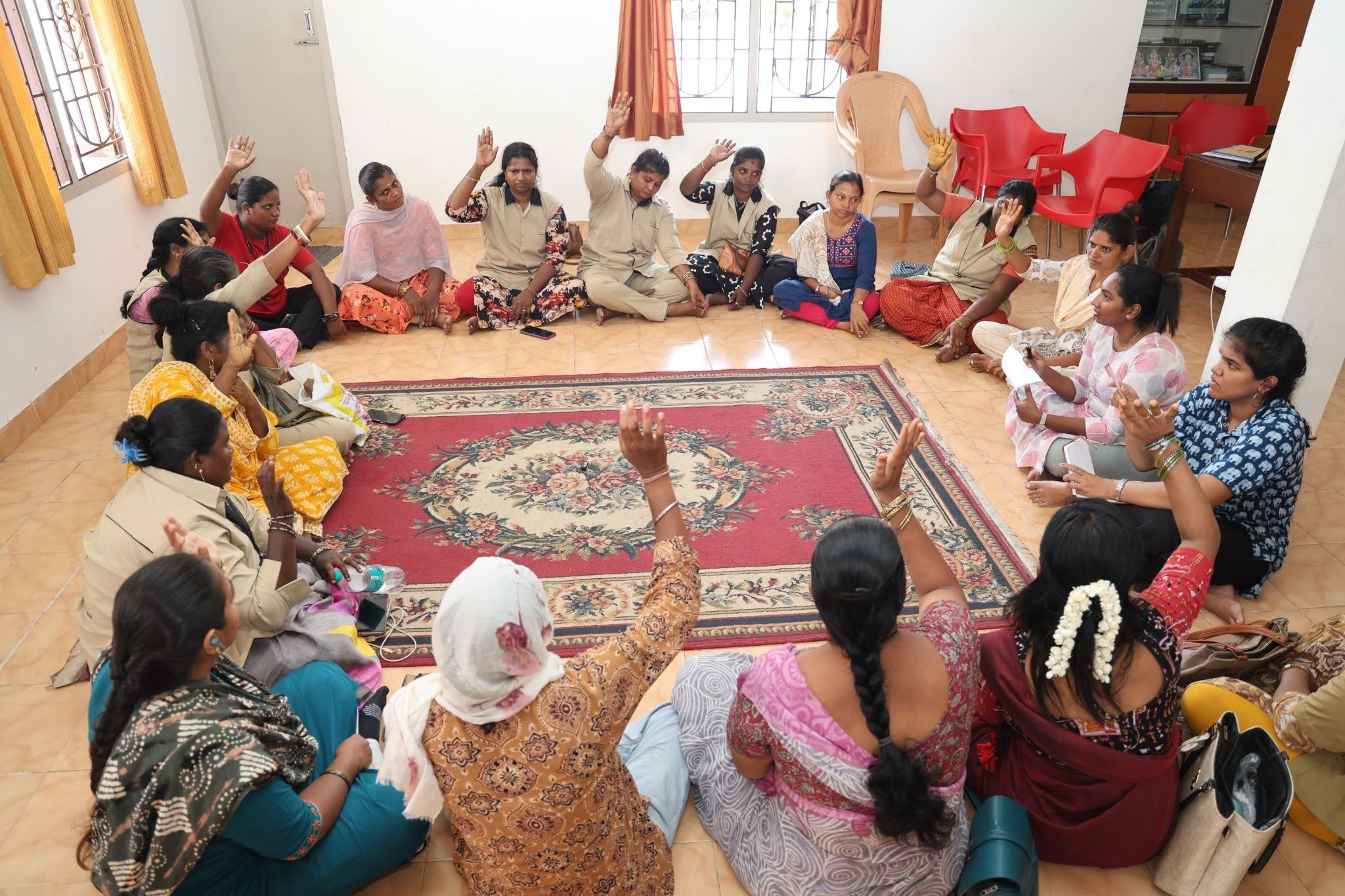
Women autodrivers answering in the affirmative when asked about CNG
About Veera Pengal Munnetra Sangam:
Veera Pengal Munnetra Sangam is a union based in Chennai for women in the transport sector. As these women are entering traditionally male dominated fields of employment, VPMS works towards formal organising for collective strength, economic security and independence. The twenty women present with us had previously worked in various fields such as tailoring, domestic labour, etc before choosing to become auto drivers.
Becoming an auto driver requires training, licensing and procuring the auto, all of which combined can take more than a year to materialise. By paying a minimal monthly membership fee, women can become members of the VPMS, which is then able to guide and facilitate the entire process for them.
Takeaways on electrification
- Absence of Charging Infrastructure:
Public charging infrastructure is sparsely available and only up and coming in Chennai. Many EV Vehicle users therefore charge their vehicles overnight at home. A majority of auto drivers live in rented housing where charging infrastructure does not exist and 3-phase current is neither continuous nor predictable. In order to enable charging infrastructure at home, they are at the mercy of their landlords who might have reservations, either because the request comes from a woman, or because of their preconceived notions and disapproval of technological developments.
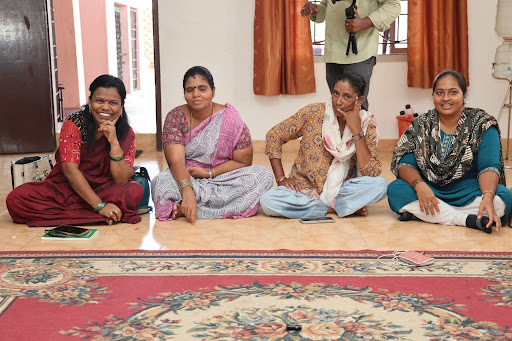
Women auto drivers in rapt attention
- Time taken to charge batteries:
The time taken to charge the batteries is a factor that hinders auto drivers from switching to EV. The average working day of women auto drivers differs vastly from that of the male auto drivers as the women are responsible for running their household and bringing their children up along with their profession, which they often do without the help of their partners. This results in a highly fragmented and interspersed work schedule. The packed days make time spent on charging even more precious.
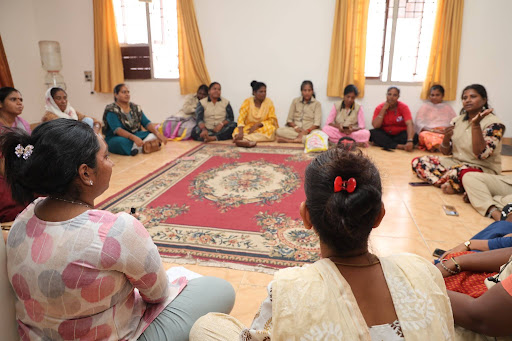
Women in the group discussing auto electrification
- Higher cost of EV autos compared to CNG/LPG autos:
According to the drivers, EV vehicles cost them more than 4 lakh rupees whereas CNG/LPG vehicles are available under 3 lakh rupees. Even though they are aware of the lower fuel expenses and overall savings as a result of EV, many drivers struggle to gather the significantly larger initial down payment and subsequent installments. Information regarding financial instruments such as loans and subsidies are also unclear and inaccessible.
- Limited servicing options:
There are not many mechanics in the city who know their way around an EV vehicle and approaching a service centre for minor problems becomes an expensive endeavour. Limited servicing options is therefore a major concern. However, the drivers do believe that standard engine servicing is expensive compared to EV battery maintenance.
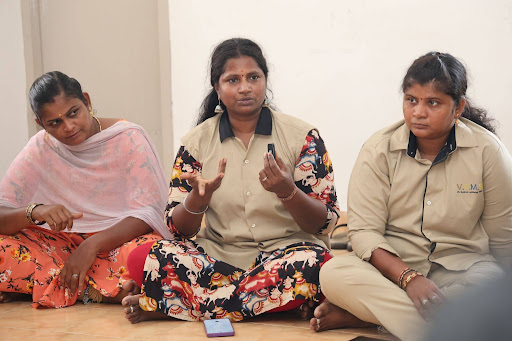
Women auto drivers sharing their concerns regarding electrification
Experience driving EV Autos:
Companies such as Bajaj, Montra and Hero have reached out to VPMS to test-drive their EV autos due to which a majority of the respondents had already experienced what it is like to drive an EV Auto. According to the women, the absence of an engine and therefore engine heat and gears made the experience of driving EV Autos smooth. This smoothness also aided in reducing hand and back pain.
The responses from the women auto drivers were invaluable and will inform our report on electrification of three wheelers in the city. Apart from electrification, the lack of available parking space, abuse faced by women auto drivers at the hands of passengers as well as male auto drivers and the absence of washrooms for women were also important points of discussion.