Citizen consumer and civic Action Group (CAG) organized a community awareness meeting on rooftop solar PV systems in Perambur, Chennai, on Sunday, July 05,2026 targeting residents of Selva Vinayagar Resident Welfare Association, apartments, and individual residents in the locality. The solar awareness meeting was held from 9:00 am to 10:00 am with 20 residents from Vivekananda Nagar and Thiruvalluvar Nagar.
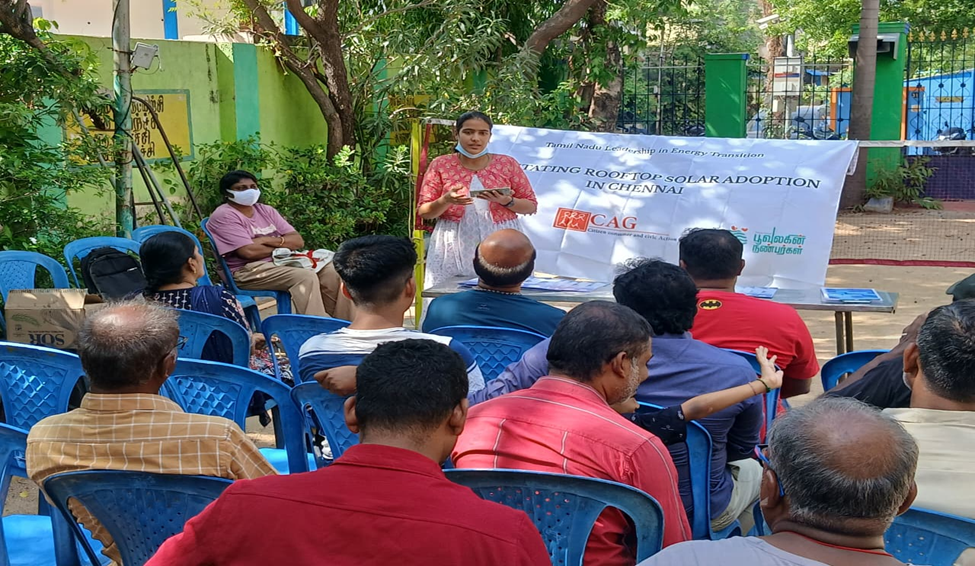
Ms. Meenakshi Chaturvedi, Researcher CAG- explaining about RTS PV system at the meeting
Workshop overview
The session was conducted by Meenakshi Chaturvedi, Researcher (CAG), Poornima, Senior Researcher (CAG), and Aswin, volunteer at CAG. Participants were given brochures covering rooftop solar PV systems. Meenakshi opened the session and walked participants through the fundamentals of rooftop solar PV systems, addressing key areas such as:
- Components of solar PV systems
- Different system types and their corresponding capacity needs
- Rooftop space required for installation
- Costs involved and subsidy benefits available through PM Surya Ghar Muft Bijili Yojana.
- System capacity and how payback periods are calculated
- Essential guidelines and checkpoints to follow during installation
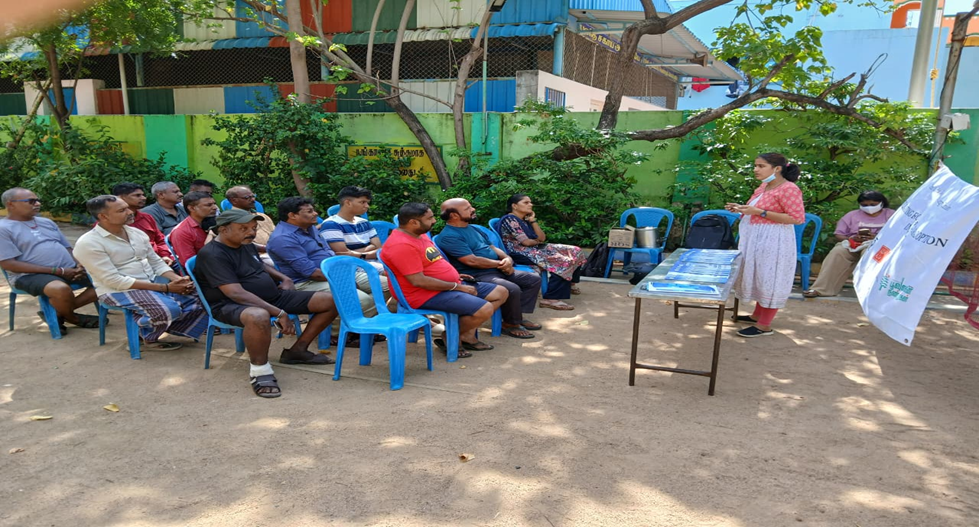
Participants during the outreach meeting
Participants inquired about the technical and financial aspects of rooftop solar as briefed below. Beyond queries, participants also came forward with suggestions to help the adoption of rooftop solar across more households in the area.
Participant Queries:
1. Do we need to pay any extra amount separately for installing the net metering system, or is it included in the overall solar installation cost?
Yes, a small additional cost applies for the bi-directional meter. This is separate from the main installation cost, but it is minor in comparison, but no other hidden charges apply.
2. Can we still use the rooftop space where the solar panels are installed, or does it become unusable?
Yes, the rooftop space remains usable. Panels can be mounted on an elevated frame so the area underneath can still be used for various purposes like it was used before for drying clothes, storage or roof gardening etc.
3. Can CAG provide a list of trusted vendors so we can avoid fraud or scams while installing solar?
CAG does not directly endorse specific vendors, but we guide consumers to choose only MNRE approved installers listed on the official pmsuryaghar.gov.in portal which ensures the vendor is verified and eligible to subsidy.
4. How many appliances like AC, washing machine, lights and fans can we run after installing solar?
There’s no restriction on the number of appliances used; only your overall consumption determines the system size needed.
5. We heard that the subsidy won't be given upfront? If they did, more people would install solar actively.
The subsidy is disbursed only after installation and inspection, mainly to prevent misuse. If the amount were given upfront, there would be no guarantee that the system gets installed correctly or even installed at all. This is the reason the government releases the fund only after genuine, functioning installations, protecting both public money and consumer interest from fraudulent claims.
Suggestions From Participants:
Participants suggested organizing a door-to-door awareness campaign in the locality, to ensure that residents who failed to attend the meeting or those who are unaware of the PM Surya Ghar scheme are also reached and given the opportunity to benefit from rooftop solar adoption.
Feedback and Conclusion
Participants found the meeting to be highly useful and informative, gaining valuable insights and had a good Q/A session and suggesting few ideas into rooftop solar awareness. Participants were informed about CAG's helpdesk, which will support consumers in accessing reliable information and raising grievances related to solar installations, with CAG’s continued support expected to encourage more rooftop solar installations in the community.