Date: 28th March 2026
Location: Vidya Sagar, Kotturpuram
As part of its ongoing study on understanding access to public transport and mobility systems for persons with disabilities in Chennai, Citizen consumer and civic Action Group (CAG) conducted a Focus Group Discussion (FGD) on 28th March 2026 at Vidya Sagar, Kotturpuram. The session brought together participants with diverse disabilities, including individuals who are blind, deaf, and those with mobility impairments, particularly wheelchair users. Over 40 people participated in the focus group discussion, including journalists, persons with disabilities and disability activists.
The discussion began with an introductory round where participants described their journeys to the venue. This opening exercise helped contextualise the lived realities of commuting in Chennai, immediately highlighting systemic barriers across multiple modes of transport and public infrastructure. Participants then engaged in structured activities using worksheets to document challenges and propose solutions.
Key Findings
1. Persons with Visual Impairments (Blind and Low Vision)
Participants highlighted significant challenges in navigating both public spaces and transport systems independently. The absence of continuous and obstruction-free tactile pathways was a major concern, with existing tactile tiles often blocked by vendors, parked vehicles, or street furniture. In metro stations, tactile paths were inconsistently designed and frequently interrupted, reducing their usability.
Access to information emerged as a critical barrier. Digital displays in buses and trains were reported to be fast-moving and difficult to interpret. There was also a lack of reliable audio announcements and real-time information regarding platform changes, working lifts, or schedules, making journey planning difficult.
In mobile applications, participants stressed the lack of accessible design features such as screen reader compatibility, dark mode options, and voice-to-text or audio-based communication tools. The absence of such features limits independent use of ride-hailing and payment apps.
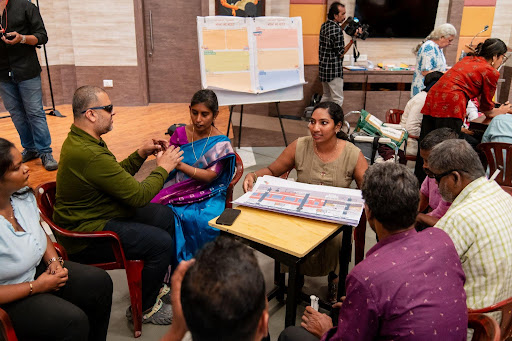
Facilitators leading the discussion to identify mobility issues with visually impaired
2. Persons with Hearing Impairments (Deaf and Hard of Hearing)
Participants with hearing impairments reported challenges primarily related to communication and information accessibility. The lack of visual clarity in announcements, including unclear or inaccurate digital displays at bus stops and stations, was a recurring issue. In transport hubs, important updates were often communicated only through audio announcements, leading to missed information.
Ride-hailing applications posed additional barriers due to drivers’ reliance on phone calls for coordination. Drivers frequently called passengers, and there were no options to opt out or communicate via text effectively. Participants also noted the absence of integrated translation features that could convert voice messages into text.
The lack of trained staff and interpreters in public transport systems further compounded accessibility challenges, especially in high-traffic areas such as railway stations and airports.
3. Persons with Mobility Impairments (Wheelchair Users and Others)
Wheelchair users and participants with mobility challenges identified extensive infrastructural barriers across public spaces and transport systems. Footpaths were either absent or unusable due to uneven surfaces, encroachments, steep slopes for drainage, and lack of ramps. Where ramps existed, they were often too narrow, steep, or poorly designed, sometimes leading directly into traffic.
Access to buses was identified as a major challenge. High entry steps, poorly designed or unavailable ramps, and inconsistent bus stopping practices made boarding difficult. Inside buses, the lack of designated space for wheelchairs, slippery flooring, and inadequate handrails further reduced safety and comfort. Participants also noted the need for better training of bus staff to assist persons with disabilities.
Railway and metro systems, while relatively better, still posed challenges. Large platform gaps, inaccessible toilets, insufficient lifts, and poorly placed buttons limited usability. In metro systems, issues such as slippery flooring, inaccessible ticket counters, and unclear identification of accessible coach entrances were highlighted.
In ride-hailing services, participants reported discrimination, with drivers often refusing passengers with wheelchairs or charging extra fares. Additionally, there was no option to specifically request accessible vehicles through apps.
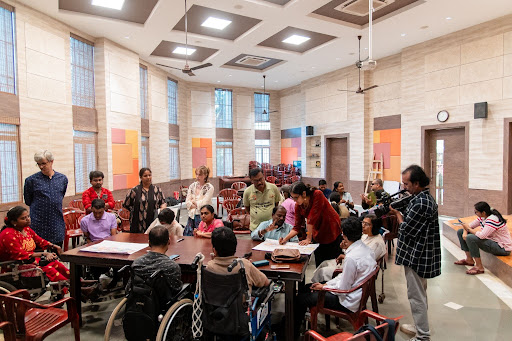
Facilitators leading the discussion to identify mobility issues with wheelchair users.
Cross-Cutting Concerns
Across all groups, participants emphasised the need for:
- Standardisation of infrastructure design (ramps, bus stops, entrances)
- Improved first- and last-mile connectivity
- Greater affordability of accessible transport options
- Inclusive and accessible digital platforms
- Sensitisation and training of transport staff and service providers
Participants also highlighted broader systemic issues, including limited access to education, employment, and public spaces, which further restrict mobility and independence.
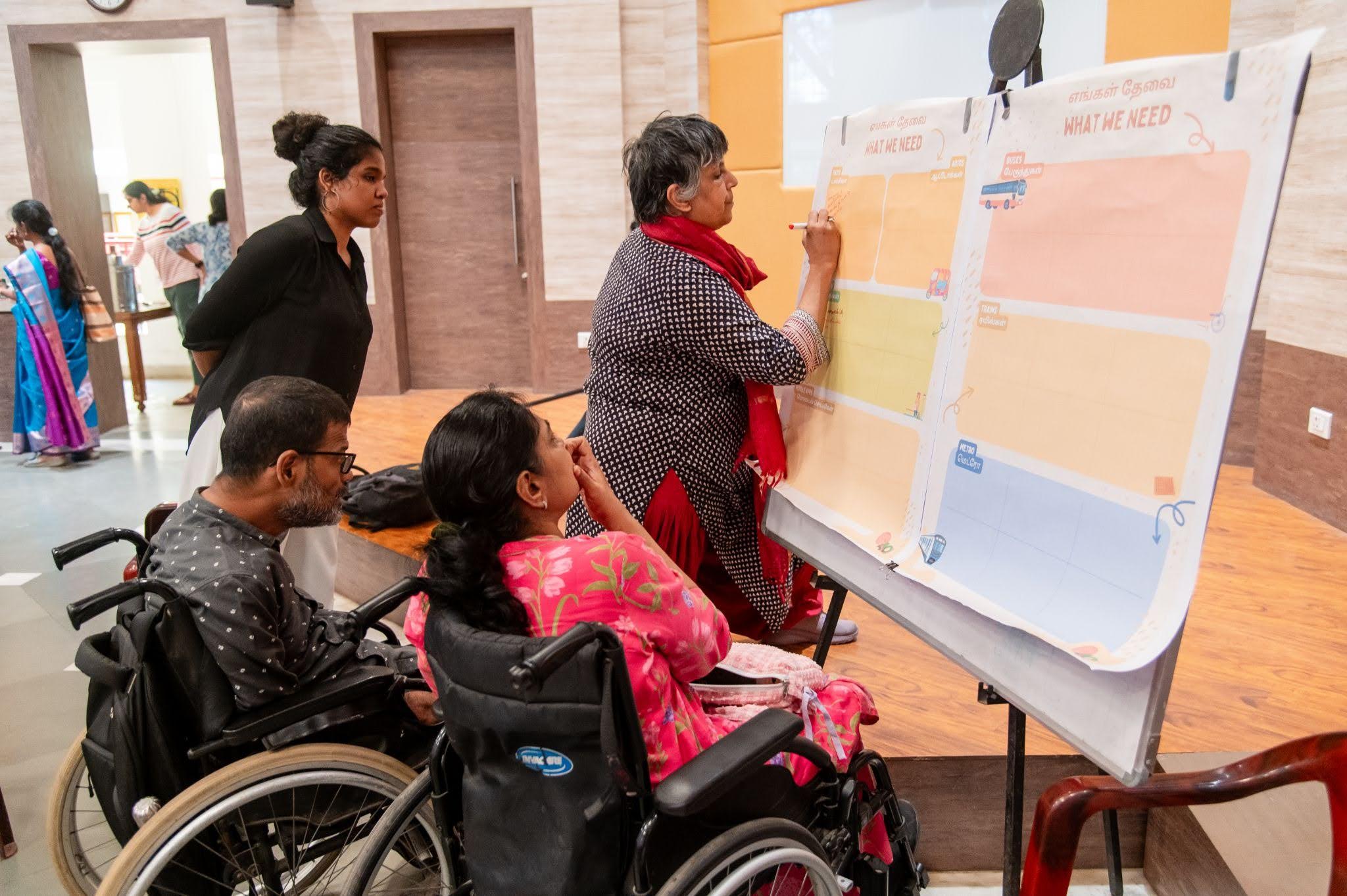
Participants writing down their mobility needs and priorities.
Conclusion
The FGD underscored that public transport accessibility in Chennai remains fragmented and often treated as an afterthought. While certain systems like the metro show progress, they still fall short of universal design principles. Participants unanimously stressed the importance of involving persons with disabilities at every stage of planning and implementation. Ensuring accessible, affordable, and inclusive mobility systems is essential not only for equitable transport but also for enabling full participation in social and economic life.