Introduction
The Climate Resilient Agriculture (CRA) project aims to strengthen climate resilient agriculture across Tamil Nadu, Kerala, Maharashtra, and Bihar by building alliances among farmers, Food Producer Organisations (FPO), research institutions, agri-business firms, consumers and government departments. The key objectives are to identify grassroots agricultural and climate-related challenges through focused group discussions, promote capacity-building programmes for farmers, develop pilot CRA models, and facilitate convergence with existing government schemes and policies.The expected outcome of the project is to create sustainable and climate-resilient farming systems, improve stakeholder coordination, enhance farmers’ adaptive capacities, and support long-term agricultural sustainability and livelihood security.
As part of the project, the team comprising Dr. Somnath, Kishore, Vishwajeet and Abdul Suban (from CAG and ASAR organization) conducted Focused Group Discussions (FGDs) with farmers in four villages of the Marathwada region — Karanjgaon, Khaparkheda, Chapadgaon, and Dhakepal. The main objective was to understand the ground-level agricultural situation, water availability issues, cropping patterns, livelihood challenges faced by small and marginal farmers, and their expectations from government programs.
The team travelled from Pune to Chhatrapati Sambhaji Nagar (Aurangabad) by car, which took approximately six hours. Upon reaching the region, hot and dry low winds with very low humidity were observed, typical of the Marathwada climate during this season.
En route, the team noted an interesting sustainable practice where native Khillari breed cows were used for extracting sugarcane juice using traditional methods.
FGD map details
https://www.google.com/maps/d/u/0/edit?mid=1AGiyiiJ-e2b8h0LQf2udeXi5uOhOaO4&usp=sharing.
DAY 1
1. FGD – Karanjgaon Village (19.948444510645444, 74.91749681349248)
Participants: 10–12 farmers
Key Insights:
- The village is situated roughly within a 20 km radius from the Godavari River.
- Most farmlands still do not use advanced irrigation technologies such as solar pumps or modern boring systems.
- Heat stress is significantly high, affecting both crops and farmers.
- A majority of the farmers are small and marginal, owning less than 3 acres of land.
- Major crops grown include maize, millets, sugarcane, corn, cotton, and fruit crops such as orange and lemon.
- Farmers repeatedly highlighted irregular and inadequate access to irrigation water, government schemes, crop insurance, and relief funds.
- Their strongest demand was for the timely construction and proper desilting of canals connected to the Jayakwadi Dam on the Godavari River. They expressed confidence that if reliable water reaches their fields, they can manage the rest of the farming activities effectively.
- The MNREGA scheme was reported as largely ineffective for them due to complicated application procedures and difficulties in dealing with government officials, especially for farmland owners.
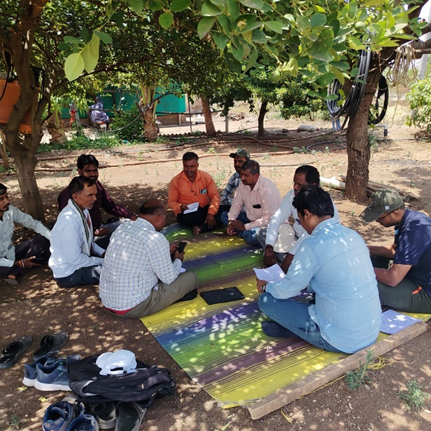
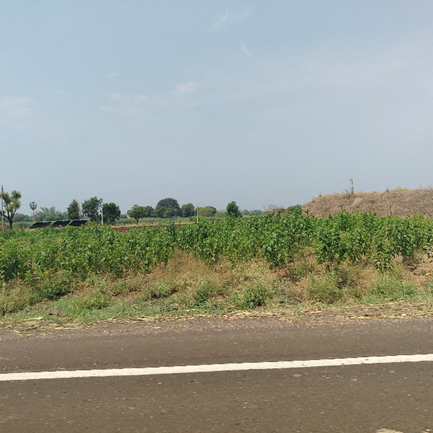
1a.FGD session at Karanjgaon 1b. Sweet lime plantation on the way to Karanjgaon
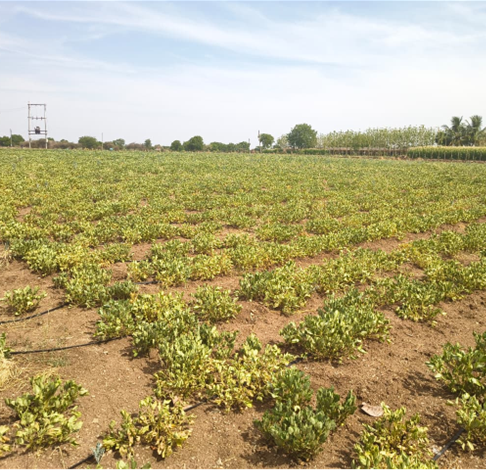
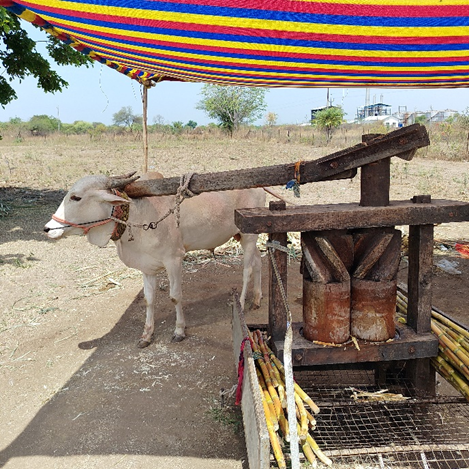
1c.Groundnut plantation at Karanjgaon village 1d. Khillari a native breed used in sugar extraction.
2. FGD – Khaparkheda Village (20.11960344476756, 74.98004927116415)
Participants: Around 136 cultivators (several farmers joined during the session)
Key Insights:
- The region experiences severe heat stress.
- Most farmers own less than 2 hectares of land, which makes it difficult to utilize MNREGA labour on their own farms.
- Major crops are primarily rainfed — pulses, cotton, millets, and others.
- The main source of irrigation water is through canals originating from the Jayakwadi Dam on the Godavari River.
- Farmers expressed strong dissatisfaction with the limited involvement and support from the government in addressing agricultural issues.
- Some progressive farmers have adopted drip irrigation to improve water use efficiency.
- Despite ongoing water scarcity, the community maintains strong cultural and social unity, often visible through collective gatherings at the local temple.
Observations:
- Multiple solar power plants were observed installed along the roadsides.
- Vachellia nilotica (commonly known as Babul or Naatu Karuvelam), a highly drought-resilient native tree species of Maharashtra, was commonly found growing in the area. This tree is valued for its ability to survive extreme dry conditions and provides fodder, fuelwood, and gum.
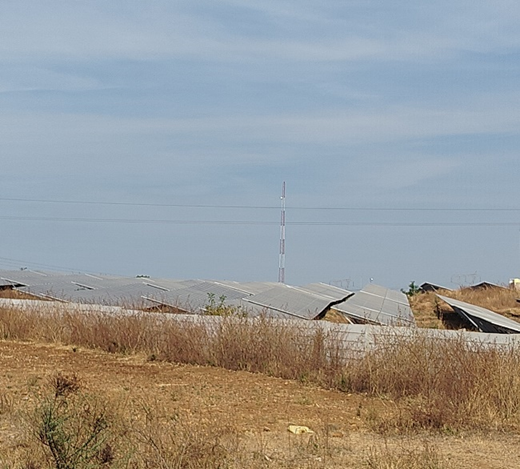
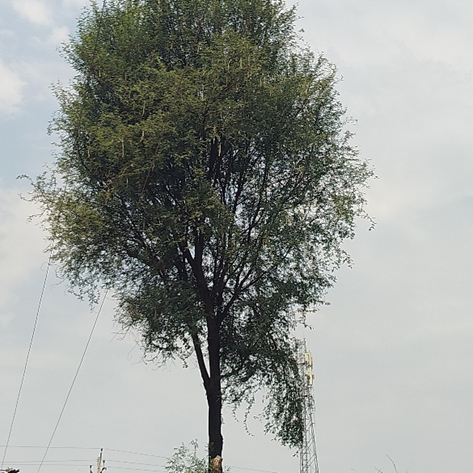
2a.Solar fields along roadsides 2b.Vachellia nilotica
(Native drought-resilient tree species)
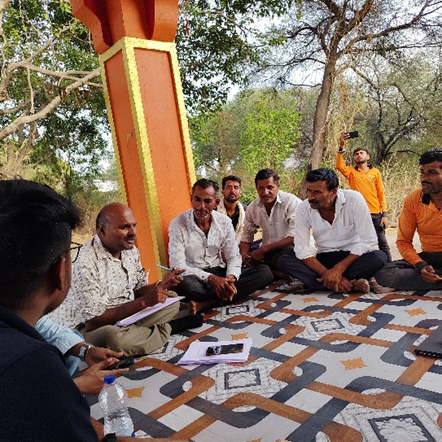
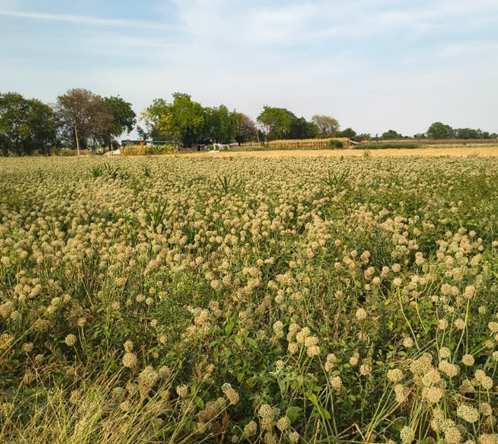
2c.FGD session at Khaparkheda 2d. Onion crop field at Khaparkheda
DAY 2
3. FGD – Chapadgaon Village (19.652001436465635, 75.99358626513632)
On the way to Chapadgaon, the team observed ongoing canal construction work in the village. A private NGO was actively involved in constructing a canal that connects to the nearby Talegaon Dam. A talk was given by the Sandip jadhav to local farmers at the canal construction site.
Key Insights:
- Major crops cultivated in the region include maize, wheat, cotton, sugarcane, millets, sorghum, pigeon pea, and others.
- Approximately 85% of the farmers are marginal farmers with less than 2 hectares of land. More than 65% own only about 1 hectare or less.
- Many farmers supplement their income by working as agricultural labourers on other farms, especially in sugarcane cutting and manual weeding.
- There has been a major shift in cropping patterns: In the 1990s, before widespread borewell adoption, farmers mainly grew rainfed crops such as millets and pulses. With the availability of borewells, they have shifted to water-intensive commercial crops like sugarcane and cotton.
- Most farmers now depend on borewells, many of which are powered by solar pumps. This widespread practice has become a major contributor to the rapid depletion of groundwater resources in the area.
- Agriculture income alone is often insufficient for family livelihood; therefore, many households also rear cattle as an important alternative source of income.
4. Women’s FGD (same Chapadgaon village) (19.652001436465635, 75.99358626513632):
A separate Focused Group Discussion exclusively for women farmers was facilitated by Vishwajeet. It was noted that women play a major role as farm laborers, particularly in less strenuous operations such as groundnut harvesting, onion cultivation, and pulses processing.
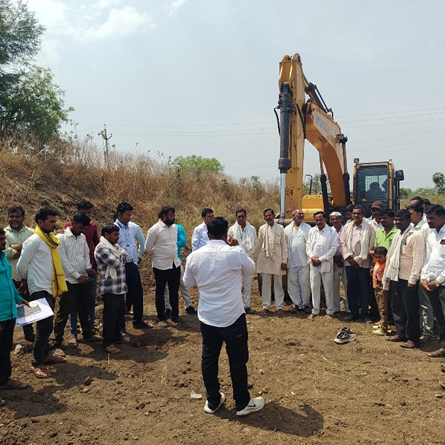
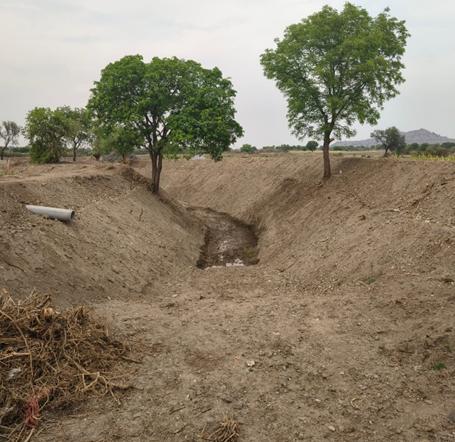
3a. Interaction with farmers at
the canal construction site 3b. Canal digging work at the site location
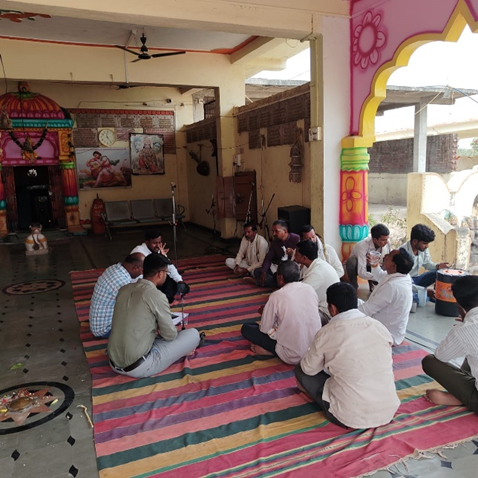
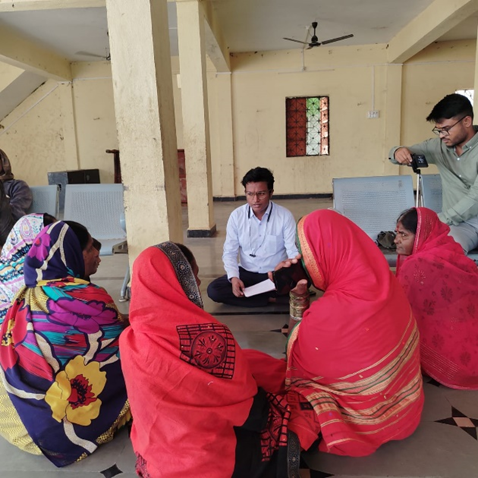
3c. Main FGD session at Chapadgaon village 4a. Separate Women’s FGD at Chapadgaon village
5. FGD – Dhakepal Village (19.531553150506877, 76.05687306266344)
Participants: Farmers from approximately 500 agricultural households
Key Insights:
- All households in the village are primarily engaged in agriculture.
- Major crops grown include pulses, pigeon pea, maize, sugarcane, wheat, sorghum, millets, cotton, and other crops.
- The primary challenges reported were acute water scarcity and high heat stress.
- Detailed discussions were held regarding the ongoing canal construction project. Farmers are required to contribute 10% of the total investment cost, with the remaining amount funded through CSR. Many participants expressed difficulty in arranging their share of the contribution.
- The MNREGA scheme was said to mainly benefit farmers growing cash crops and fruit crops. Other eligible farmers often struggle to receive adequate manpower support under the scheme.
Observations:
- Extensive fruit crop fields, particularly orange orchards, were commonly seen along the roadside during travel.
- Cordia sinensis (locally known as Gondan or Gondni), a drought-resilient native tree species of the Marathwada region, was observed. The tree produces small edible fruits and is considered suitable for dryland agroforestry due to its hardiness in low-water conditions.
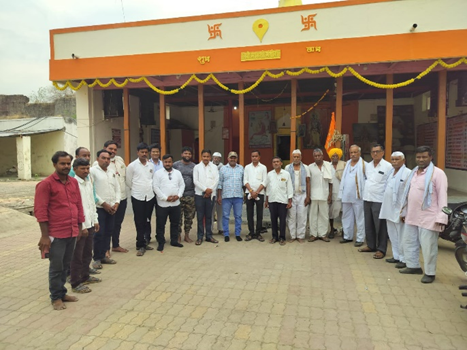
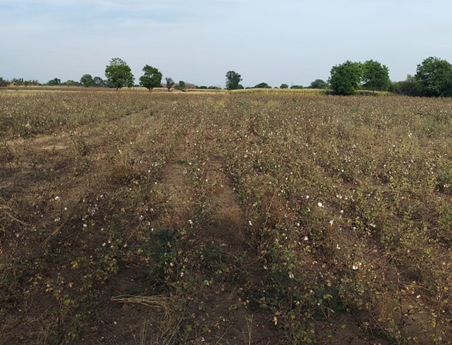
5a.Group photo taken during Dhakepal FGD 5b.Cotton plantation at Dhakepal village
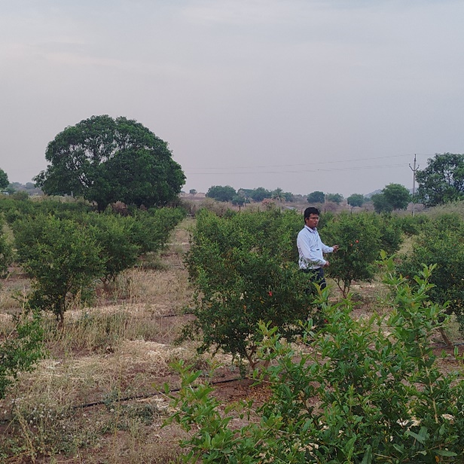
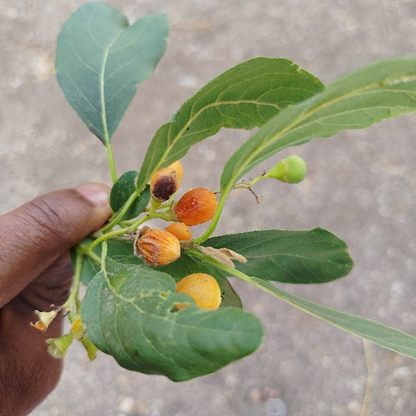
5c. Pomegranate plantation at Dhakepal 5d. Cordia sinensis (Gondan), Drought resilient,
Native tree with edible fruits.
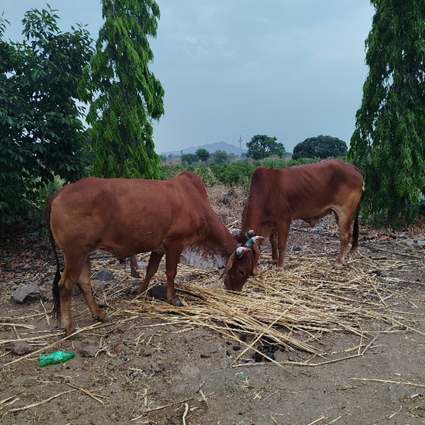
5e.Gorang and Gir -Native cow breeds grown.
Recommendations
- Farmers demanded fast construction, proper desilting, and reliable water supply through canals from Jayakwadi Dam to reduce groundwater dependency.
- Make MNREGA scheme simple with less paperwork and easier access so small farmers can get labour support for their fields.
- Release crop insurance claims and drought relief funds quickly without delays to help farmers recover from losses.
- Provide subsidies and training for drip irrigation to improve water efficiency in farming.
- Encourage millets and pulses by offering better MSP, markets, and incentives to reduce water-intensive cropping.
- Give special credit, inputs, and help to marginal farmers owning less than 2 hectares of land.
- Promote indigenous cows (Khillari, Gir) and drought-resistant trees for fodder and extra income.
- Provide targeted training and support to women in onion, groundnut, and other farming activities.
Conclusion
Focus group discussions in four Marathwada villages highlight that acute water scarcity, groundwater depletion, and the shift to water-intensive crops severely threaten the livelihoods of small and marginal farmers. Despite heat stress and weak institutional support, farmers expressed readiness to adopt drip irrigation, drought-resistant varieties, and indigenous livestock systems. The study underscores reliable canal water from the Jayakwadi Dam as their foremost requirement. Strengthening water infrastructure and climate-resilient practices is essential for sustainable agriculture in the region.