DAY 1
INTRODUCTION
The Climate Resilient Agriculture project aims to strengthen Climate Resilient Agriculture (CRA) practices across Tamil Nadu, Kerala, Maharashtra, and Bihar. The project focuses on building alliances among farmers, Food Producer Organisation, research institutions, agri-business firms, and government departments. Key objectives include identifying grassroots-level agricultural and climate-related challenges through Focus Group Discussions (FGDs), promoting capacity-building programmes, developing pilot CRA models, and facilitating convergence with existing government schemes.
A team comprising Rameshkumar, General Secretary of the TN Consumer Protection and Environmental Research Center (TNCPERC) who also served as our local resource person, and Abdul Suban, Researcher from the Citizen consumer and civic Action Group (CAG), which is leading the overall coordination of the project, conducted these following FGDs.
Objective of the visit:
To understand ground-level agricultural situations such as water availability, cropping patterns, livelihood challenges faced by small and marginal farmers, and their expectations from government programmes.
DAY 1: Meeting with Private Stakeholders
1. NAMCO - Mr.Jeeva
The team met Mr. Jeeva, the head of NAMCO. The NGO works in collaboration with the National Bank for Agriculture and Rural Development (NABARD) to support rural development and agricultural initiatives. The organization has been actively involved in lake and river desilting activities to improve water availability for agriculture.
Several food producer organisations in the Thiruvarur region were formed under NAMCO's guidance and support. NAMCO currently manages and supports 1,040 Self-Help Groups (SHGs) in Vedaranyam.
- It was reported that many youngsters are losing interest in agriculture, perceiving it as an unprofitable occupation.
- Farmers practising traditional farming consider agriculture to be a high-risk activity due to insufficient government support and incentives.
- The organization emphasized the need for increased awareness campaigns on rainwater harvesting and water conservation schemes.
- It was suggested that independent agencies or NGOs should be involved in monitoring Mahatma Gandhi National Rural Employment Guarantee Act (MNREGA) works to improve the quality and effectiveness of assets created under the programme.
- Special incentives and benefits for young farmers were recommended to encourage greater youth participation in agriculture.
- The representative stressed that annual desilting activities should be carried out at least one month before the monsoon season to maximize water storage and irrigation benefits.
- He further suggested that the government reduce the interest rate and give crop loans at the right times.
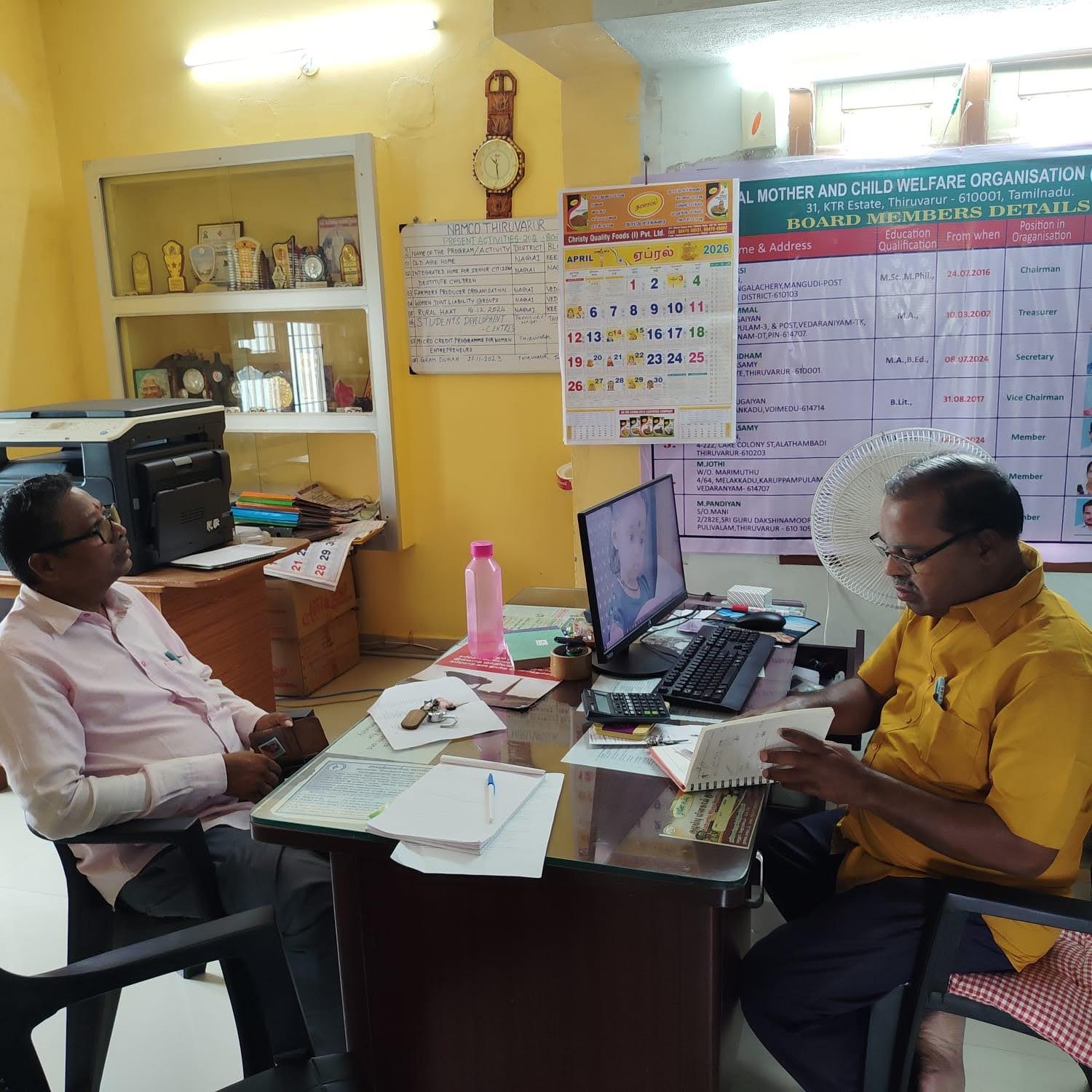
1a. Interaction with Jeeva, chief officer of NAMCO
2. Agriculture Machinery Shop Owner- Mr. Manivel
The team met with the agriculture machinery dealer Mr.Manivel. He sells Power Weeders, Tillers, and Grass Cutters, mostly priced below ₹1.5 lakh at his place. He explained about the benefits of agricultural machinery, particularly that it cuts down labour and improves precise farming. Manivel said that power weeders and tillers (up to 15 HP) are the most beneficial and commonly used machines.
- He suggested that MNREGA should include training on the use of agricultural machinery through NGOs. He added that farmers needed to be provided more financial support by introducing new schemes to enable switchover to organic farming. He suggested that research and development can be done to improve drone technology for farming practices
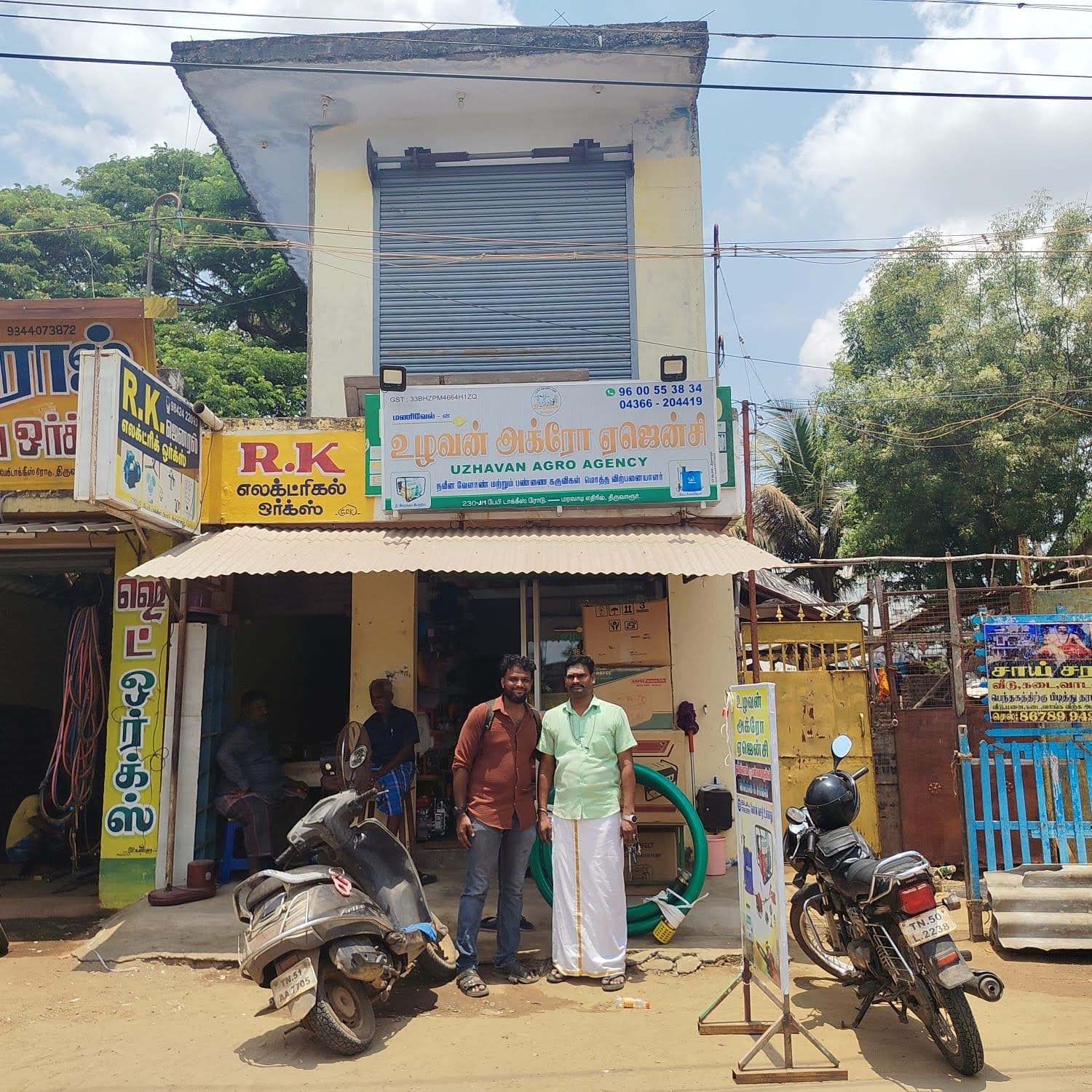
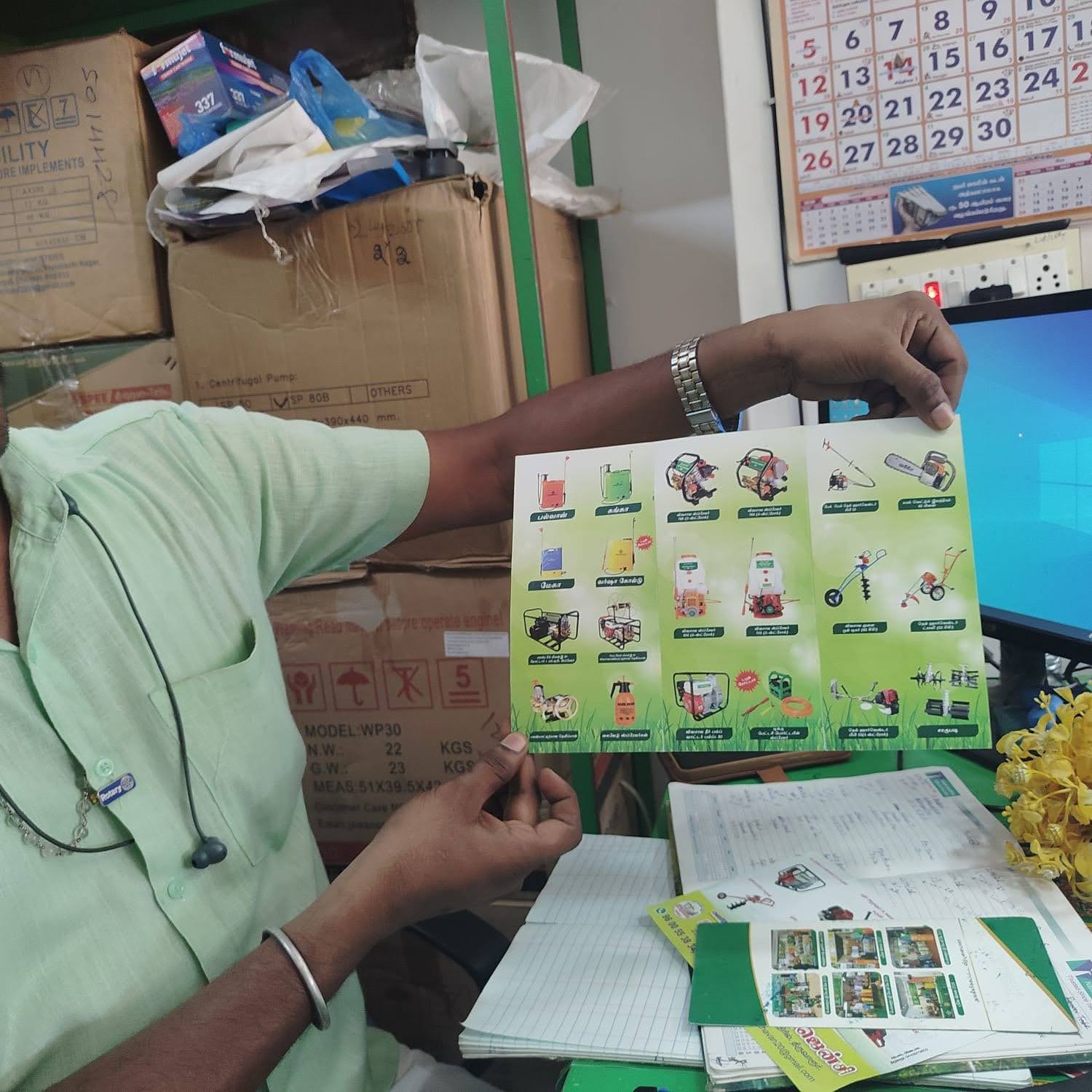
2a. At Ulavan Agro Agency 2b.Machinery the shop deals with
3. Conventional Fertilizer & Seed Shop Owner- Mr.Kailasam
Mr. Kailasam’s shop supplies hybrid seeds and fertilizers to farmers. He reported that the popular paddy varieties sold at his shop were: CR1009 (Ponmani), ADT50, KO51, ADT44 (Samba Ponni), A516, and BPT5204 (Andhra Ponni).
- He highlighted the lack of a proper market for traditional rice varieties, leaving farmers discouraged.
- He suggested the government should make extensive awareness campaigns across Tamil Nadu for successful conventional farming practices especially in the case of using the right fertilizer for the right crop.
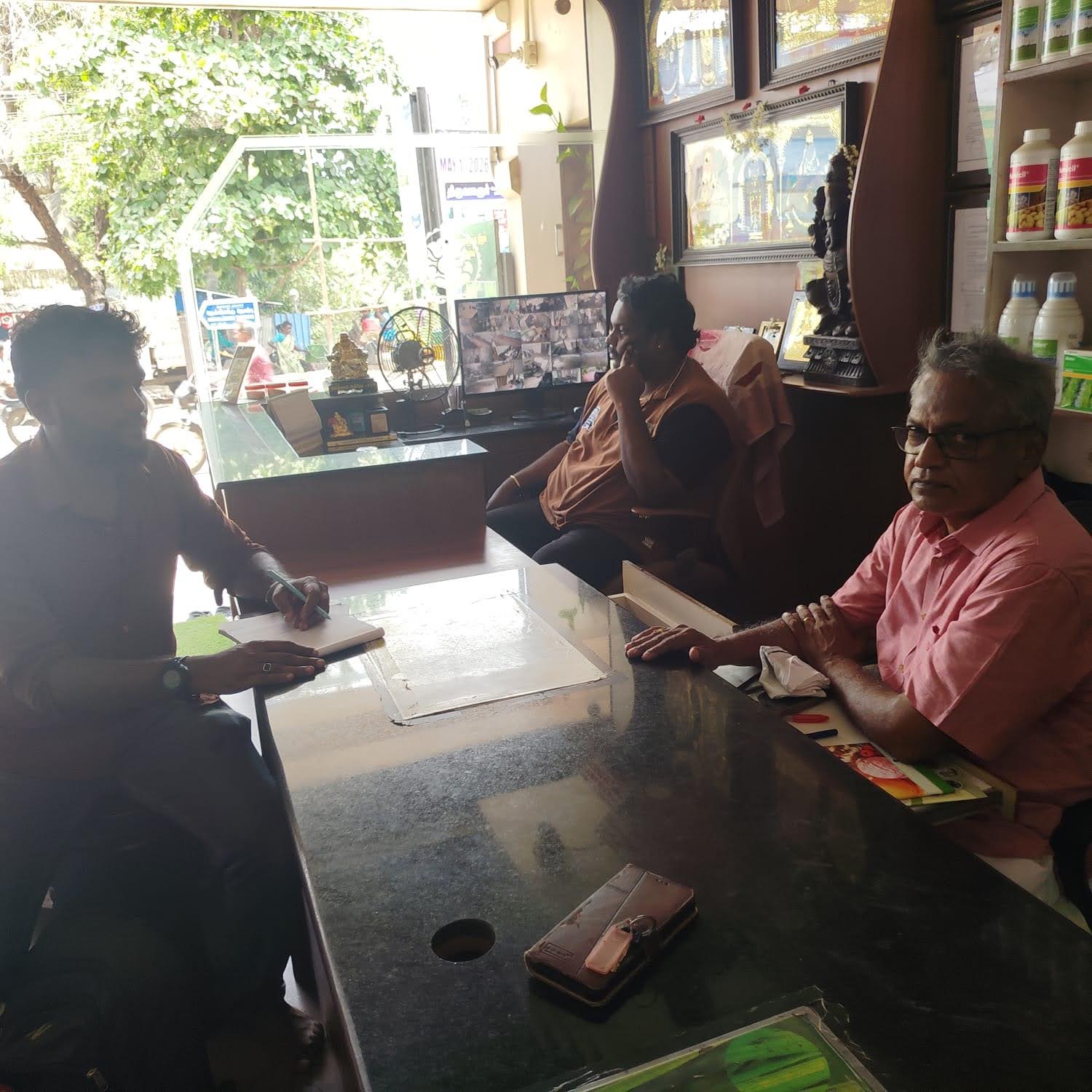
3a. Interaction with conventional fertilizer shop owner
4. Kamaraj Food Producer Organisation- Mr.Bharath
Mr. Bharath runs Kamaraj Foods. This firm has been operating since the 1990s, and makes groundnut and sesame chikkis (candies) in various sizes and supplies them across multiple states. Previously, it procured raw materials directly from farmers but now increasingly depends on market sources due to declining farm production and frequent crop losses over the past 10 years.
-
The cost of production of their food products has been increasing day by day. He observed that these increases are felt more keenly by farmers than by them.
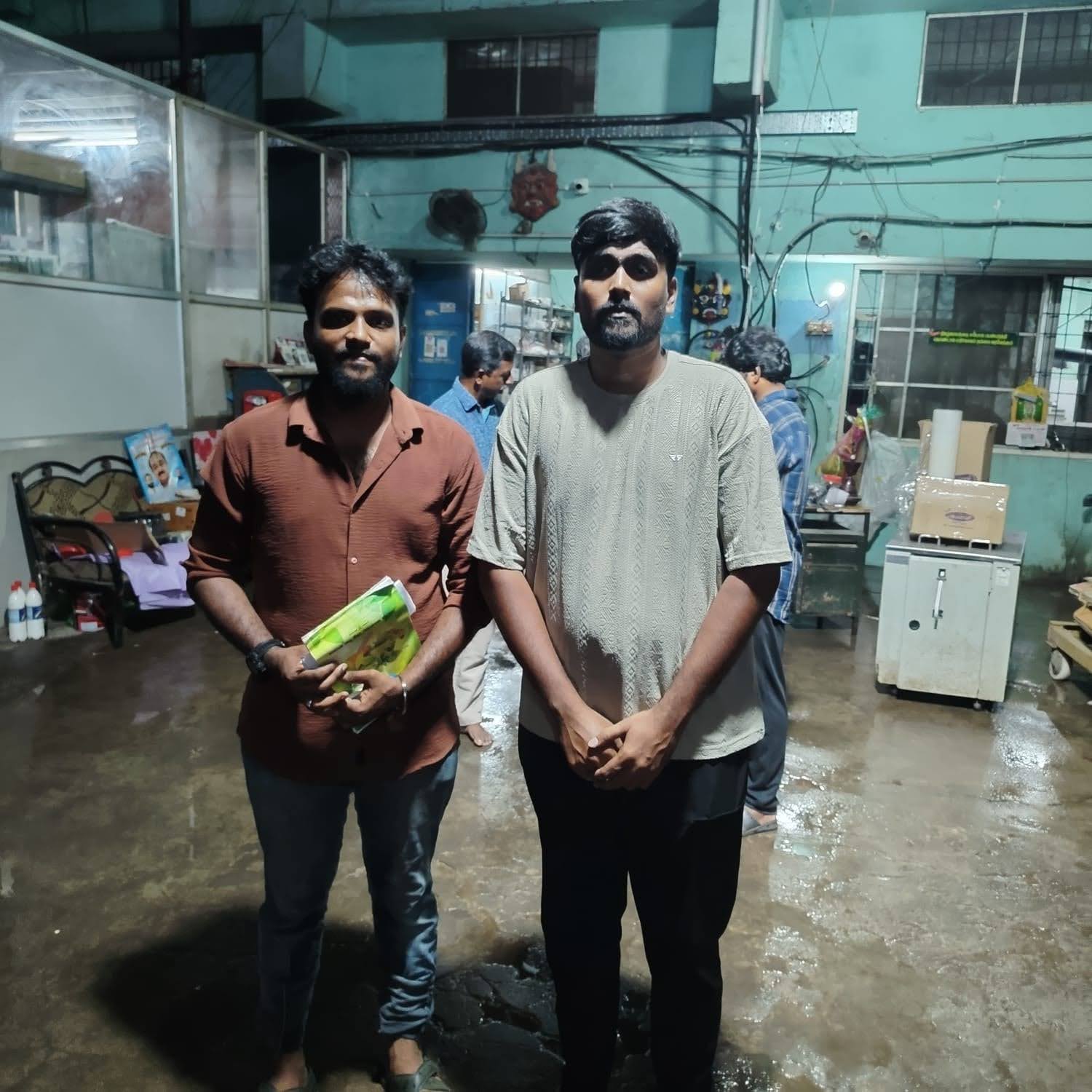
4a. Meeting with Bharath chief person in Kamaraj foods
5. Vivekananda Oil Mill (Food Producer Organisation)- Mr.Ramesh
A traditional oil extraction unit functioning since the 1990s, currently managed by Mr. V.V.P.D. Ramesh, this mill produces oil from coconut, groundnut, sesame, and castor seeds, and supplies oil cakes as cattle feed. Mr. Ramesh shared best practices for producing quality coconut pulp for oil extraction.
- As a farmer himself, he discussed the challenges in climate-resilient agriculture, labour costs (e.g., ₹12/kg for cotton picking), and crop risks due to erratic rainfall.
-
He also shared a successful experience of using coconut oil cake as organic manure in paddy fields, which significantly improved yield.
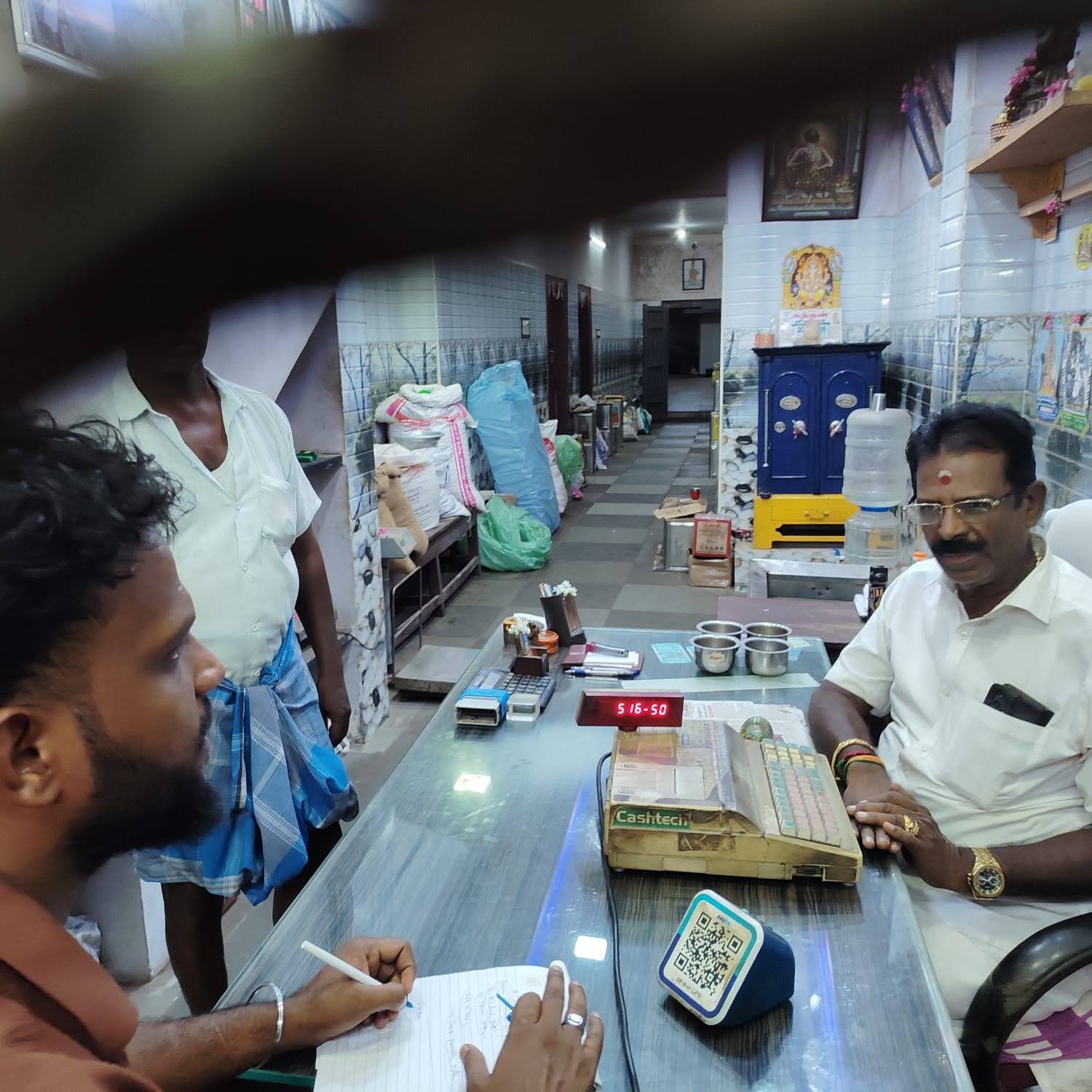
5a.Discussion with V.V.P. Ramesh, owner of Oil extraction unit.
6. Farmers Union Leader – Mr. Alagar Raj
The team met with Farmers Union leaders from the Nagapattinam region. The farmers in the Union are often from multi-generational farming backgrounds.
- He noted that farming is increasingly seen as a “poor man’s business”.
- He spoke about the distress of farmers and the losses they face. This often leads to the next generation choosing professions other than farming. This then results in farming land being converted to housing plots.
- He observed that only about 5% of farmers use solar-powered pumps and around 10% practise traditional farming.
- He suggested that the government support farmers practising traditional farming by bearing crop loss risks.
- He emphasised the need for regular awareness campaigns about government schemes and subsidies.
-
He highlighted specific difficulties in cotton cultivation.
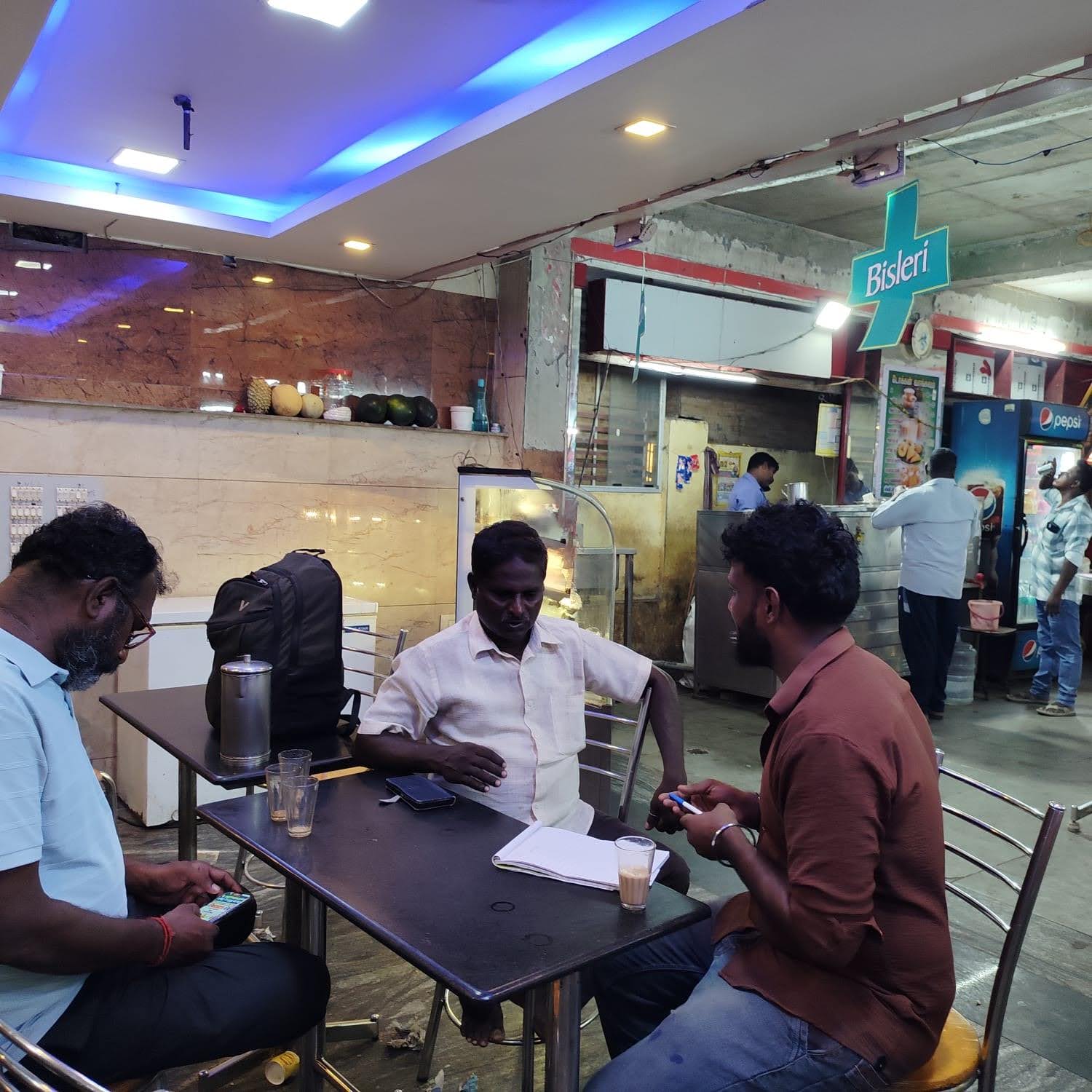
6a. Discussion with farmer union leader Alagar raj.
DAY 2: Meeting with Financial Service Providers
7. Meeting with bank official from Central Cooperative Bank, Kumbakonam
- Initially the team met with the bank manager of Kumbakonam Central Cooperative Bank.
- She explained about the roles and responsibilities of the bank when it comes to serving farmers in their region.
- The scale of available finance for farmers is fixed annually in the District Collector’s meeting. The bank serves both the general public and farmers. Farm loans, subsidies, and input distribution are handled separately by Primary Agricultural Cooperative Credit Societies (PACCS).
- She also insisted that all financial roles and responsibilities are taken by the region’s PACCS office at Thiruvarur.
-
She therefore advised that we meet the local PACCS office manager.
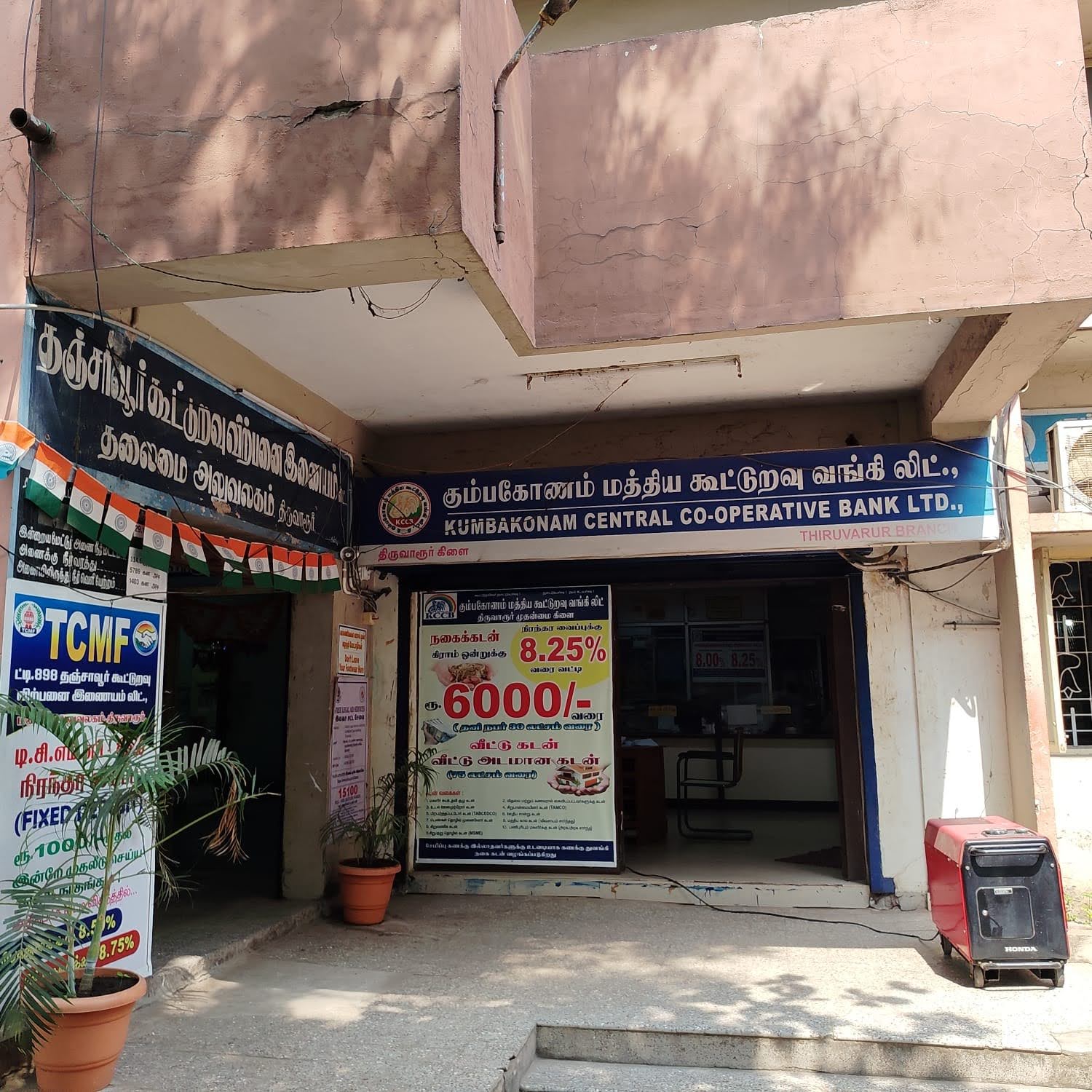
7a. Kumbakonam Central Cooperative bank
8. Farmers FGD at PACCS Office, Perunthuraikudi,Kulikkarai.
The team next met with farmers of Peruthuraikudi region which was arranged by Mr.Alagu Srinivasan, Manager of the PACCS office. Roughly, 12–15 farmers participated (mostly above 50 years, holding 5–7 acres).
- Major crops: Paddy, Groundnut, and Sesame.
- Most farmers follow conventional methods with hybrid seeds; very few practise traditional varieties like Karuppu Kavuni and Kaatu Yanam.
- Sugarcane cultivation declined after the closure of the local sugar factory.
-
Major issue: Severe damage to food crops by wild pigs.
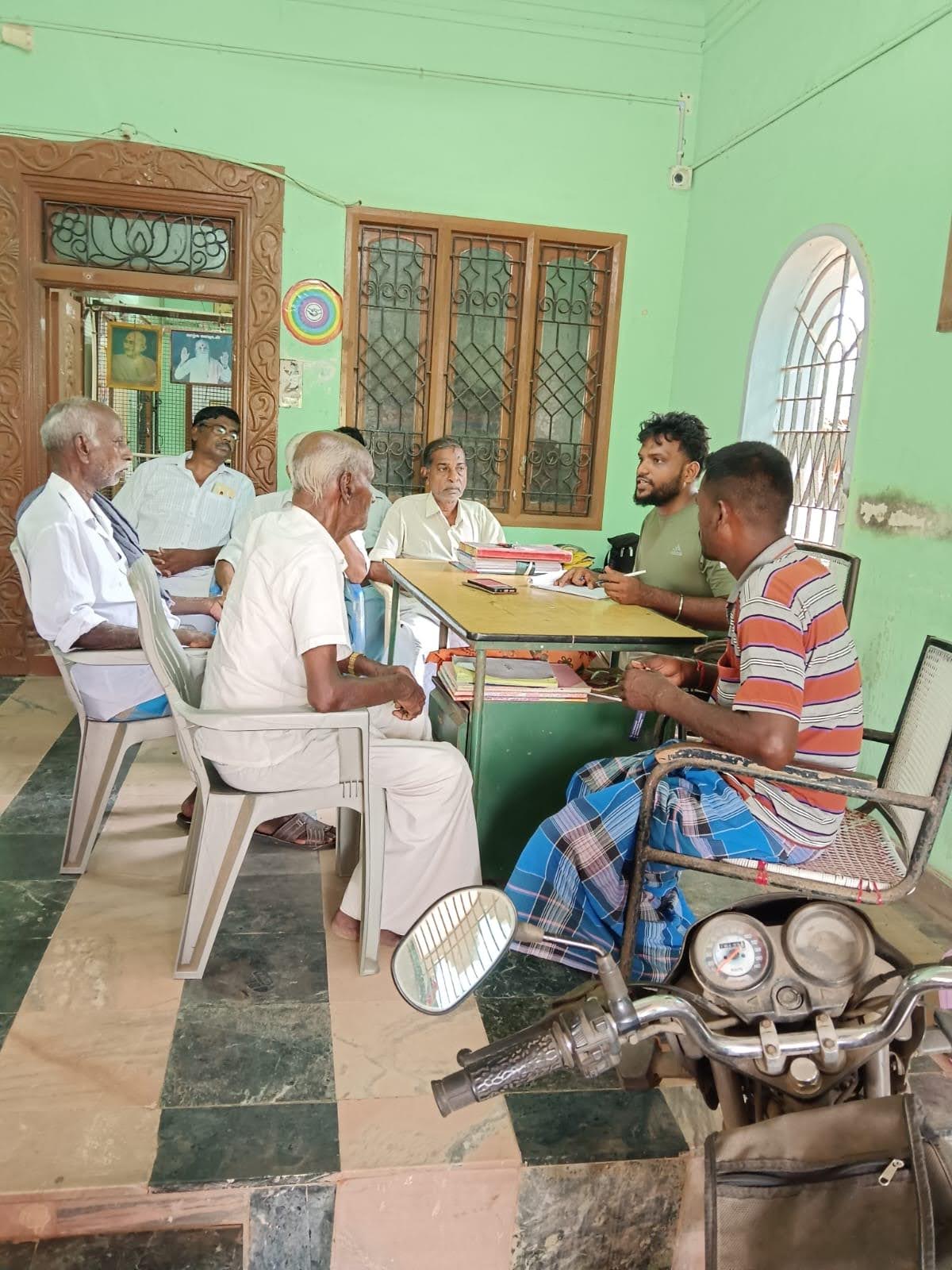
8a.Discussion with farmers of Perunthuraikudi.
9. Primary Agricultural Cooperative Credit Society (PACCS), Perunthuraikudi - Mr. Alagu Srinivasan, Manager
Mr. Alagu Srinivasan explained the role of PACCS in providing agricultural loans and subsidies.
- Loans are given in two forms: inputs (seeds, fertilizers, pesticides) and cash (repayable in ~1 year).
- Interest rates: 12% for general agricultural loans and 11.5% for SHGs.
- Most farmers repay loans on time.
-
The PACCS also runs a successful Food producer Organisation dealing in traditional rice varieties, neem cake, and value-added food products.
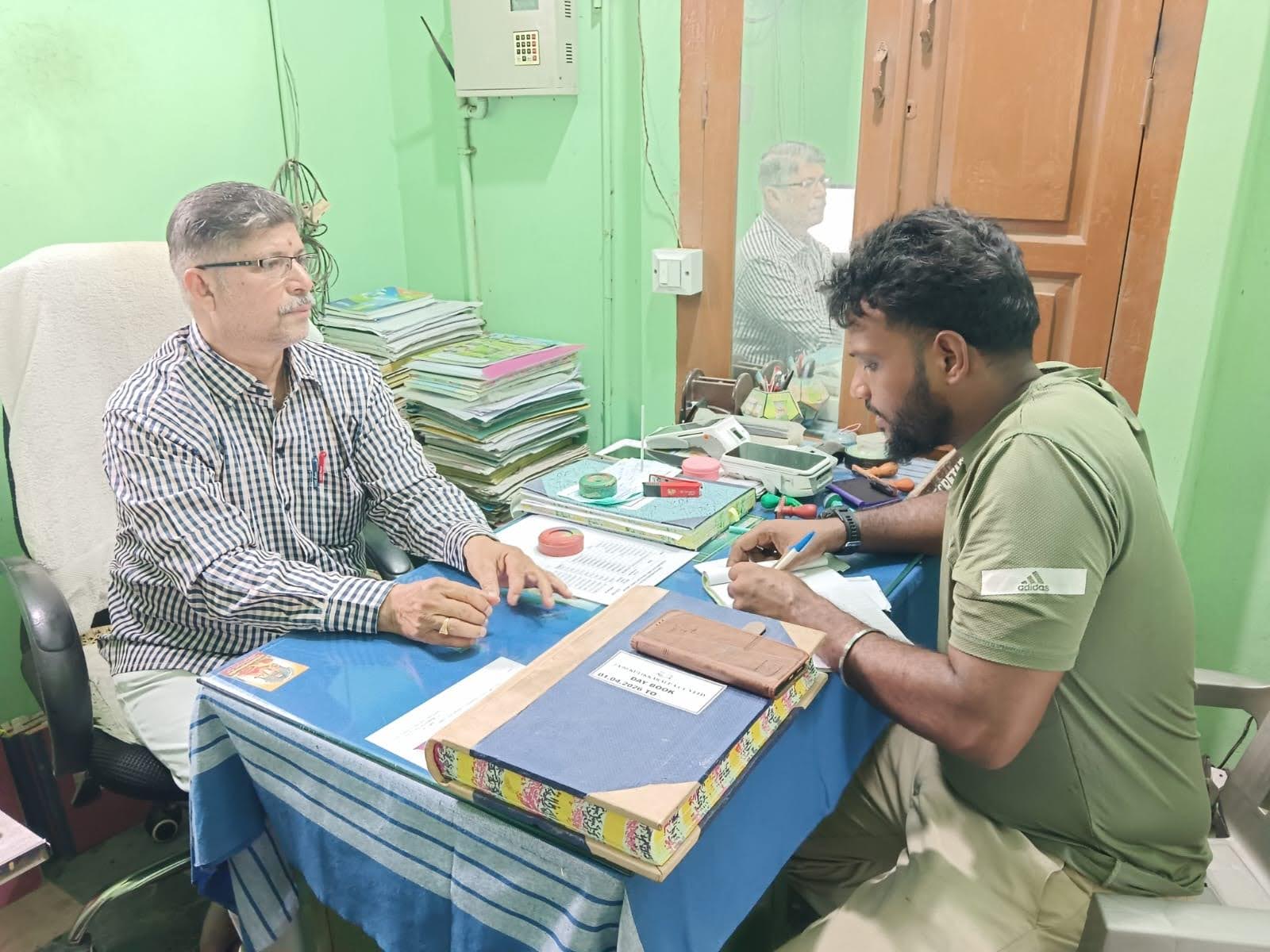
9a. Discussion with Alagu Srinivasan, Manager,PACCS office, Kulikkarai.
10. Private Insurance Agent- Mr.Venkatesh
Mr.Venkatesh handles crop insurance for farmers of the Thiruvarur region. He highlighted issues with crop insurance — that most companies are not based in Tamil Nadu and their lack of understanding of local conditions makes claims difficult.
- Farmers have faced major difficulties in claiming insurance from 2021 onwards as only few villages of the region have been provided crop insurance - most were denied.
- He suggested that the Government of Tamil Nadu ensure that the right insurance company be given permits to work in Tamil Nadu as most private insurance companies providing crop insurance are from other states.
11. Solar Pump Dealer – Mr. Mathan
- The team met with solar vendor Mr. Mathan who delivers solar pumps to farmers of the Thiruvarur region.
- Farmers show interest in the KUSUM scheme for subsidized solar pumps.
- He informed about the e-Vaadagai scheme, under which farmers can rent agricultural machinery (including mobile solar pumps, tillers, weeders, and tractors) at a low cost from the Agriculture Engineering Department.
- He further added that the Government can increase awareness campaigns for farmers to help them understand about schemes related to farming systems and the importance of availing those schemes..
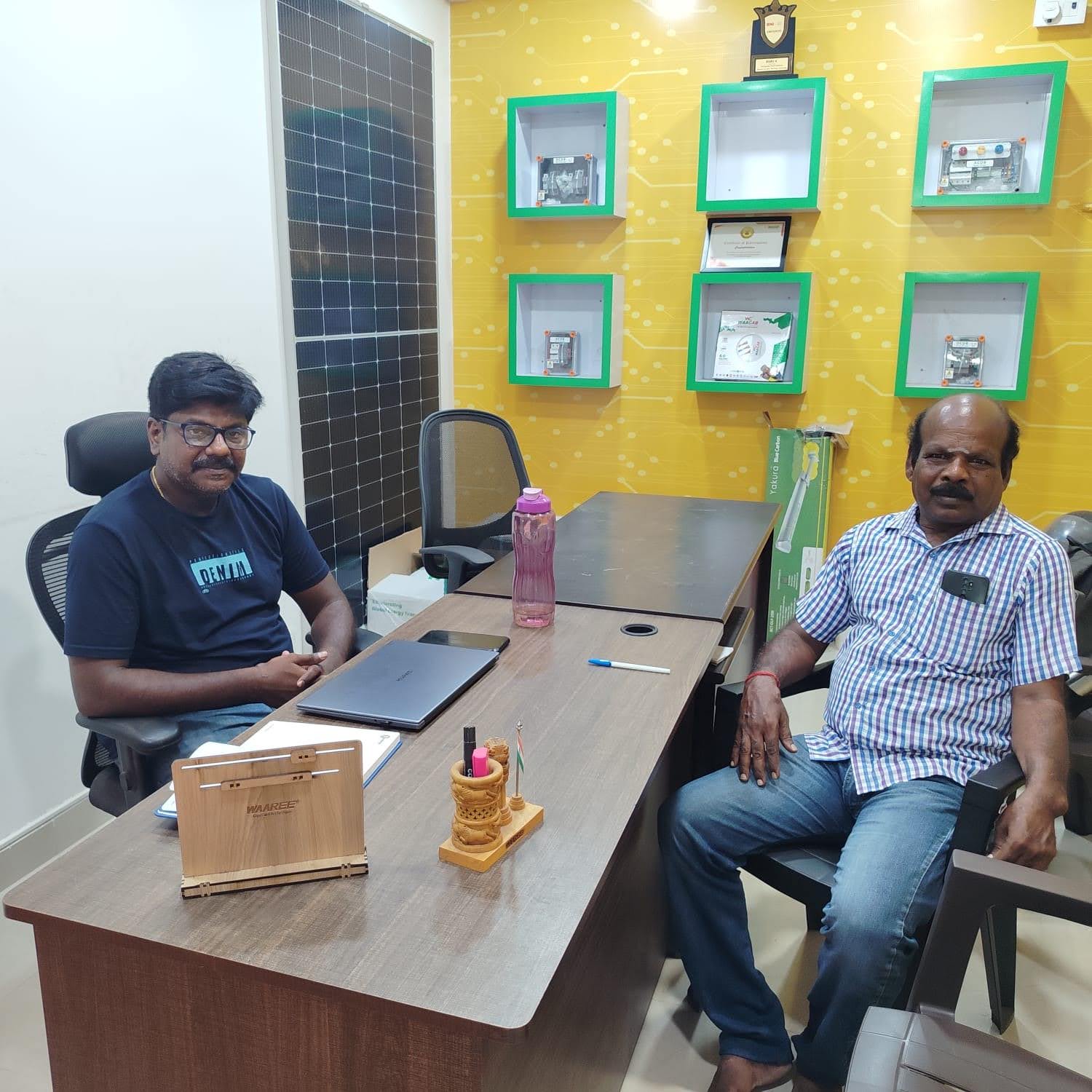
11a. Interaction with Mr. Madhan, Proprietor, Murugaiyan solar venture
Key recommendations from various stakeholders for NGOs and government bodies to work on:
- Strengthen water resource management through timely desilting of water bodies, promotion of rainwater harvesting, and expansion of watershed development programmes.
- Enhance awareness and outreach on government schemes, subsidies, crop insurance, and climate-resilient agricultural practices to improve farmer participation and uptake.
- Introduce targeted incentives, skill development programmes, and entrepreneurship opportunities to attract and retain youth in agriculture.
- Provide greater financial support to farmers through timely crop loans, reduced interest rates, and improved access to credit for small and marginal farmers.
- Promote climate-resilient and traditional farming systems by offering risk-sharing mechanisms, market support, and incentives for sustainable agricultural practices.
- Strengthen crop insurance coverage and claim settlement mechanisms to ensure timely compensation and better protection against climate-induced crop losses.
- Improve market linkages, value addition, and price realization for farmers, particularly for traditional crops and locally processed agricultural products.
- Encourage adoption of modern agricultural technologies, including farm mechanization, solar-powered irrigation systems, and precision farming tools, through financial and technical support.
- Establish effective monitoring and accountability mechanisms for rural development programmes such as MNREGA to improve the quality and long-term usefulness of assets created.