1. Introduction
The Climate Resilient Agriculture (CRA) Project aims to strengthen the resilience of farming communities to climate change across Tamil Nadu, Kerala, Maharashtra, and Bihar. It works with farmers, FPOs, research institutions, civil society organizations, agri-businesses, and government departments to promote sustainable and climate-resilient agriculture. The project identifies local challenges through stakeholder consultations and focus group discussions (FGDs), supports capacity building, and promotes climate-resilient farming practices and government schemes, with Citizen consumer and civic action Group (CAG) coordinating the project across the four states.
As part of the project, representatives from CAG, ASAR, Bodhi and Thanal Agroecology Producer Company conducted an FGD with farmers in the Alathur region of Palakkad district, Kerala. The discussion explored the major agricultural and climate-related challenges faced by farmers, their existing practices, and the support needed to strengthen climate resilience. This report combines the structured FGD findings with detailed field notes to identify local priorities and guide suitable interventions under the project.
1.1 Background and Setting
The FGD was held in Alathur, a paddy-growing region in Palakkad district that depends heavily on irrigation from the Malampuzha Dam. Participants included paddy cultivators as well as farmers engaged in coconut, vegetable, mango, and other allied agricultural activities. Discussions covered the full range of production, from land preparation and cultivation to procurement, marketing, and household food security, and concluded with structured group presentations summarising key concerns and recommendations.
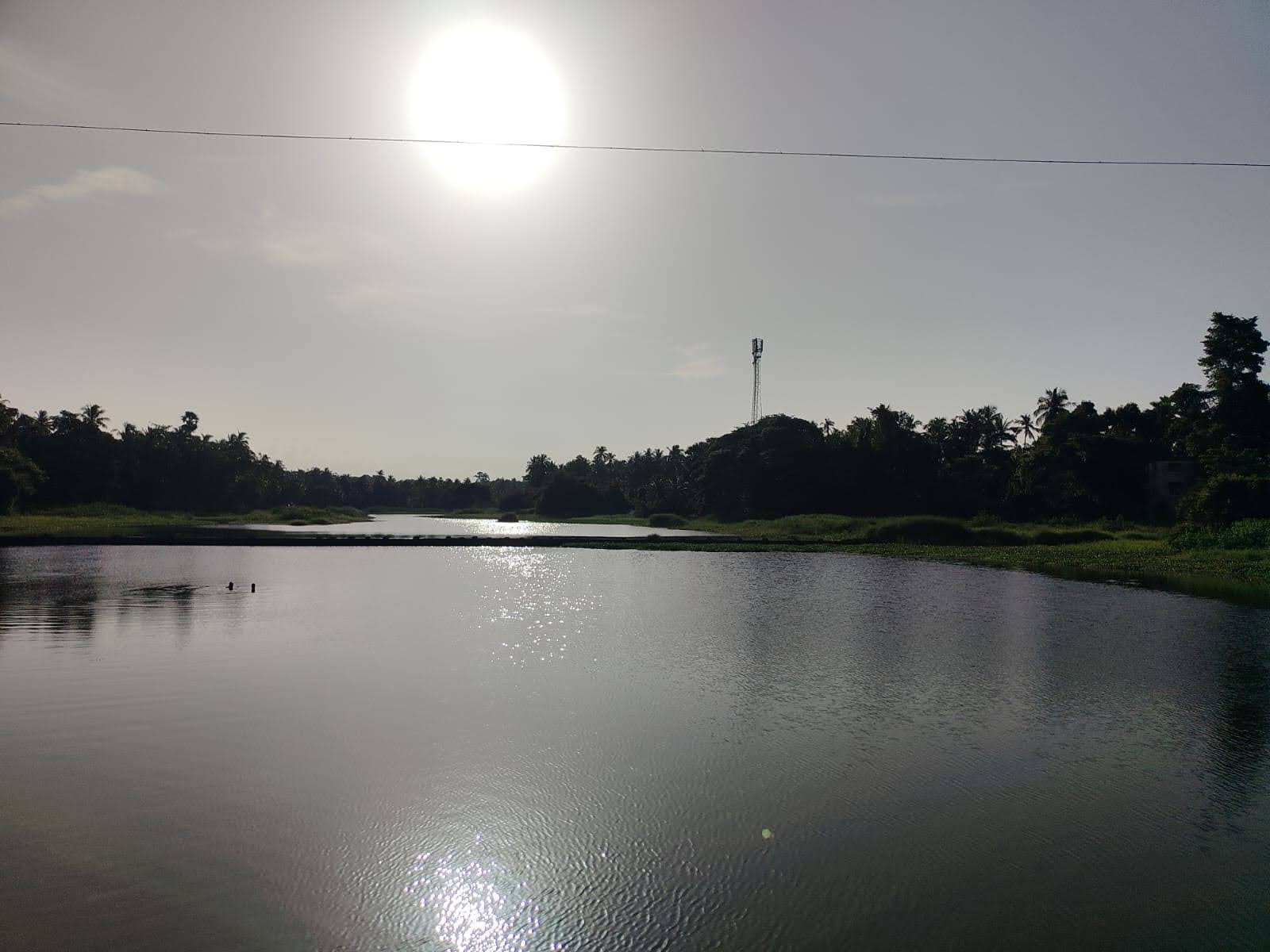
1a. Picture taken at Mazhampuzha Checkdam

1b.Water hyacinth species invasion seen in the river
2. Executive Summary
Paddy cultivation has become financially unviable due to high costs, low returns, delayed procurement, labour shortages, rising input costs, climate variability, soil and water challenges, human–wildlife conflict, and declining youth interest in farming.
Farmers identified key institutional supports, including Krishi Bhavans, farmer collectives, subsidized loans, and machinery-rental societies, which help reduce some of the challenges faced in agriculture. They also proposed practical measures to improve agricultural viability. Discussions further highlighted concerns regarding coconut and mango cultivation, traditional farming systems, seed and fertilizer quality, food security, dietary changes, and the reliability of official agricultural data.
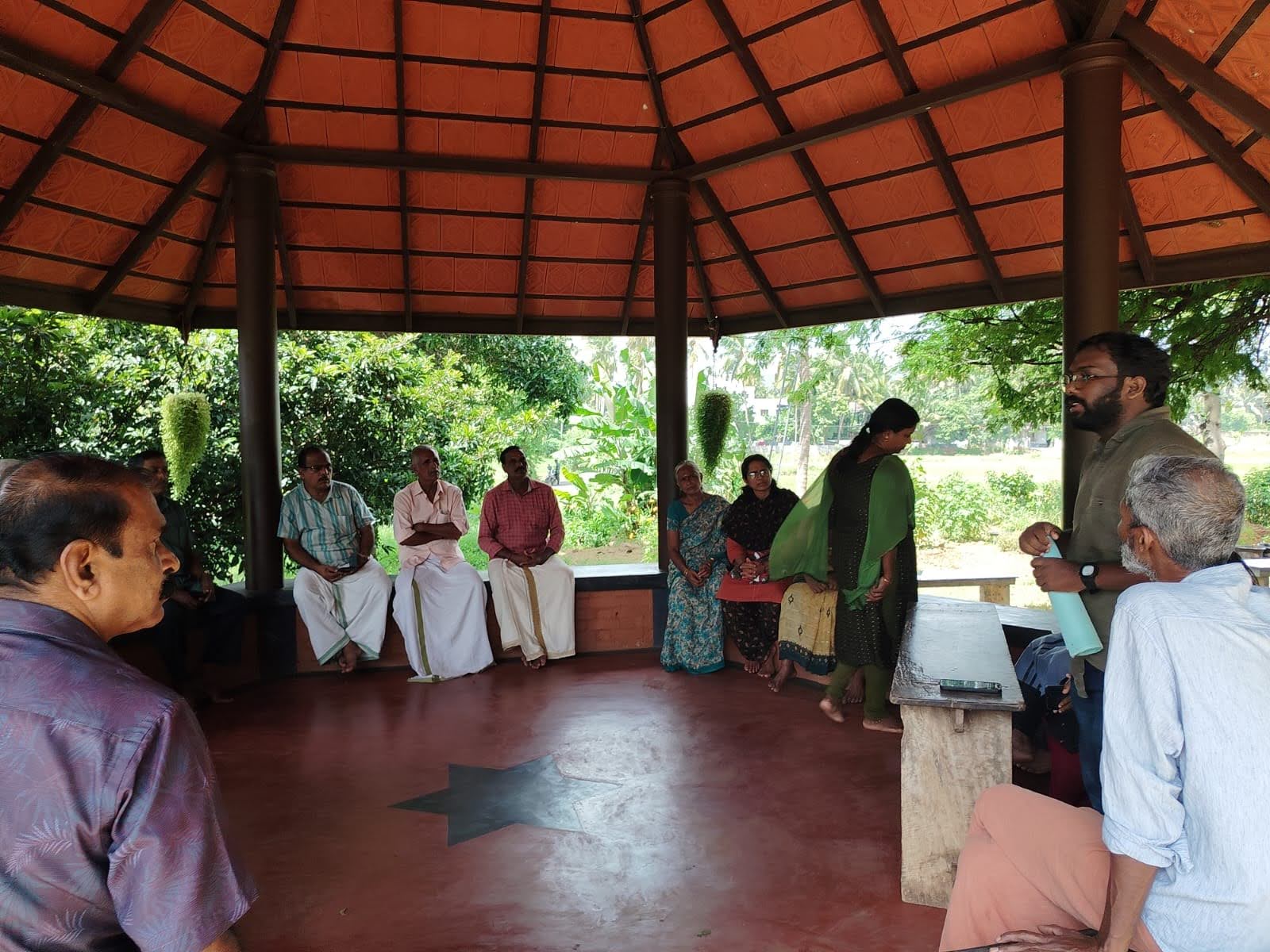
2a. Introductory part of focus group discussion
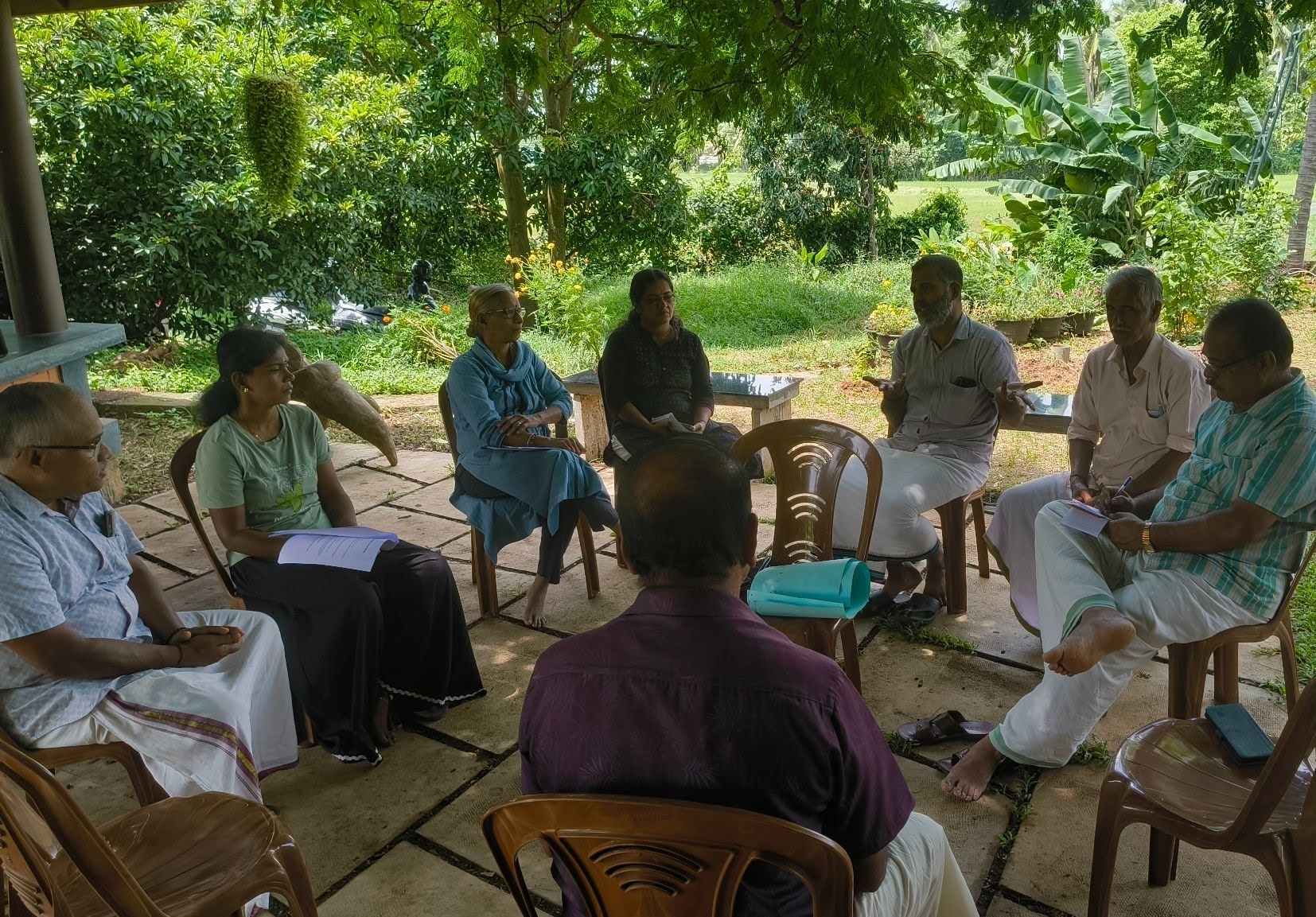
2b.Farmers groups separated for discussion
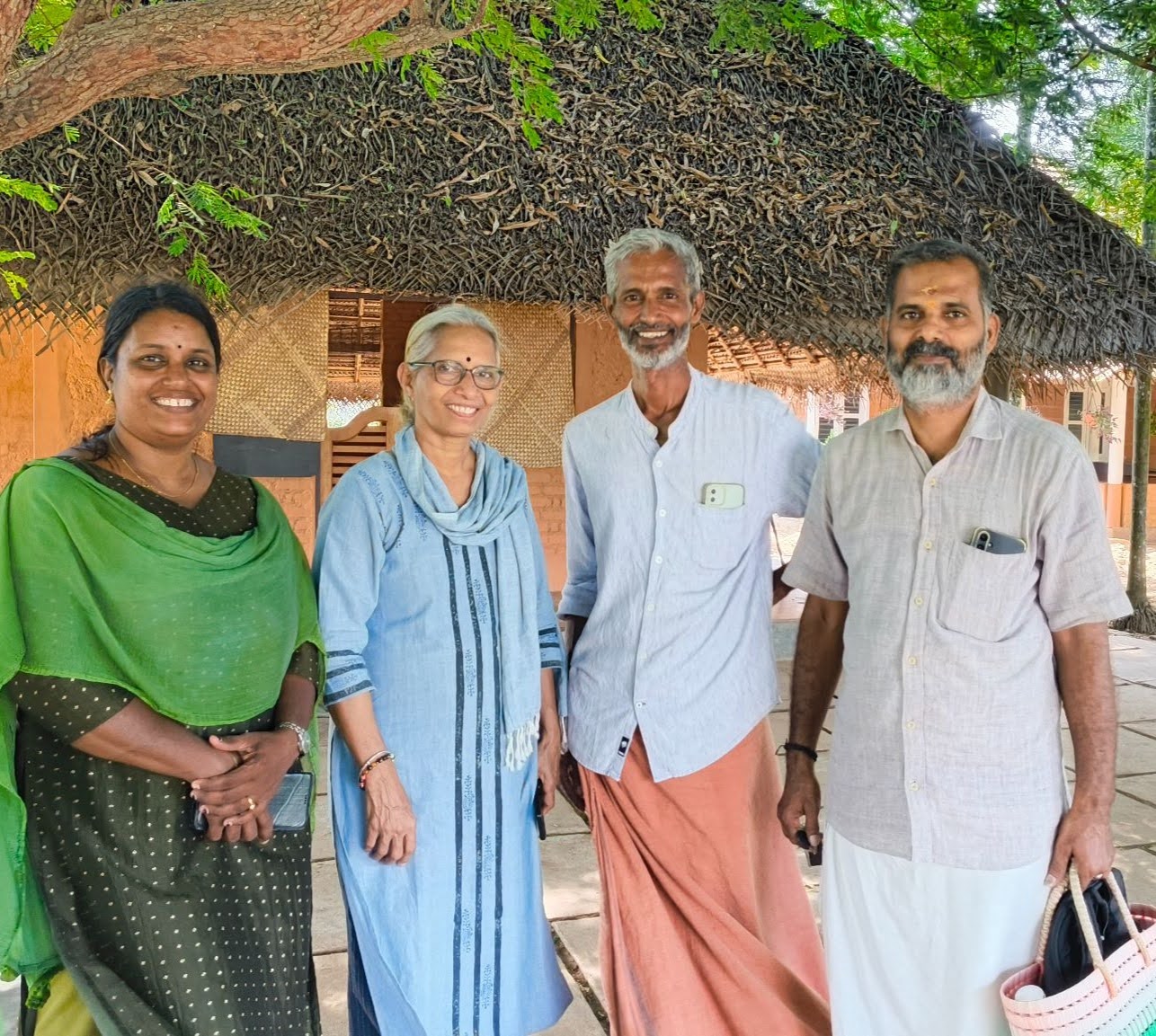
2c. Pictures taken with organizer of Farmers’ meet
3. Economics of Paddy Cultivation
The central concern raised throughout the discussion was the poor economics of paddy cultivation. Farmers estimated that cultivating one acre of paddy, from transplanting to harvest, costs approximately ₹50,000, while expected profits are only around ₹30,000.
3.1 Procurement Price and Policy
Government paddy procurement through Supplyco is priced at around ₹28 per kg, with participants also referring to a base of about ₹30 per kg. Farmers consider this inadequate given rising cultivation costs and argue that ₹40 per kg would make paddy farming financially viable. However, they believe governments hesitate to increase procurement prices because higher retail rice prices often lead to public dissatisfaction and political pressure. Participants viewed this as a deliberate policy trade-off, where farmer incomes are kept low to maintain affordable consumer prices. They also noted that, unlike other commodities, even a small increase in rice prices tends to face strong public opposition.
3.2 Delays in Procurement and Payment:
Farmers described a long and uncertain path from harvest to payment. In Palakkad, harvested grain must be dried below the strict 17% moisture threshold, unlike Kuttanad where higher moisture content is often accepted. Drying can take 10–15 days and may require repetition if standards are not met, while transport shortages can cause further delays. Farmers reported receiving Paddy Receipt Slips (PRS) only three to four months after harvest, with payments still pending even after delivery.
Government procurement in Palakkad is capped at around 2,500 kg per acre. A farmer harvesting 4,000 kg may have only 2,500 kg accepted, leaving the surplus to be marketed independently. Additional handling costs, including gunny bags and loading charges of around ₹28 per bag, further reduce farmer incomes.
3.3 Reliance on Private Traders
Because of procurement delays and inadequate on-farm or community storage, many farmers sell paddy to private traders at ₹23–24 per kg — well below the official procurement price of ₹28 per kg — simply to obtain timely cash.
3.4 Coconut and Other Crop Economics
Coconut prices fluctuate considerably depending on production levels, particularly in Tamil Nadu. Prices may rise to around ₹60–70 per kg during periods of low production but fall to ₹30–32 per kg when supply is abundant; farmers explained that coconut prices in Kerala are influenced more by market conditions in neighbouring states than by local production, and that even when prices rise, farmers often cannot benefit because production itself has declined during those periods. Poor price realisation is not limited to paddy: other crops, including colocasia (chembu), often receive prices that do not cover production costs, and in some years farmers have abandoned harvested produce because transportation and marketing costs exceeded expected returns.
4. Labour: Shortages, Wages, and Changing Work Patterns
A severe shortage of local agricultural labour has reshaped how farming is done in the region. Farmers now depend heavily on migrant workers from West Bengal and Tamil Nadu for transplanting, harvesting, and fertilizer application, as local workers — especially for physically demanding or low-status tasks — have become very difficult to find. Permanent agricultural labourers have become extremely rare; only a few farmers employ one or two permanent workers, while the vast majority depend entirely on temporary labour.
4.1 Wage Trends and Gender Gap
Daily wages have risen sharply, reaching ₹800–1,000 for men (with some figures cited at ₹750–850) and around ₹500 for women — a gender wage gap that participants highlighted directly. Some tasks have shifted from daily wages to contract or per-unit payment (for example, per bag or per square foot for fertilizer application and bund clearing, or per acre for transplanting by migrant workers). Notably, labourers in vegetable cultivation now often work only a half-day shift (8:30 a.m.–1:00 p.m.) while still earning around ₹1,000 plus meals.
4.2 Skilled Labour Shortages
Beyond general labour, the region faces a specific shortage of skilled workers: experienced tractor drivers, machine operators, bund construction workers, transplanting labourers, coconut climbers, and harvesting specialists. This shortage delays time-sensitive operations and drives up costs even where machinery is available — for instance, after the first rainfall following a dry spell, tractors may be available but too few trained operators exist to use them, delaying land preparation. The number of experienced coconut climbers and dehusking labourers has also declined sharply, forcing farmers to pay high wages to the few workers who remain. Participants also observed a decline in worker productivity, noting that tasks once completed by one worker in a day now take several days.
4.3 Shift to Chemical Weed Control
Rising costs for manual weeding (around ₹300 per hour) have pushed nearly 90% of farmers to rely on chemical herbicides, including products such as Roundup, instead of manual labour — a shift participants linked to concerns about long-term soil health, biodiversity, and sustainability.
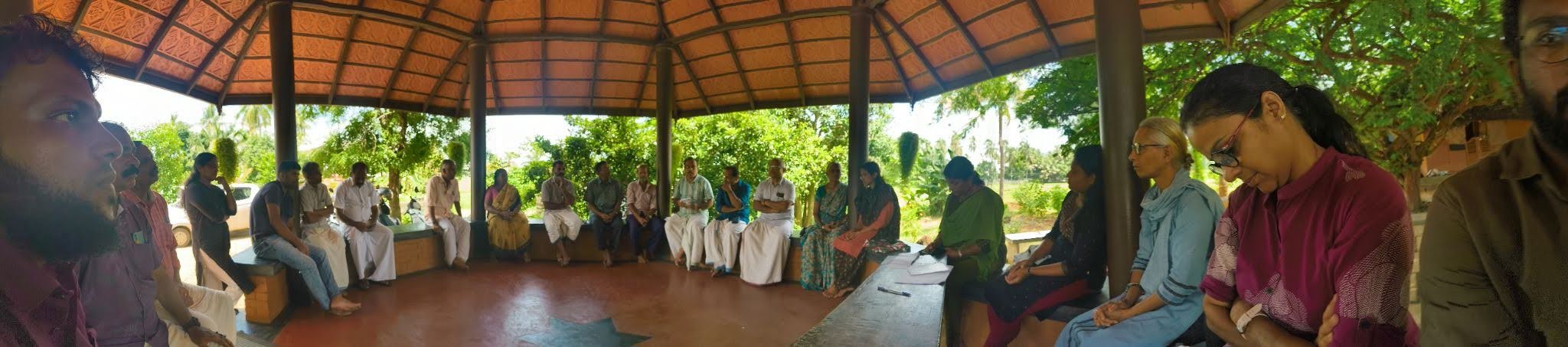
4a. Picture taken during discussion with all the farmers together.
5. Mechanization
With most farmers owning less than five acres, large agricultural machinery is not economically viable, as it may be used only for a few hours or a day each season while requiring costly maintenance. Farmers therefore rely on smaller equipment such as tractors, brush cutters, sprayers and drones, as well as rental services through farmer collectives like Nira, which provides harvesters at regulated rates. The Block Panchayat also supports some land-preparation equipment.
Small-scale machinery for vegetable cultivation, cassava planting and pit digging remains scarce, leaving farmers dependent on manual labour. Drone spraying is increasingly available but becomes cost-effective only when around 100 acres are cultivated collectively, requiring coordination that is currently uncommon. Machinery shortages also worsen during peak seasons as harvesters move between states according to cropping cycles.
6. Climate Change and Extreme Weather
Farmers reported significant changes in local climate, including extreme heat, erratic and unpredictable rainfall, prolonged dry spells followed by heavy rain, and more frequent flooding. They partly attributed these changes to widespread deforestation, including daily logging in Palakkad for transport to factories in Tamil Nadu, which they associated with localized desertification and the narrowing of rivers and canals.
Since the 2018 floods, participants have observed declines in soil fertility, organic matter, and agricultural productivity. Erratic weather has disrupted the traditional agricultural calendar, including green manure sowing before paddy nurseries, while also changing pest pressure and bird behaviour. Large flocks of birds now reportedly damage young paddy seedlings after transplantation, a problem considered uncommon in the past.
Perennial crops have also been affected. Mango trees increasingly show irregular flowering and fruiting, while coconut production has declined. Heavy rainfall frequently breaches field bunds, requiring repeated repairs, and the shortage of skilled labour has further increased cultivation costs.
7. Water Resources and Irrigation
Agriculture in the region depends heavily on the Malampuzha Dam. During drought periods, drinking water needs are prioritized over irrigation, and farmers at the tail end of the canal system often receive inadequate supply even when dam storage is otherwise sufficient — in the year of the discussion, much of the dam's storage had been reserved for drinking water despite adequate storage the previous year.
7.1 Canal Maintenance and Governance
Main irrigation canals receive regular maintenance funding, and smaller canals are maintained by the Panchayat through the MGNREGS employment guarantee programme, with the Irrigation Department responsible for the main network. Irrigation schedules for water released from the Malampuzha Dam are prepared jointly by the Agriculture Department, the Panchayat, irrigation officials, and farmer representatives according to the agricultural calendar; a Water Users Association of approximately 30 members also participates in discussions with the Irrigation Department before water-distribution decisions are finalized.
Nonetheless, floods have narrowed canals through silt deposits, and damaged shutters in various locations remain inadequately repaired, restricting flow to downstream areas. Temporary repairs to breached embankments were described as short-term fixes rather than durable solutions.
7.2 Ponds, Storage, and Borewells
Village ponds once supported irrigation, groundwater recharge, domestic use, livestock watering, and fish habitat, but many have disappeared or become shallow due to silt accumulation and poor maintenance. Their loss has weakened local water conservation and contributed to declining fish populations. Farmers noted that neighbouring Chittur has stone-lined water storage structures, unlike their region. Borewells provide partial relief and are mainly used for coconut, banana, and vegetables, as paddy’s high water demand makes borewells and drip irrigation unsuitable. Subsidized drip irrigation helps coconut farmers irrigate larger areas with less water but is not suitable for paddy.
8. Soil Health and Fertility
Repeated flooding has washed away nutrient-rich topsoil and fertilizers, leaving soils deficient in organic carbon and micronutrients. Declining cattle rearing has made farmyard manure scarce and costly, while green manure crops such as cowpea have largely been abandoned due to unpredictable rainfall. Labour shortages also make manure application difficult.
Farmers increasingly rely on chemical fertilizers such as urea and Factamfos for quick results, often applying them above recommended rates or using cheaper substitutes, contributing to nutrient imbalance. They also questioned the quality and effectiveness of commercial fertilizers, micronutrients, and nano-fertilizers such as Nano Urea and Nano Potash, reporting limited crop response and calling for independent testing. Inconsistent availability of fertilizers at the required time was another major concern.
9. Pest Management and Pesticide Use
Climate change has contributed to new and more resistant pests, leading farmers to apply pesticides preventively, sometimes at three times the recommended dose. Many consider “green-label” pesticides ineffective and therefore use stronger “red-label” products, with some sourcing highly toxic or banned pesticides from neighbouring Tamil Nadu despite health and environmental risks. Lack of coordinated spraying allows pests to move to untreated fields, resulting in repeated applications, while farmers increasingly rely on pesticide dealers rather than agricultural extension officers for pest-control advice.
Participants also raised concerns about intensive pesticide use on vegetables from Tamil Nadu entering local markets, highlighting food-safety risks. They shared a traditional cabbage snail-control method using fresh leaves and moist sacks to trap snails overnight, followed by collection and salt treatment, and called for more scientifically validated, environmentally friendly pest-management practices.
10. Human–Wildlife Conflict
Crop damage from wild boars and peacocks has become a major concern. Peacocks feed on bean flowers and other vegetables before pods form, sometimes causing total crop loss, while wild boars have led farmers to abandon tuber crops such as cassava, elephant foot yam, and colocasia, leaving suitable farmland unused. Farmers cited wildlife protection laws as a major barrier to effective control. Compensation for wild boar and elephant damage is handled separately from crop insurance, with agricultural officers assessing losses through field inspections and photographs or videos, followed by payment at government-approved rates for damaged trees, plants, or crops.
11. Land Use Change and Urbanization
Rapid urbanization around Alathur has converted significant agricultural land into residential and commercial development. Over the past 15–20 years, the town has expanded roughly fivefold in extent — from approximately one kilometre to nearly five kilometres — along corridors such as the Gurukulam–Palakkad Road and Kacheri Road, steadily reducing the land available for cultivation.
12. Declining Youth Interest in Agriculture
Participants described a near-total loss of interest among young people in farming as a livelihood, with virtually no new entrants — including children of existing farmers — over the past 10–20 years. Most young people view farming as an inherited responsibility rather than a viable profession, and many who continue to farm do so mainly because they have inherited land or wish to continue a family tradition, not because agriculture offers sustainable returns.
12.1 Reasons Cited
• Unstable income and no guarantee of recovering production costs.
• Low social status; farming is seen as an unstable, unrespectable occupation that can even affect marriage prospects for young men.
• Reluctance to take up physically demanding manual labour, with many preferring employment outside Kerala after completing their education.
• A paradox in agricultural education: many students study agriculture and work with local farmers on academic projects — some student groups have even cultivated 10–15 acres as part of their training — yet very few pursue farming as a career after graduating, and even parents often discourage children from entering the sector.
• Greater social recognition of farming in neighbouring states such as Tamil Nadu, Karnataka, and Andhra Pradesh, where state governments actively encourage youth into agriculture.
Participants strongly recommended integrating agricultural education into school curricula from an early age — on par with subjects like Mathematics and English — along with field visits, training programmes, and subsidies to build genuine interest.
13. Traditional Crops, Seeds, and Food Systems
Traditional crop diversity has declined considerably. Farmers once grew various pulses alongside paddy and milled their own rice, but cultivation is now concentrated on hybrid varieties such as Uma, based largely on Supplyco’s procurement preferences. Traditional rice varieties, including Jeerakasala, Rakthashali, Poochamban, Thavalakkannan, Chitteni, and Aanakomban, have largely disappeared due to limited local milling facilities, although varieties such as Poochamban and Thavalakkannan remain valued for their taste and use in aval (flattened rice).
Participants noted that while Uma performs well in the second crop season, it consistently underperforms in the first, highlighting the need for climate-resilient, locally suitable varieties and greater agricultural research. Traditional varieties such as Chitteni yield less but require fewer external inputs, suggesting that policies should consider nutritional quality, resilience, and low-input farming alongside yield.
Farmers also reported poor germination in some government-supplied seeds, forcing them to purchase more reliable private seed, often from Tamil Nadu. Participants called for stronger seed quality control and locally adapted seed production.
13.1 Food Security and Dietary Change
Farmers also reported growing dependence on commercially processed, chemically treated market rice for household consumption — since their own best-quality produce is sold for income — which they believe has adversely affected family health. Mixed cropping of pulses (sesame, pigeon pea, green gram, black gram) along field bunds, once common, has almost disappeared, and households now purchase pulses from the market. Participants also observed a broader dietary shift among younger generations toward restaurant and processed foods, in place of traditional home-cooked meals. Significant post-harvest losses of fruits like jackfruit and mango also go unaddressed for lack of harvesting, processing, storage, and marketing infrastructure — much of this fruit falls and rots because harvesting and processing are labour-intensive and economically unviable.
Participants cited examples of villages where communities collectively fund farmer groups to produce safe, healthy food for local consumption, and suggested such community-supported agriculture models be replicated more widely, alongside encouraging farmers to set aside at least a small area of chemical-free food production for their own households.
13.2 Farming Practices in Neighbouring Areas
Traditional farming practices, including larger landholdings and permanent labour, are still followed in areas such as Chittur, Kozhinjampara, and Velanthavalam, though even these farmers face growing water-availability challenges.
14. Institutional Support Systems
14.1 Krishi Bhavan and Extension Services
The Krishi Bhavan is the primary source of technical guidance for farmers, providing crop calendars, seed distribution, fertilizer recommendations, pest management advice, farmer training programmes, and coordination of irrigation schedules with the Irrigation Department and Panchayat. Farmers participate in Padasekhara Samithi (Paddy Field Committee) meetings to receive and disseminate this guidance and often share it further within their communities, though fertilizer subsidies are no longer distributed directly through the Krishi Bhavan — farmers now purchase inputs from authorized depots. The Panchayat separately allocates some funds for seeds and labour support under specific programmes, but most agricultural assistance is channelled through the Krishi Bhavan.
14.2 Financial Support
Cooperative societies offer agricultural loans at roughly 7% interest, often sanctioned with minimal documentation (a recent land tax receipt), while banks provide agricultural gold loans up to ₹3 lakh, with an on-time-repayment subsidy reducing the effective rate to around 4%. The Central Government's PM-KISAN scheme provides ₹2,000 per instalment, but strict eligibility rules — excluding government employees, pensioners, and those without owned land — leave many farmers out. Participants noted that many farming households rely on loans to finance cultivation and, with rising costs and unstable prices, remain caught in a cycle of debt that makes farming increasingly unsustainable as a livelihood.
14.3 Crop Insurance
Both State and Central Government crop insurance schemes exist. State compensation is often delayed but does eventually arrive; Central scheme compensation depends on weather-station data and is payable only when losses exceed 50%, with registration required in advance — those missing the window lose eligibility entirely. Participants criticised the timing of insurance portals, which often open only after the season has begun, leaving many farmers uninsured despite rising climate risk, and recommended simplifying procedures and pre-positioning registration ahead of the season.
14.4 Machinery and Farmer Collectives
The Nira Agricultural Machinery Service and similar societies supply tractors and harvesters at fixed, regulated rental rates, benefiting the wider Alathur region. However, participants noted an absence of strong farmer collectives specifically for paddy, attributed to political interference and limited cooperation, in contrast to well-organized vegetable and coconut grower collectives in areas like Vithanassery — cited as a model where a Farmer Producer Organisation purchases produce of any quantity from any member, whether a single basket or a full truckload.
15. Marketing and Farmer Producer Organisations
Participants identified the absence of an organised marketing system as a major constraint on farm incomes. Existing farmer groups mainly focus on procurement and payments, with limited collective planning, synchronized cultivation, or bargaining, leaving prices largely controlled by intermediaries. Farmers felt they have little influence over produce prices, while middlemen capture a large share of the value.
Recommendations included establishing Farmer Producer Companies (FPCs) to aggregate produce, provide storage, enable collective marketing, develop traceable and quality-certified brands, and support direct consumer sales. Participants also suggested decentralised collection centres and dedicated markets to reduce dependence on private traders, along with durable institutions rather than short-term development projects.
16. Reliability of Agricultural Data and Information Flow
Participants questioned the accuracy of official agricultural surveys and production estimates, believing that data collection often occurs without adequate consultation with farmers or local institutions, and recommended involving farmer organisations and agricultural officers more closely so that policy is grounded in field realities. They also noted that information on government schemes, weather advisories, and improved technologies does not always reach farmers in a timely manner, limiting the benefit of otherwise-available programmes.
17. Recommendations
Across the open discussion and the structured group presentations, participants converged on a consistent set of recommendations for making agriculture viable and attractive again:
- Increase paddy procurement prices to around ₹40/kg and ensure timely lifting, PRS issuance, and payment to farmers.
- Expand storage infrastructure at the local level so farmers can store produce and avoid distress sales to private traders.
- Strengthen fertilizer and seed subsidies with timely distribution, reliable availability, and stronger quality control.
- Improve farmer welfare support through pension schemes, increased direct subsidies, and wider access to PM-KISAN and similar schemes.
- Simplify crop insurance procedures by enabling pre-season registration and ensuring faster assessment and compensation for crop losses.
- Restore and maintain village ponds and canals through regular desilting and repair of shutters and embankments, especially to support tail-end farmers.
- Promote climate-resilient paddy varieties suited to changing weather conditions while conserving traditional rice varieties.
- Establish Farmer Producer Organisations (FPOs/FPCs) to support collective marketing, storage, branding, quality certification, and better market access.
- Strengthen agricultural research and extension services for soil testing, seed and fertilizer quality, pest management, and climate-resilient crop development.
- Promote coordinated farming and integrated pest management to improve pest control, reduce pesticide and herbicide use, and lower cultivation costs.
- Develop local processing and value-addition units for crops such as jackfruit and mango to reduce post-harvest losses and increase farmer income.
18. Conclusion
The Alathur FGD paints a picture of a farming community under sustained pressure from multiple, compounding directions: an economically unviable price structure, chronic procurement delays, an eroding labour base, climate volatility, degrading soil and water resources, intensifying pest and wildlife pressure, and a generational disengagement from agriculture as a livelihood. Yet the discussion also surfaced functioning institutional mechanisms — Krishi Bhavans, subsidized credit, machinery-rental societies, and isolated successful farmer collectives — that suggest a path forward.
Participants were clear that addressing the core economics of procurement pricing and payment timeliness, combined with stronger farmer-owned marketing institutions, restored natural resource management, reliable seed and input quality, and a deliberate effort to make farming a socially respected and economically secure profession for the next generation, are the priorities for reversing the current decline.