1. Introduction
The Climate Resilient Agriculture (CRA) Project aims to strengthen the resilience of farming communities to climate change across Tamil Nadu, Kerala, Maharashtra, and Bihar. It works with farmers, FPOs, research institutions, civil society organizations, agri-businesses, and government departments to promote sustainable and climate-resilient agriculture. The project identifies local challenges through stakeholder consultations and FGDs, supports capacity building, and promotes climate-resilient farming practices and government schemes, with Citizen consumer and civic action Group (CAG) coordinating the project across the four states.
2. Objective of the Farmers' Meet
The main focus of the discussions was to understand the geographical and ecological characteristics of the Alur region, assess the current status of farming communities, study prevailing cropping patterns and weather-rainfall dynamics, and gain insights into the initiatives and interventions undertaken for sustainable agricultural and community development.
3. About the Alur Region
Aloor (Alur) is a Rural Gram Panchayat located in the Chalakudy-Mukundapuram taluk in the Thrissur district of Kerala.
The region experiences tropical monsoon climate with high humidity, warm temperatures, and abundant rainfall.It is characterized by fertile alluvial and lateritic soils, making it suitable for agriculture.
The area is influenced by the Chalakudy River, which plays an important role in irrigation and groundwater recharge. Agriculture is the primary livelihood activity, with paddy, coconut, banana, rubber, arecanut, and seasonal vegetables being the predominant crops cultivated in the region.
4. Methodology used in Discussion
- As part of the FGDs the team visited Alur, near Chalakudy, Thrissur, Kerala, joining the facilitation team comprising Amjad, Usha, and other members.
- Approximately 15-16 farmers participated in the discussion, most of whom were aged 45 and above.
- At the beginning of the session, participants were divided into four groups and assigned different agriculture-related topics for discussion. Each group identified key issues, challenges, and recommendations pertaining to their assigned topic.
- To ensure that all participants had the opportunity to contribute to every topic, the discussion themes were circulated among the groups in a rotational manner. This approach enabled each farmer to express their perspectives and concerns across all thematic areas.
- The session was highly interactive and participatory, encouraging meaningful exchanges among the participants. At the conclusion of the discussion, a representative from each group presented the major highlights and key findings that emerged from their deliberations.
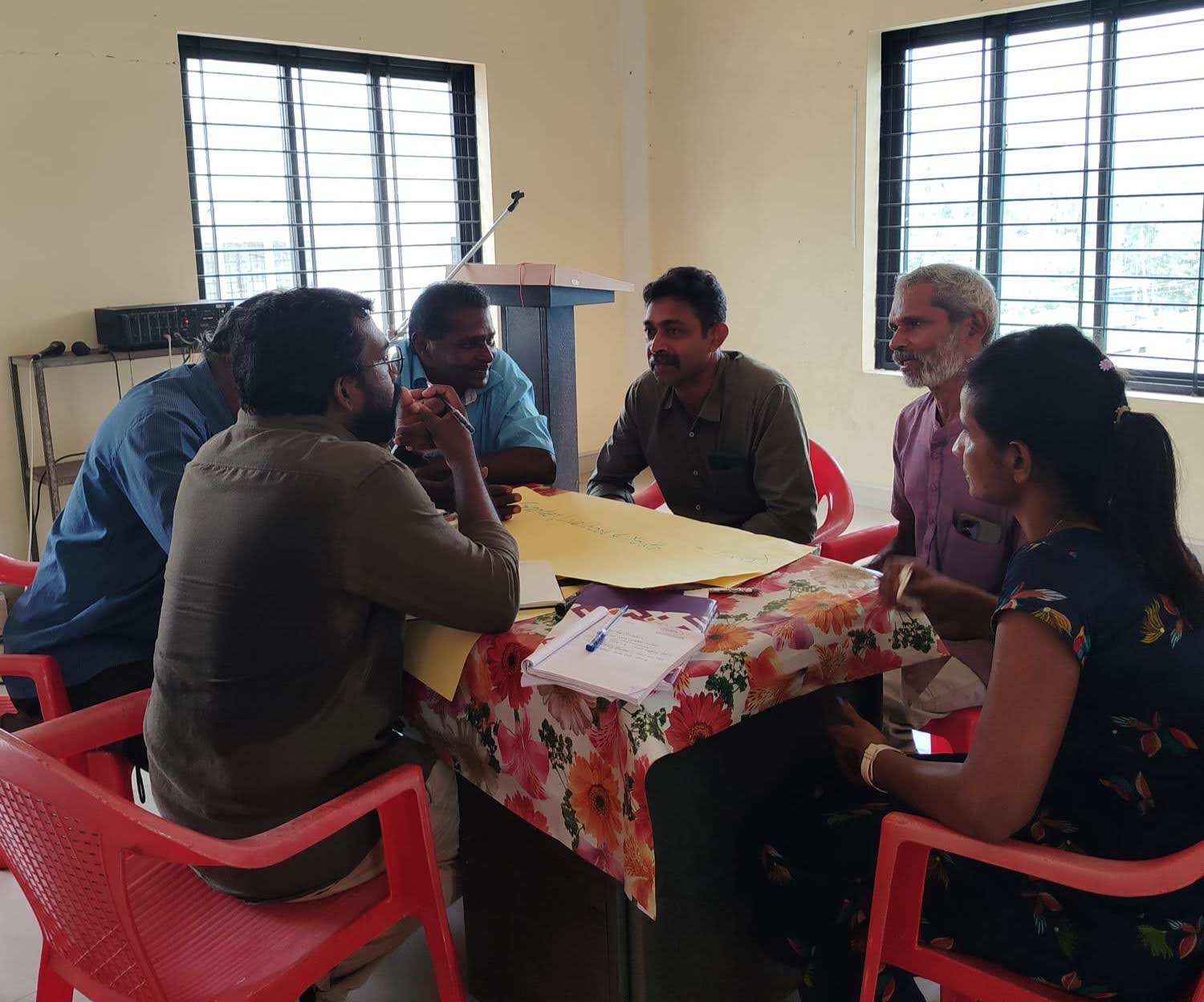
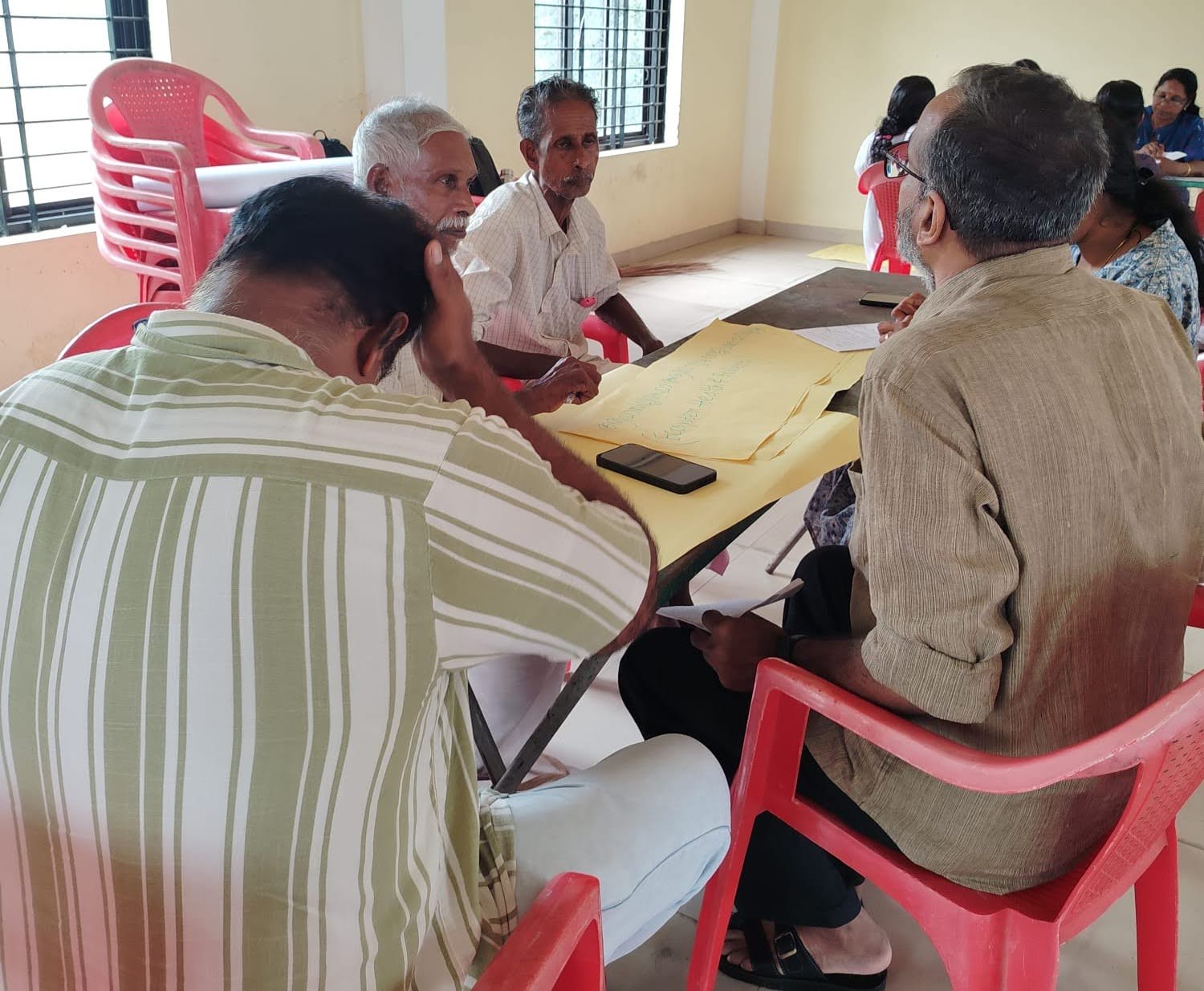
4a. Group 1 farmers’ discussion 4b. Group 2 farmers’ discussion
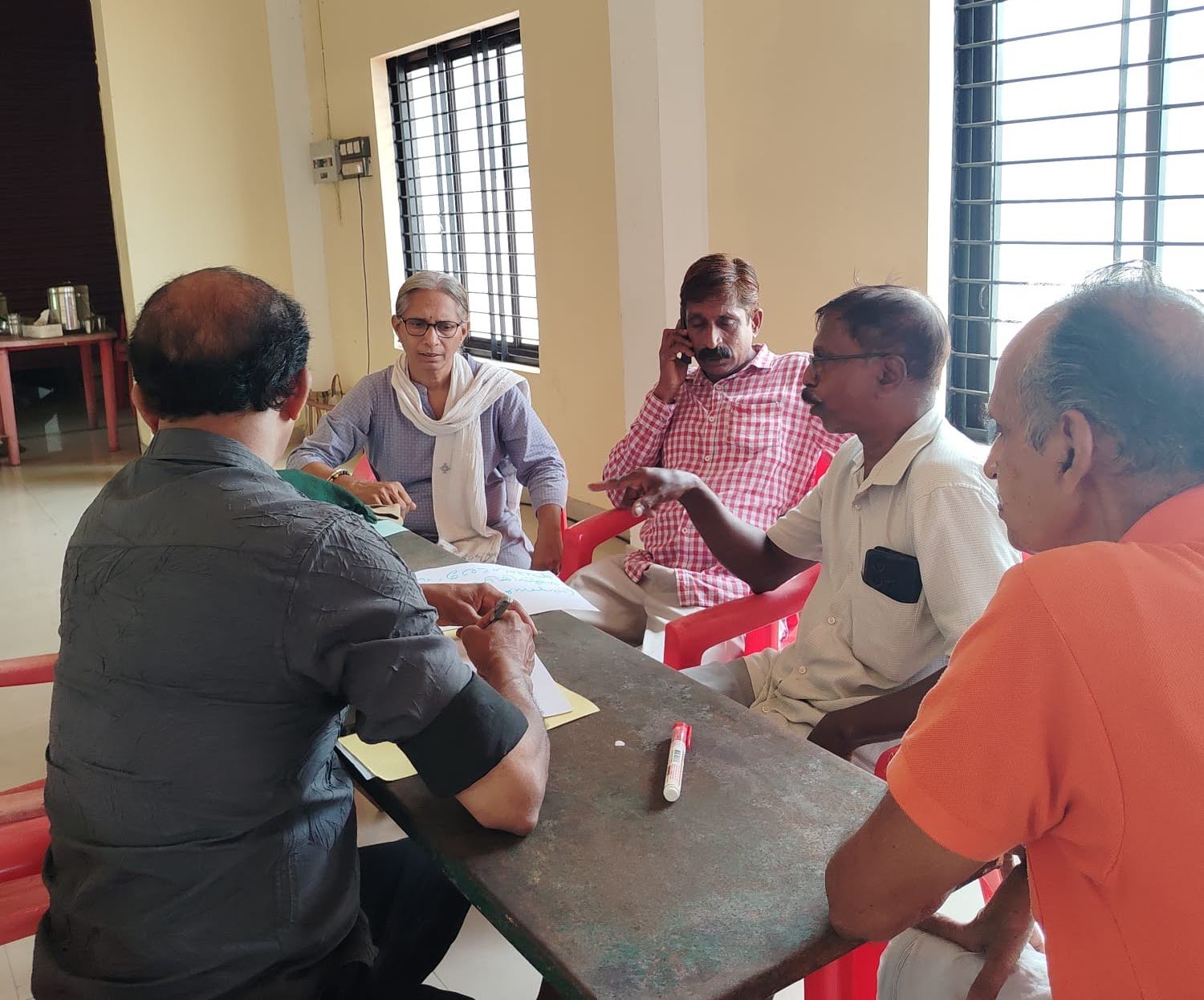
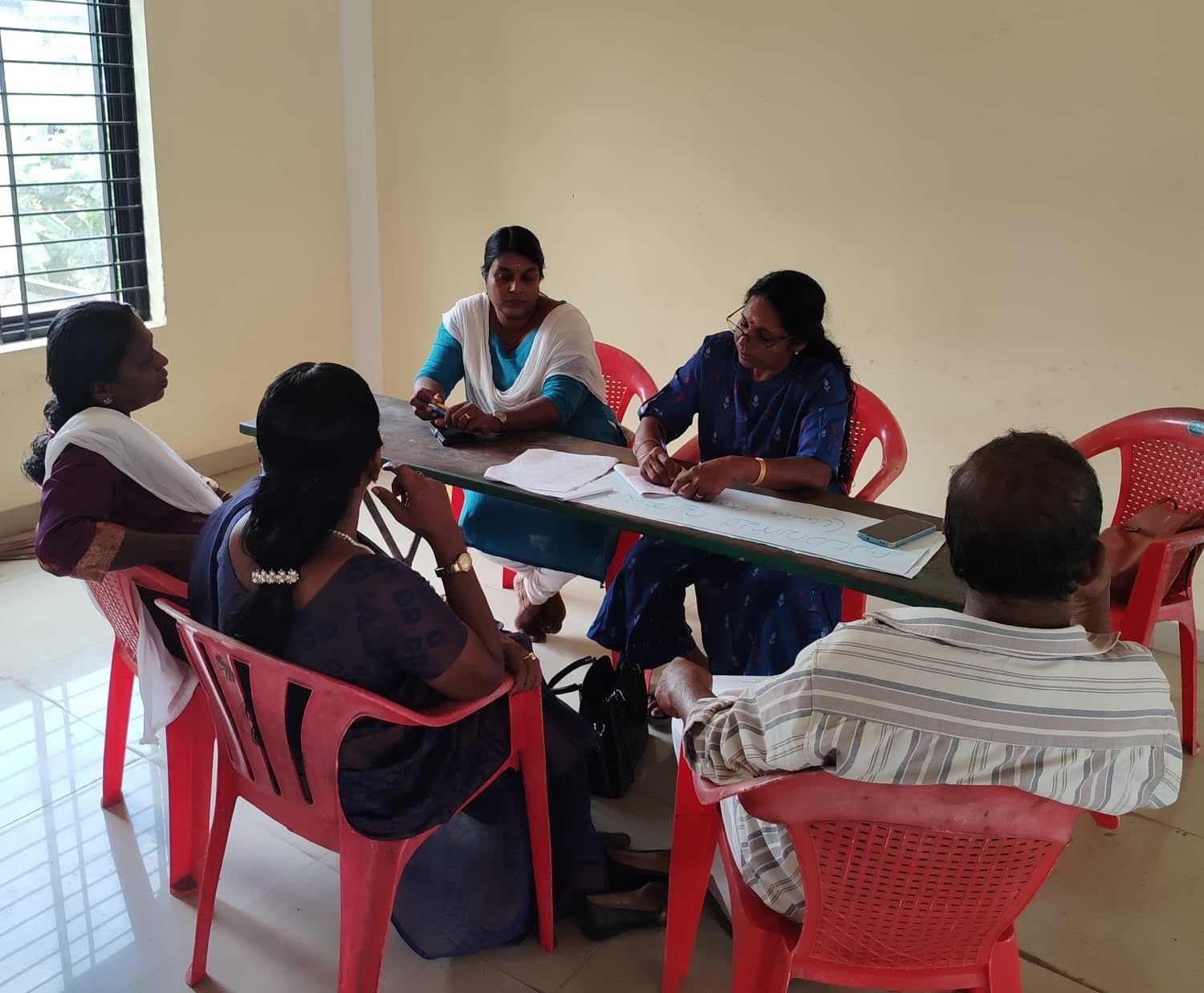
4c. Group 3 farmers’ discussion 4d. Group 4 farmers’ discussion
5. Detailed Findings from the Discussion
5.1 Climate Change and Weather Variability
- Farmers emphasized that changing weather patterns have severely disrupted farming cycles, leading to production losses of up to 50%. The major challenges are crop damage, waterlogging, and increasing disease incidence following excessive rainfall.
- The traditional agricultural calendar (Njattuvela), once used to determine planting seasons, is no longer reliable because monsoon patterns have shifted significantly.
- If favourable weather occurs during a few critical months, it supports production for the entire year. However, after February, temperatures become extremely high, resulting in severe water scarcity, increased pest attacks, and widespread viral diseases in vegetable crops. Earlier, viral diseases affected only a small proportion of crops, but they now affect up to 50% in some cases.
- Farmers are experiencing both extremes of climate: heavy rainfall causes waterlogging, crop rot, and fungal diseases, while prolonged heat causes drought, water scarcity, viral diseases, and pest infestations.
- Weather has become highly unpredictable, with prolonged heavy rainfall followed by intense heat. As a result, even climate-resilient crop varieties often fail to perform consistently. Farmers stated that increasingly unpredictable weather makes it difficult to rely solely on weather forecasts for cultivation planning.
- Even small climatic changes significantly affect agricultural production. Timely cultivation is critical because delayed planting results in substantial yield reductions.
- Farmers perceived that climate change, particularly rising temperatures and irregular rainfall patterns, has increased the incidence of pest infestations and fungal and viral diseases, resulting in significant crop losses and reduced productivity.
5.2 Impact of the 2018 Floods on Soil, Water and Crops
- The 2018 floods fundamentally altered soil properties by washing away fertile topsoil, depositing sediments, changing drainage patterns, and increasing soil acidity in many areas, particularly beyond Chalakudy. Farmers reported that maintaining balanced soil pH has become increasingly difficult, while groundwater depletion has emerged as another major concern.
- Earlier, crops such as bananas produced good harvests for six to eight cropping cycles. Today, farmers consider themselves fortunate if they obtain one or two successful harvests.
- After the 2018 floods, invasive weeds spread rapidly across agricultural lands, creating additional management challenges.
- Farmers observed noticeable changes in soil nutrient status and water quality following the 2018 Kerala floods, indicating long-term impacts of extreme weather events on agricultural resources.
5.3 Pests, Diseases and Snail Infestation
- Crops such as snake gourd, bitter gourd, drumstick, and several others have become increasingly difficult to cultivate because pollination has declined. Many crop diversification experiments have therefore been unsuccessful.
- Snail infestations have emerged as a major challenge in farming systems, and farmers expressed the need for effective and sustainable management strategies to control snail attacks and minimize crop damage.
- Soil acidity, increasing weed infestation, and rapidly spreading viral diseases were identified as major emerging agricultural challenges linked to rising temperatures.
5.4 Water Management and Groundwater
- Crops require adequate irrigation during summer, efficient drainage during the rainy season, and improved water storage facilities. Farmers stressed that integrated water management has become essential.
- Farmers pointed out that modern construction practices, particularly paving residential compounds with interlocking tiles, reduce groundwater recharge by preventing rainwater infiltration.
- In the 1,000-acre paddy area, cultivation depends on dewatering individual polders through pumping systems. Unreliable electricity and pump failures frequently delay cultivation and reduce productivity.
5.5 Biodiversity and Traditional Ecological Practices
- Biodiversity loss was identified as a major concern. Traditionally, household compounds included Kaavu (sacred groves), which conserved water, supported biodiversity, and provided natural pest control. Their disappearance, together with the clearing of vegetation for landscaping, has reduced pollinator populations such as honeybees and weakened local ecosystems. Farmers also expressed concern about the widespread planting of invasive exotic tree species, such as Acacia, which they believe deplete groundwater.
- Biodiversity conservation remains important because it supports water conservation, soil health, and pollinator populations. However, farmers often prioritize immediate economic survival over maintaining natural vegetation due to limited land availability.
- Excessive use of chemical pesticides has harmful impacts beyond crop production, contaminating soil and water while adversely affecting livestock, fish, and other wildlife. Farmers observed a significant decline in indigenous fish species, which they attributed in part to intensive pesticide use. They emphasized that these ecological impacts should also be considered in agricultural planning and policy.
- Urbanization, increasing vehicle use, and infrastructure development have contributed to environmental degradation.
5.6 Seeds and Agricultural Inputs
- Farmers face significant challenges in accessing reliable organic agricultural inputs. Many products marketed as organic fertilizers are reportedly adulterated. For example, rice flour is mixed with neem cake, making it difficult to trust commercially available organic inputs.
- Farmers lamented the disappearance of locally adapted traditional seed varieties. They now depend largely on commercial seeds, many of which are of poor quality, cannot withstand climate stress, and cannot be saved for future planting.
- Farmers expressed little confidence in the quality of commercially available seeds. Seeds collected from diseased plants often transmit diseases to subsequent generations. They emphasized that universities and research institutions should develop better seed systems and promote locally adapted varieties.
- Farmers highlighted that different agro-climatic regions require different seed varieties. A variety suitable for Tamil Nadu or even Palakkad may not perform well in Thrissur, demonstrating the importance of preserving locally adapted seeds.
- Farmers showed interest in reducing dependence on chemical fertilizers by promoting the use of cow urine and other organic alternatives, emphasizing the need for training and knowledge dissemination on their effective application in farming practices.
- Excessive use of chemical fertilizers has degraded soil health over time. Farmers recommended greater promotion of organic manure and other sustainable farming practices.
5.7 Extension Services and Institutional Support
- Agricultural officers generally provide useful recommendations based on soil test results. However, farmers stressed that protecting and conserving soil is more important than simply applying fertilizers.
- Farmers felt that agricultural extension services primarily promote conventional farming because officers receive limited training in organic agriculture. While government subsidies for fertilizers, pesticides, and selected crops help reduce cultivation costs, farmers would like stronger institutional support for organic farming.
- Farmers reported that timely information and advisories from the Krishi Bhavan are often not communicated effectively. They emphasized the need for better and more timely dissemination of information, and requested micro-level advisory services tailored to local climatic conditions and crop-specific needs.
- Farmers expressed dissatisfaction with the quality of subsidized agricultural machinery and inputs supplied through cooperative societies. In many cases, they are required to purchase designated products despite knowing that better alternatives exist. They recommended establishing stronger quality control and monitoring systems.
5.8 Labour Availability
Labour shortages remain severe. Farmers depend heavily on migrant workers, particularly from West Bengal, as local labour costs have increased to ₹700-₹800 per day. Participants recommended integrating MGNREGA (Thozhilurappu) workers into private agricultural activities to reduce labour shortages and cultivation costs.
5.9 Markets, Prices and Financial Risk
- Farming has become financially risky because of unstable market prices, rising production costs, and inadequate financial security. Vegetable prices have remained almost unchanged over the past decade, while cultivation costs have increased substantially.
- Paddy cultivation costs are approximately ₹45,000-₹50,000 per acre, depending on the season.
- Most produce is sold in nearby markets, and farmers face transportation challenges. They recommended better coordination and crop planning by government agencies to avoid market gluts and improve distribution.
- Farmers continue to face significant market price fluctuations, making farming financially uncertain.
5.10 Insurance and Risk Coverage
- Existing crop insurance schemes are inadequate. Compensation is generally provided only when crops are completely destroyed, while major yield losses caused by heat, drought, or other climate-related stresses are rarely covered. Farmers argued that compensation should be based on actual production losses rather than physical damage alone.
- Farmers also noted practical limitations of insurance. For example, if only 50 out of 1,000 insured banana plants are damaged, they often avoid filing claims because it complicates future claims for larger losses.
5.11 Youth Participation and Social Perception of Farming
- Farmers believe agriculture is widely perceived as a risky occupation rather than a stable profession. Consequently, young people prefer careers that provide stable incomes and greater social status.
- Farmers observed that agriculture has traditionally received little social recognition. Public appreciation improved somewhat after the COVID-19 pandemic, when food shortages highlighted the importance of farmers.
- Although farming provides independence, it still lacks financial security, discouraging youth participation. Participants believed that integrating modern technology into agriculture could make farming more attractive to younger generations by improving efficiency, productivity, and profitability.
- The farming community in Alur is predominantly composed of middle-aged and elderly farmers, indicating limited participation of younger generations in agriculture.
5.12 Mechanization, Cropping Practices and the Value Chain
- Mixed cropping requires nearly twice the management effort of monocropping because each crop has unique planting schedules, nutrient requirements, and harvesting periods.
- Farmers emphasized that agriculture now requires managing the entire value chain — from land preparation and cultivation to harvesting, transportation, and marketing — without any guarantee of fair returns. They stressed the need for climate-specific planning that integrates scientific knowledge with indigenous farming experience.
- Farm mechanization is becoming increasingly important. However, machinery designed for large farms is generally unsuitable for Kerala's small and fragmented landholdings. Farmers requested affordable, small-scale machinery better suited to local conditions.
5.13 Cooperation, Farmer Organizations and Community Support
- Farmers emphasized the importance of cooperation through farmer organizations. Collective action enables knowledge sharing, problem-solving, collective marketing, and easier access to resources.
- Participants emphasized the need for stronger community support systems, particularly for knowledge sharing, collective storage facilities, and improved marketing mechanisms for agricultural produce.
- Organizations such as Thanal, Kudumbashree, Jaiva Karshaka Samithi, and Joint Liability Groups (JLGs) play an important role in supporting farmers. Their support could be further strengthened by providing quality seeds, organic fertilizers, and other essential inputs to expand agriculture to more areas.
5.14 Soil Health and Erosion
- Soil erosion has significantly reduced soil organic carbon, negatively affecting long-term soil fertility and productivity. Soil conservation, regular soil testing, water conservation, and erosion control should become higher priorities, particularly for root and tuber crops.
- There should be stricter regulation of borewell extraction to prevent groundwater depletion. Farmers also noted that canal water and fertilizers brought from other regions may introduce invasive weeds into agricultural fields.
6. Recommendations
- Agricultural information should be made available in Malayalam and delivered through practical support systems at the panchayat level, enabling farmers to receive timely advice and technical assistance.
- Need for more soil testing facilities.
- Improve groundwater recharge through rainwater harvesting and better water conservation practices.
- Provide greater training to help farmers manage viral diseases during hot periods and fungal diseases during periods of heavy rainfall.
- Institute stricter quality monitoring of seeds, fertilizers, pesticides, and agricultural machinery to ensure reliable products.
- Encourage farmers to make better use of existing agricultural office services; panchayats and local institutions should play a more active role in agricultural development.
- Prioritize soil conservation, regular soil testing, water conservation, and erosion control, particularly for root and tuber crops.
- Strengthen community seed banks and local seed conservation initiatives to preserve indigenous varieties.
- Support collective farming organizations to improve access to markets, financial support, resources, and knowledge sharing.
- Provide greater recognition and institutional support for women's continuing role in agriculture.
- Integrate modern technology into agriculture to make farming more attractive to younger generations by improving efficiency, productivity, and profitability.
- Provide greater technical knowledge, training, and institutional support for organic farming adoption.
- Preserve traditional agricultural knowledge, including the Njattuvela calendar and other seasonal practices, combined with modern scientific information for improved decision-making.
- Promote organic manure and other sustainable farming practices to address soil degradation from excessive chemical fertilizer use.
- Revive traditional rainwater conservation practices, including methods used around coconut trees.
- Improve consumer awareness of naturally grown produce and strengthen market demand for high-quality agricultural products.
- Support dairy and poultry farming as essential components of organic and integrated farming systems.
- Strengthen organizations to providing quality seeds, organic fertilizers, and other essential inputs.
- Introduce a Minimum Support Price (MSP) for organic produce to ensure fair and stable returns for farmers.
- Establish panchayat-level procurement facilities for paddy to improve market access and reduce dependence on intermediaries.
- Enforce stricter regulation of borewell extraction to prevent groundwater depletion.
- Encourage collective farmer groups to specialize in different commodities to make marketing, aggregation, and value chain management more efficient.
- Improve timely dissemination of information and advisories from the Krishi Bhavan.
- Develop micro-level advisory services tailored to local climatic conditions and crop-specific needs.
- Introduce a guaranteed minimum income for farmers and integrate agriculture into school curricula so children understand the importance of farming and food production from an early age.
- Develop effective and sustainable strategies to manage snail infestations.
- Base crop insurance compensation on actual production losses rather than physical damage alone.
- Provide affordable, small-scale farm machinery suited to Kerala's small and fragmented landholdings.
- Improve government coordination and crop planning to avoid market gluts and improve distribution of produce.
7. Key Observations
• The farming community in Alur is predominantly composed of middle-aged and elderly farmers, indicating limited participation of younger generations in agriculture.
• Farmers perceive climate change as a major threat to agriculture, particularly through rising temperatures, erratic rainfall, and the increasing occurrence of pests and diseases.
• Extreme weather events, especially the 2018 Kerala floods, have had long-lasting impacts on soil fertility and water quality, affecting agricultural productivity.
• Pest infestations, particularly snail attacks, have emerged as an important concern requiring effective and sustainable management strategies.
• There is a growing interest among farmers in adopting organic and low-chemical farming practices, including the use of cow urine and other natural inputs.
• Farmers recognize the importance of collective action and expressed the need for stronger community networks for knowledge sharing, storage, and marketing of agricultural produce.
• Existing support mechanisms are perceived as inadequate, with farmers emphasizing the need for greater government assistance through financial support, technical guidance, and climate-resilient agricultural policies.
• The participatory nature of the FGD enabled farmers to openly discuss their challenges and collectively identify practical solutions and priority interventions for improving agricultural resilience.
• The discussions highlighted the interconnected nature of environmental, economic, and institutional challenges faced by farming communities in the region.
8. Conclusion
Overall, the farming systems in Alur are increasingly vulnerable to climate variability, underscoring the need for integrated approaches that combine climate adaptation, sustainable farming practices, community participation, and institutional support. Farmers observed that agriculture receives much stronger institutional support in many developed countries; under current conditions, one cultivation season may be successful, another average, and another a complete failure. Sustained, coordinated action across government agencies, research institutions, NGOs, and farmer organizations remains essential to strengthen the resilience of Alur's farming community against climate-related risks.