Visit Date: 04.06.2026
1. Introduction
The Climate Resilient Agriculture project aims to strengthen Climate Resilient Agriculture (CRA) practices across Tamil Nadu, Kerala, Maharashtra, and Bihar. The project focuses on building alliances among farmers, FPOs, research institutions, agri-business firms, and government departments. Key objectives include identifying grassroots-level agricultural and climate-related challenges through Focused Group Discussions (FGDs), promoting capacity-building programmes, developing pilot CRA models, and facilitating convergence with existing government schemes.
As part of the Climate Resilient Agriculture Project, Abdul Suban and Anushree, researchers from CAG, visited the following departments in Chennai on 2nd June 2026:
• Agriculture Engineering Department, Nandanam, Chennai
• Agriculture and Farmers Welfare Department, Chennai
2. Department Visit Minutes
2.1 Agriculture Engineering Department, Nandanam, Chennai
Officers Met:
• Tmt. N. Sithambara Chithra, B.E (Ag) – Executive Engineer (HRD & e-Vaadagai Scheme)
• Tmt. R. Dhanalakshmi, B.E (Ag) – Executive Engineer (PMKSY)
2.1.1 Meeting with Executive Engineer – e-Vaadagai Scheme
The team met Tmt. N. Sithambara Chithra at the Agriculture Engineering Department. She is responsible for manpower planning, training programs, and the e-Vaadagai Scheme.
During the interaction, she provided an overview of various government schemes related to agricultural machinery. She highlighted that the department currently has only 500 tractors under the scheme, while the demand is continuously rising. She emphasized the urgent need to increase the number of tractors to meet farmers' requirements.
She also mentioned that she is responsible for desilting small canals in the Nagapattinam region. She stressed that only farmers possessing a valid Farmer Identity Card are eligible to avail government schemes and subsidies.
She briefed the team about the different machinery available under the e-Vaadagai Scheme, including Tractors, Power Weeders, Power Tillers, Rock Dust Removers, Solar Pumps, and other modern equipment.
2.1.2 Meeting with Executive Engineer – PMKSY
The team then met Tmt. R. Dhanalakshmi, Executive Engineer responsible for PMKSY schemes. She oversees all activities related to water management, water harvesting, and irrigation under PMKSY.
She explained in detail about the PDMC (Per Drop More Crop) scheme, which offers significant subsidies for drip irrigation and sprinkler systems. She also emphasized the importance of having a valid Farmer Identity Card to avail benefits under these schemes.
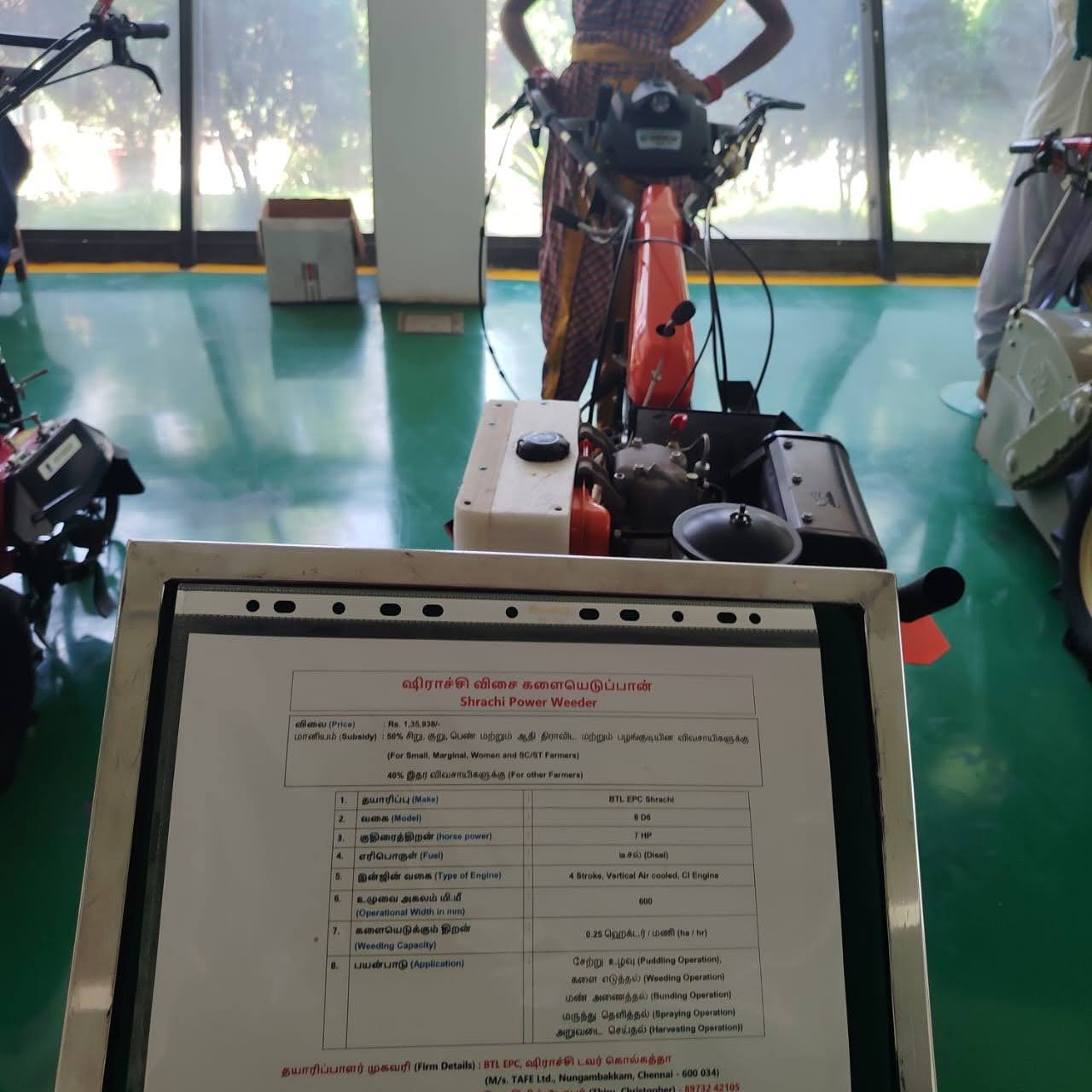
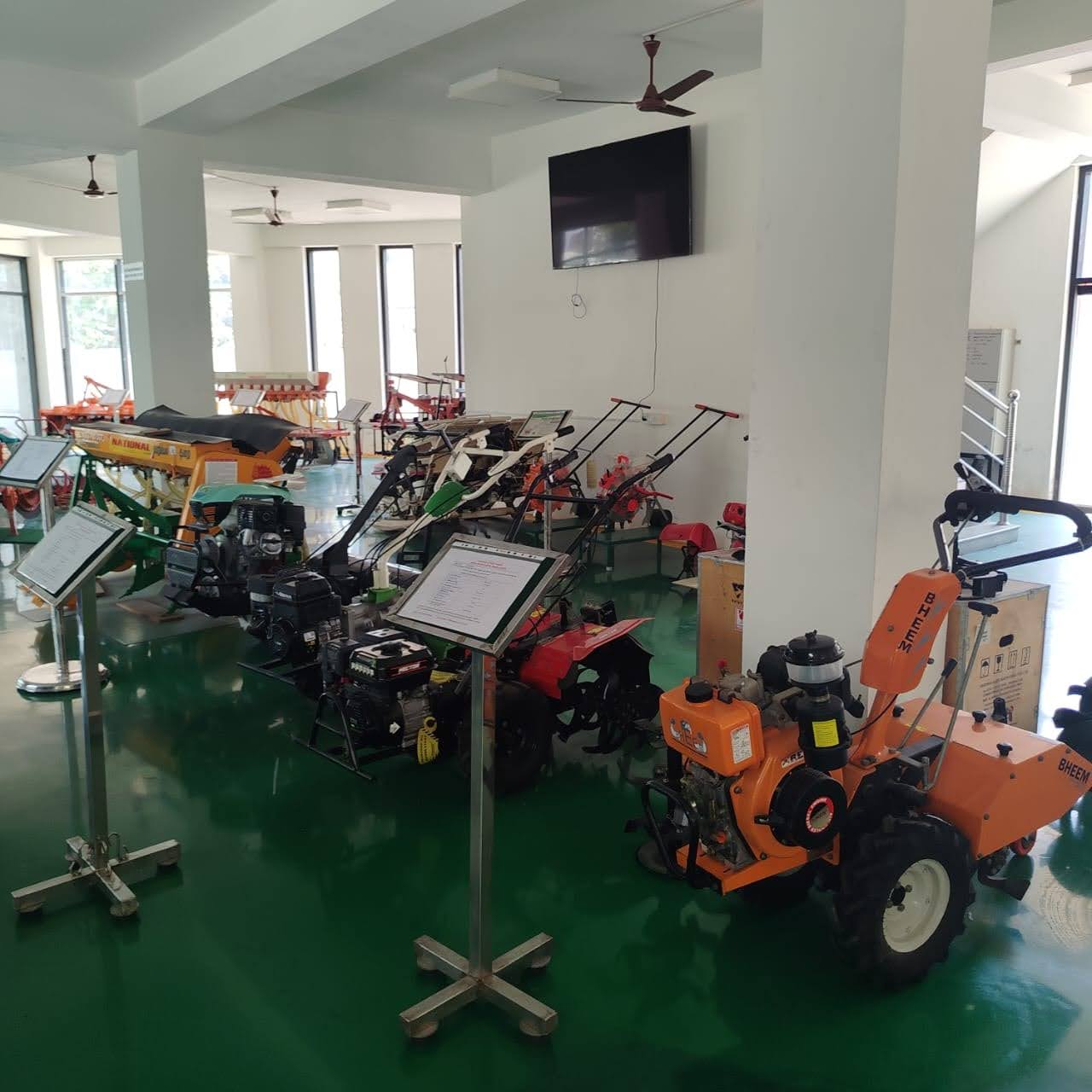
1a.Multiple agriculture machines for sale 1b.Power Weeder Equipment
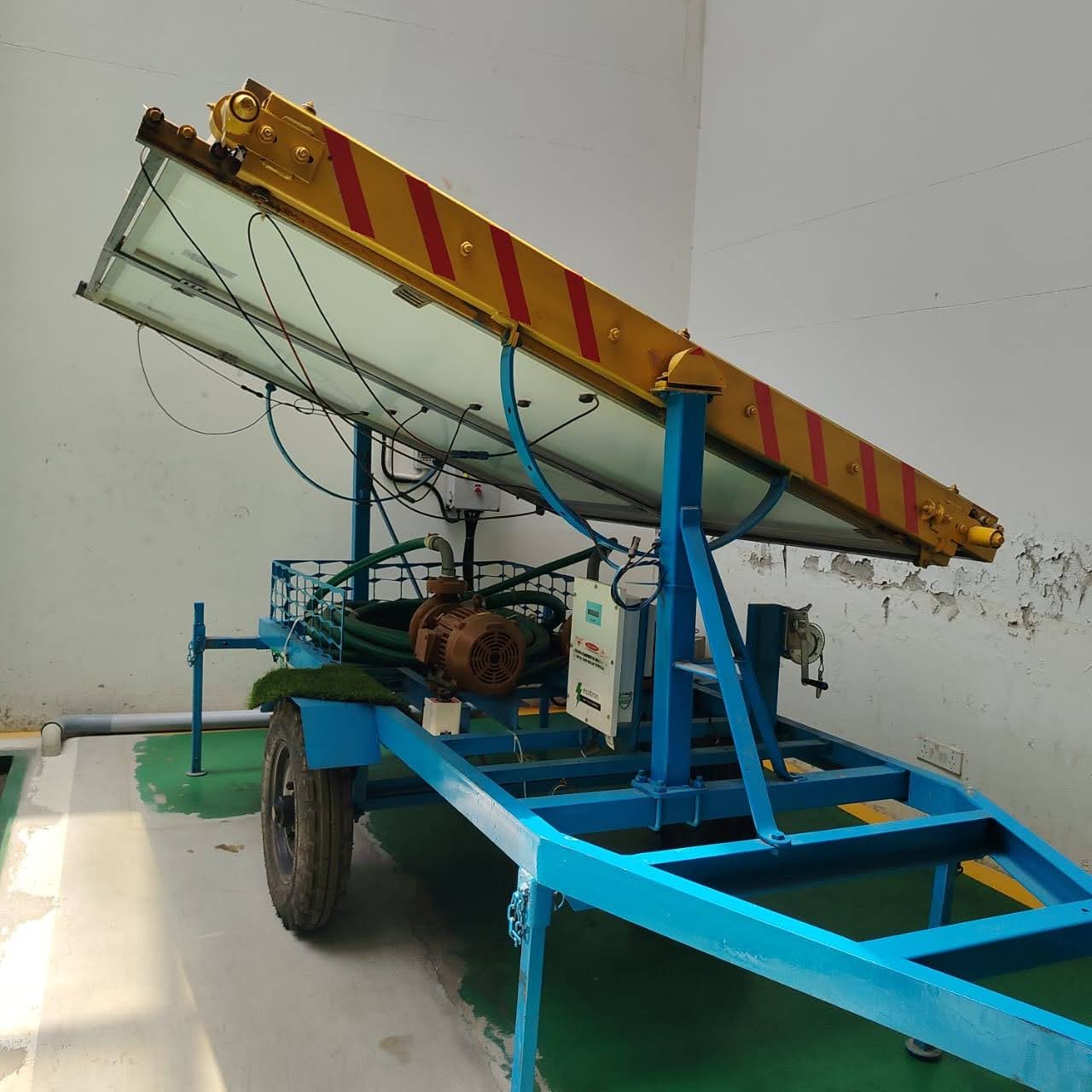
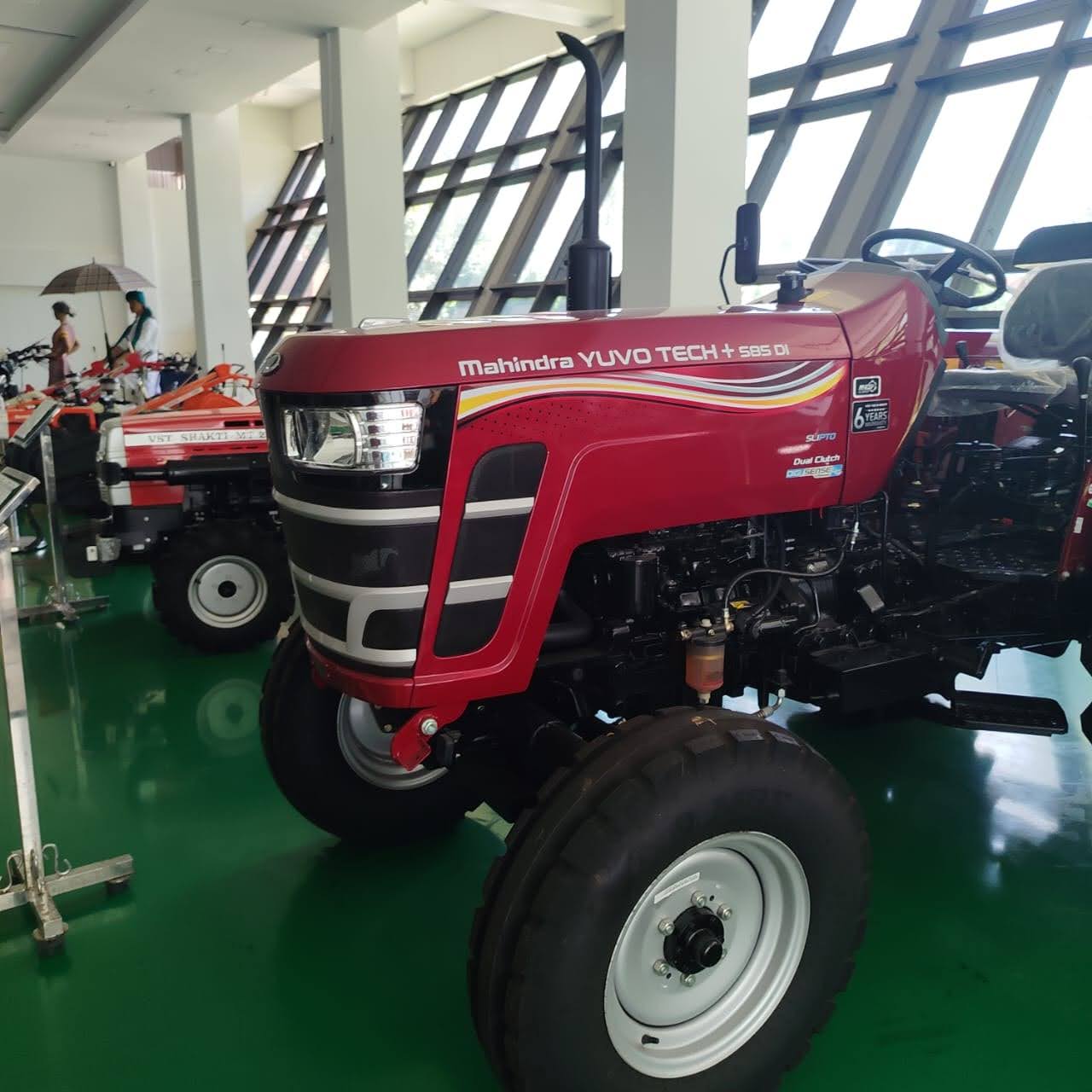
1c. Solar powered Mobile water pump 1d. Heavy tractor given on rent
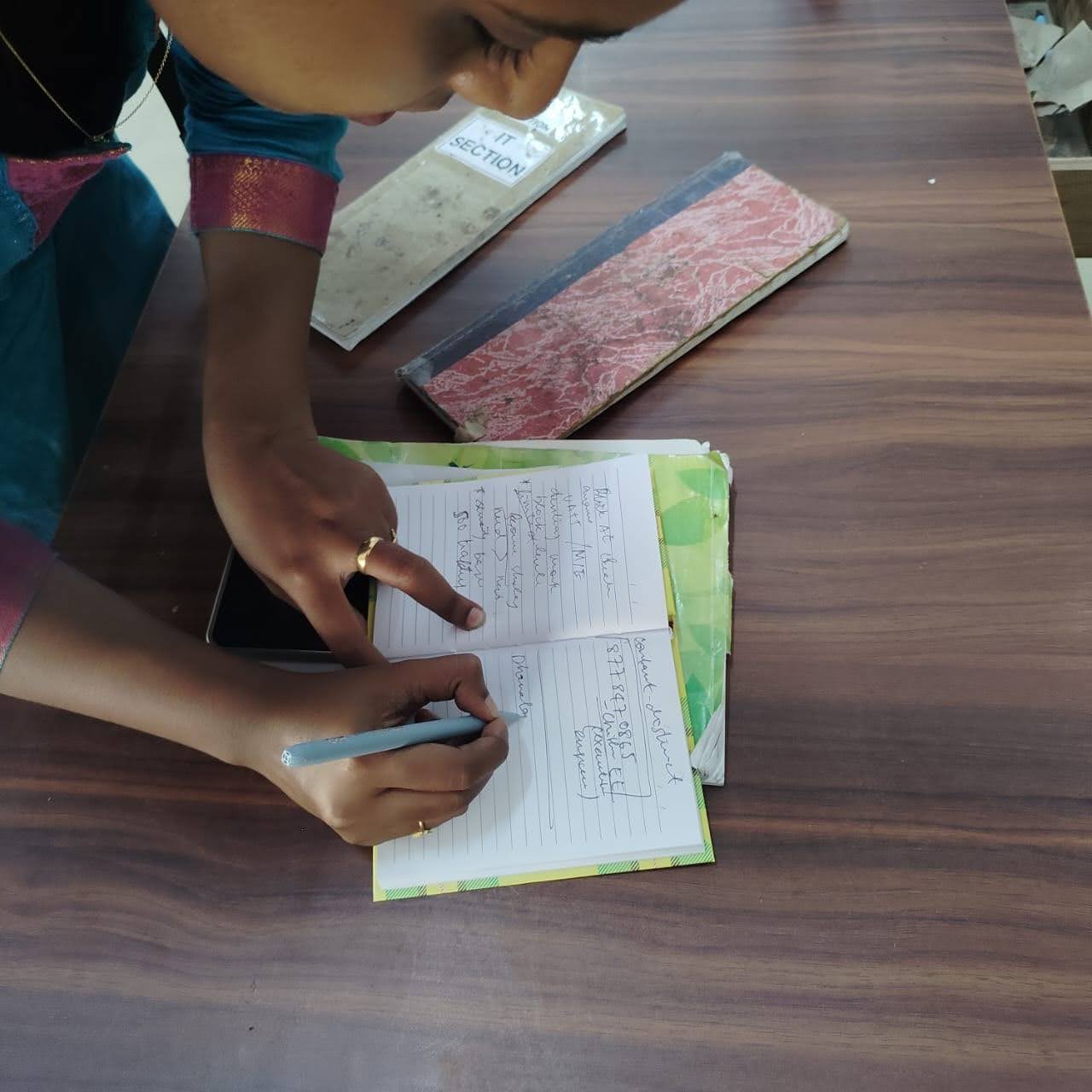
1e. Notes taken during Interactions at the
Agricultural Engineering Department
2.2 Agriculture and Farmers’ Welfare Department, Chennai
Officers Met:
• Deputy Director of Agriculture (Climate Resilient Agriculture) – Mrs. Sumathi
• Agriculture Officer (Climate Resilient Agriculture) – Mr. Lokesh
2.2.1 Meeting with Deputy Director Mrs. Sumathi – Climate Resilient Agriculture (CRA)
The team met the Deputy Director responsible for implementing schemes related to Climate Resilient Agriculture. She is responsible for overall administration of schemes related to this. The officer explained that her team has conducted multiple awareness campaigns to educate farmers about various CRA schemes, including:
• Chief Minister's Mannuyir Kaathu Mannuyir Kaappom Scheme (CM MK MKS) – Flagship scheme promoting organic farming, soil health, Integrated Farming System (IFS), vermicompost, and traditional seeds.
• Hill Farmers Development Scheme – New scheme for hill area farmers focusing on sustainable and climate-friendly agriculture.
• Watershed Development Component (PMKSY) – TAWDEVA – Focuses on rainwater harvesting, farm ponds, soil conservation, and drought proofing.
• Kalaignarin All Village Integrated Agricultural Development Programme – Village-level development of fallow lands, water sources, and micro irrigation.
• National Mission on Natural Farming – Promotes chemical-free natural farming practices.
• Alternative Crop Cultivation & Summer Ploughing – Encourages millets, pulses, and moisture conservation practices.
• Climate Resilient Redgram Transplantation Technology – Promotes drought-tolerant redgram varieties with improved methods.
The department follows a fair distribution policy to ensure benefits reach as many farmers as possible. For example, if there is a ₹50,000 subsidy for constructing a farm pond under the Rainwater Harvesting Scheme, and Farmer A has already availed this benefit last year, then the department will reject Farmer A's application this year. Instead, they will approve the subsidy for other eligible farmers such as Farmer B or Farmer C who have not yet received the scheme. This way, benefits are equitably distributed.
The officer was very receptive and requested the team to send an official email for any further detailed information or collaboration.
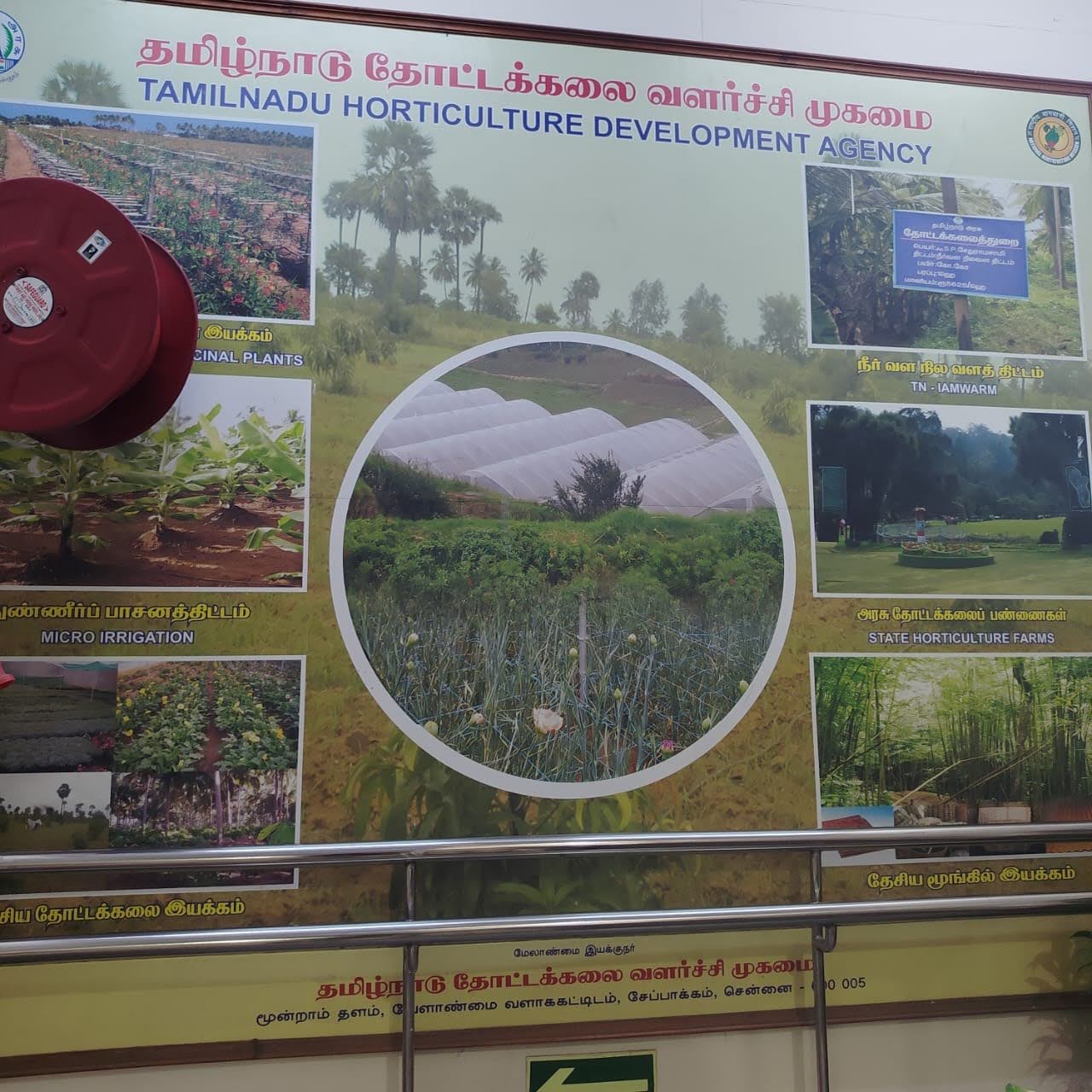
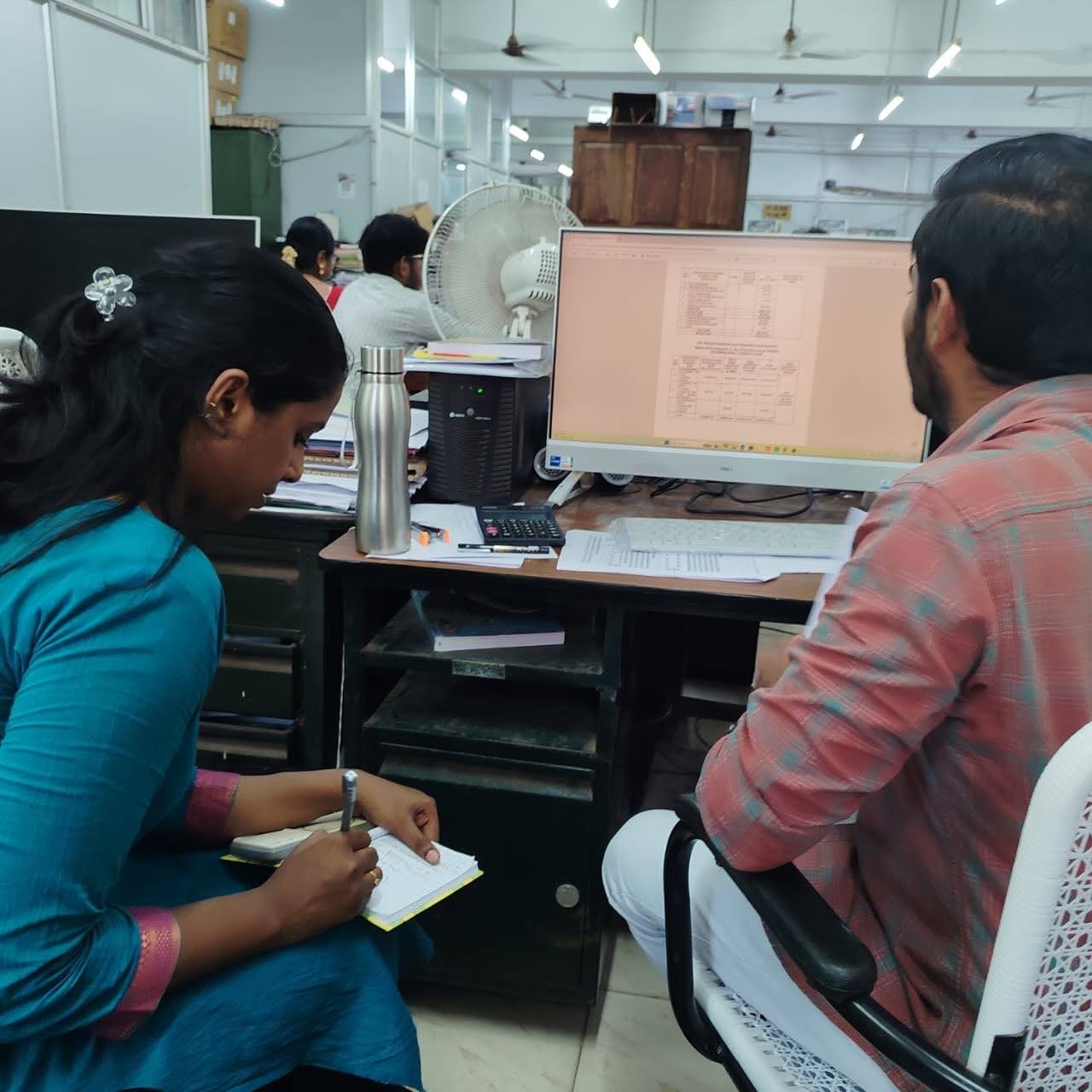
2a.Poster representing various schemes implemented 2b. Interaction with Agriculture officer Mr. Lokesh by the Agriculture & Farmers’ welfare department. agriculture
2.2.2 Meeting with Agriculture Officer Mr. Lokesh – Climate Resilient Agriculture
The team was then directed to the Agriculture Officer, who briefed them about the seven schemes mentioned above, allocated under Climate Resilient Agriculture for the current year.
He further provided his contact details for all future clarifications and plans.
3. Policy and Scheme Observations
The following observations consolidate policy- and scheme-level insights gathered from the meetings with government stakeholders held to date.
3.1 Agriculture Engineering Department
The Executive Engineer responsible for implementing the e-Vadagai scheme walked the team through its functioning and operations.
The scheme provides rental farm machinery to farmers, and officers confirmed it has strong demand and uptake on the ground. However, supply falls significantly short of need — for example, the government currently operates 500 tractors against an estimated demand of 5,000, a 10x gap that directly affects scheme effectiveness and creates visible digital lags in availability tracking on the platform.
A key concern raised was the Farmers Registry, a mandatory database that will be the entry point for all subsidy and beneficiary activities related to agricultural mechanisation. Officers noted that block-level officials are currently conducting door-to-door registration drives.
There is a clear scope to build awareness among farmers about the registry, its importance, and the consequences of not registering.
3.2 Deputy Director of Agriculture & Team – Agriculture and Farmers Welfare Department
The Agriculture Officer presented an overview of the schemes under their purview, covering climate resilience and farmer welfare:
• Tamil Nadu Millet Mission – Promotes cultivation of drought-resistant traditional millets, including samai, Thinai, and Varagu, with support for farmer groups and Custom Hiring Centres (CHCs).
• National Mission on Natural Farming (NMNF) – Supports a shift to chemical-free, nature-based farming through livestock integration, biomass mulching, and natural bio-inputs to reduce cultivation costs and restore soil health.
• Registered farmers receive ₹15,000 per hectare per year for three years to establish on-farm input production infrastructure.
• Bio-input Resource Centres (BRCs) are being set up across districts including Ariyalur, Coimbatore, Cuddalore, Dharmapuri, and Dindigul.
• Certification is handled by the Tamil Nadu Organic Certification Department (TNOCD), which acts as a Regional Council certifying Local Farming Groups under the Natural Farming Certification System.
• Micro Irrigation Scheme – Subsidises drip and sprinkler irrigation equipment and absorbs the 12% GST on behalf of farmers to promote efficient water use.
• Climate Resilient Integrated Farming System (IFS) – Integrates crop cultivation, livestock, fishery, and agroforestry to stabilise farmer incomes and build resilience to extreme weather. Promoted under the Rainfed Area Development (RAD) component of the National Mission for Sustainable Agriculture (NMSA) and NICRA, with technical support from State Agricultural Universities (SAUs) and Krishi Vigyan Kendras (KVKs). Active demonstration projects are running in high-risk zones such as Cuddalore. Government support includes technical training, input subsidies, and technology demonstrations to aid transition from monoculture.
3.3 GOI Beneficiary Guidelines
The team was also briefed on the government's beneficiary eligibility framework that applies across all schemes:
• The same farmer cannot receive benefits under the same scheme in consecutive years — each cycle must cover a new beneficiary.
• Two or more schemes cannot be bundled for a single farmer simultaneously.
• Every scheme has its own separate beneficiary guideline that needs to be clearly looked into.
3.4 Crop Certification
Officers clarified an important limitation regarding organic certification:
• PGS (Participatory Guarantee System) – Allows peer-certified farmers within the same community to verify each other. Export markets, especially the EU, require independent third-party certification with a documented audit trail. PGS has no independent auditor and no internationally recognised accrediting body, so it fails that test.
• NPOP (National Programme for Organic Production) – Qualifies because it uses accredited independent inspection agencies and mirrors international standards. India also has a mutual recognition arrangement with the EU, so NPOP-certified produce enters without re-certification.
3.5 Monitoring & Evaluation Framework within the State
Scheme monitoring follows a bottom-up structure beginning at the block level and escalating upward through district offices to the head office in Chennai.
4. Action Points
4.1 On Awareness of Farmers Registry
• Conduct FGDs at the village/block level to assess current awareness levels and identify farmers who are yet to register.
• Develop simple IEC material (pamphlets, local-language explainers) covering what the registry is, why it matters, and the consequences of not registering.
• Support block-level officials in their door-to-door registration drives by mobilising farmers in project villages.
• Set up a channel to capture on-ground bottlenecks or grievances faced by farmers during registration and relay these to the Agriculture Engineering Department.
4.2 On Crop Certification
• Run awareness sessions for farmers and FPOs on the difference between PGS and NPOP, particularly for groups interested in export markets.
• Facilitate linkages between interested farmer groups/FPOs and the Tamil Nadu Organic Certification Department (TNOCD) to help them navigate the NPOP certification process.
• Document certification journeys of early-adopter farmers as case studies to support wider capacity-building efforts.
4.3 On Private Sector Involvement
• Act as an intermediary connecting farmers/FPOs to agri-business firms for market linkages, including machinery supply under the e-Vaadagai Scheme and inputs for natural farming.
• Organise convergence workshops bringing together government departments, private players, research institutions, and farmer collectives.
• Explore CSR or co-funding partnerships with private firms to support pilot CRA models developed under the project.