Date: 19.08.2025
Venue: Chennai
Chief Guest: Joint Commissioner of Police (Traffic), Mr. Bandi Gangadhar, IPS
Speakers: Mr. Bhaskaran, Assistant Commissioner, Planning, Traffic
A V Venugopal, Program Manager, ITDP
G Ananthakrishnan, Writer and Editor, formerly with The Hindu
Dr. Divyalakshmi, Assistant Professor, Sri Ramachandra Medical College
Historically, streets in Indian cities have been designed primarily to accommodate motorised transport, often neglecting the needs of vulnerable road users. Among these, children remain the most at risk, as their limited physical strength and cognitive abilities make navigating busy roads particularly challenging. The statistics are alarming — every day, 45 children lose their lives in road crashes in India.
Recognising the urgent need to create safer school environments, Citizen consumer and civic Action Group (CAG), in collaboration with the Greater Chennai Traffic Police, conducted a comprehensive study focusing on three school zones in Chennai. The findings were compiled into a report titled “Safe School Zones – Enhancing Sustainable Mobility & Creating Safe School Routes in Chennai.” The report launch event took place on August 19, 2025, bringing together students, school representatives, traffic authorities and urban mobility experts to discuss strategies for improving safety and sustainability around schools.
Ahead of the report launch, CAG organised an interactive workshop with students from five schools: Don Bosco Matriculation Hr. Sec. School, Erukkanchery, St. Gabriel's Higher Secondary School, Broadway, Sri Ramakrishna Mission Higher Secondary School, T. Nagar, The Hindu Senior Secondary School, Adyar and Madras Christian College Higher Secondary School, Chetpet. The workshop began with the screening of a video showing a school student struggling to cross a road during peak school hours, setting the tone for discussions on the realities and challenges faced by children during their daily commute.
To keep the session engaging, students were asked to express their ideas on paper, about the difficulties they encounter while commuting to school, whether by walking, cycling, using public transport, or private vehicles. The workshop ended with students voting on improvements they would like to see around their schools, such as properly maintained and continuous footpaths, segregated cycle lanes, safer pedestrian crossings, better traffic enforcement near school zones etc.
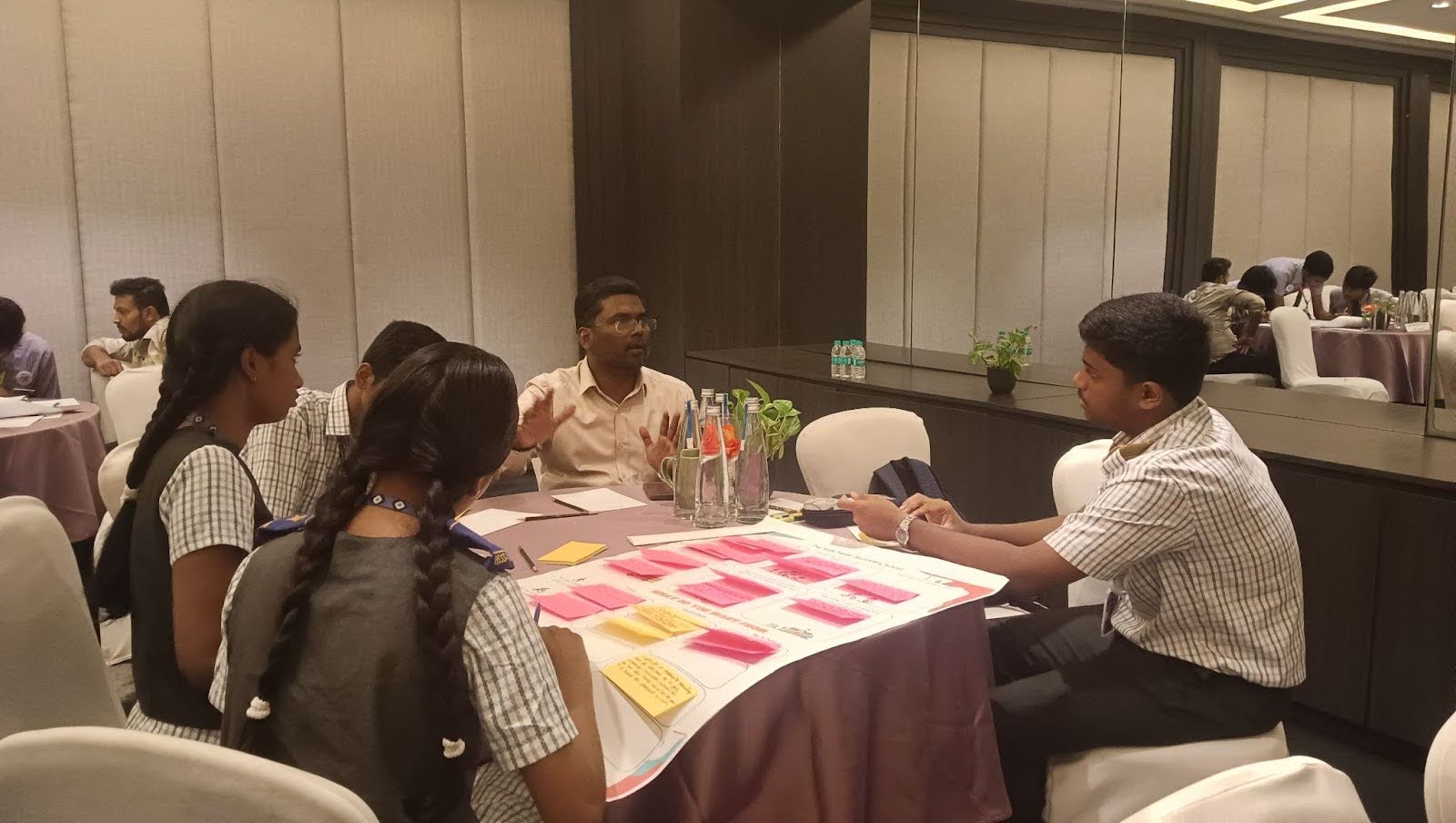
School students identifying safety and mobility issues in their school zone during the workshop.
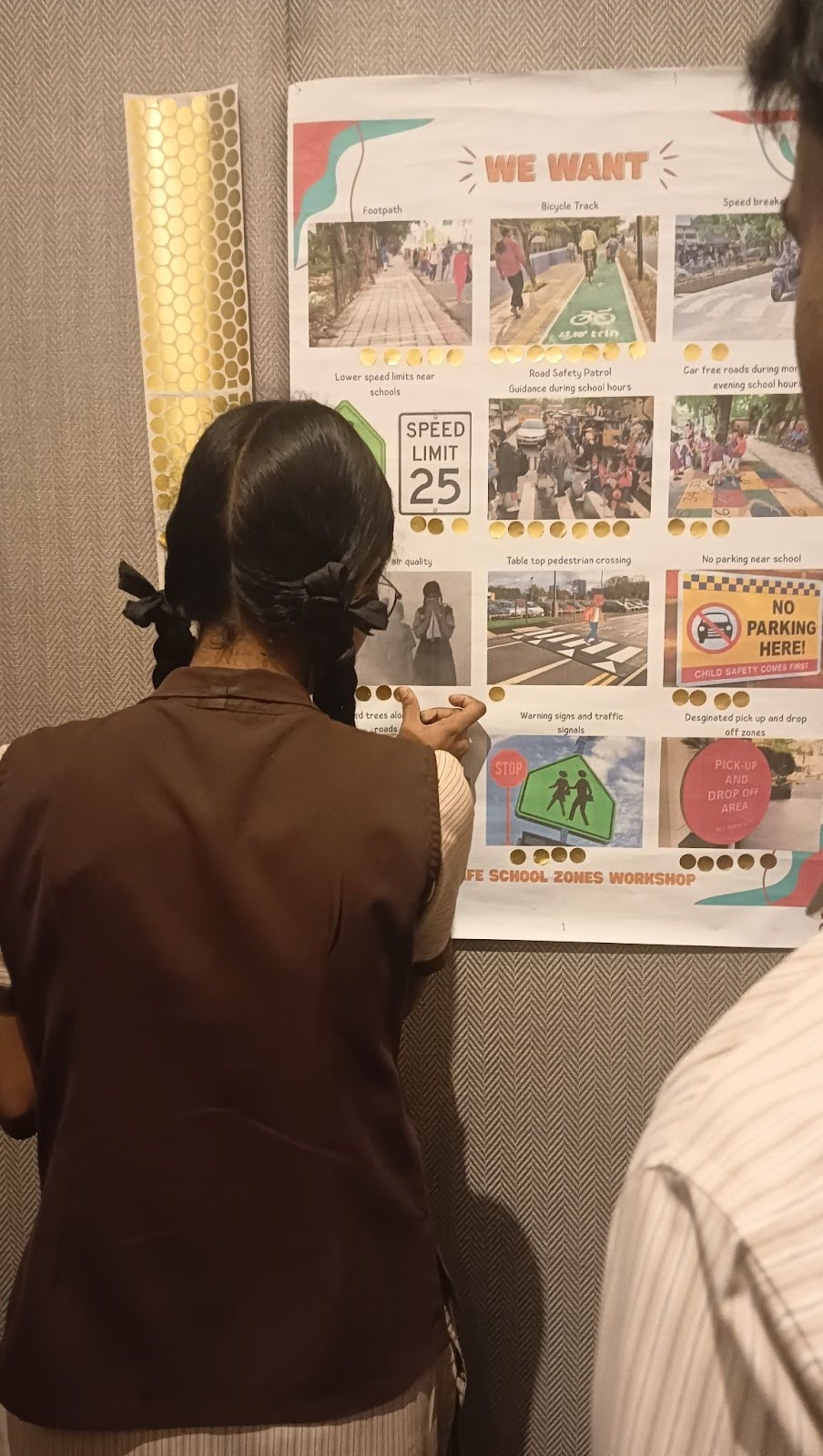
A school student voting for her preferred improvements in school zones.
The event began with Nina Subramani, Senior Researcher at CAG, outlining the day’s agenda. She highlighted CAG’s broader initiatives in sustainable mobility and introduced the objectives of the study, which aimed to identify barriers to the use of non-motorised modes of transport for school commutes.
Sowmya Kannan, Researcher at CAG, presented the detailed methodology of the study, which included road infrastructure audits in the neighbourhoods of three selected schools, perception surveys with parents, student discussions to understand travel experiences and air quality measurements around school zones. The findings revealed critical gaps in infrastructure, safety, and planning, underscoring how current conditions directly impact the health, independence, and safety of children on their way to school.
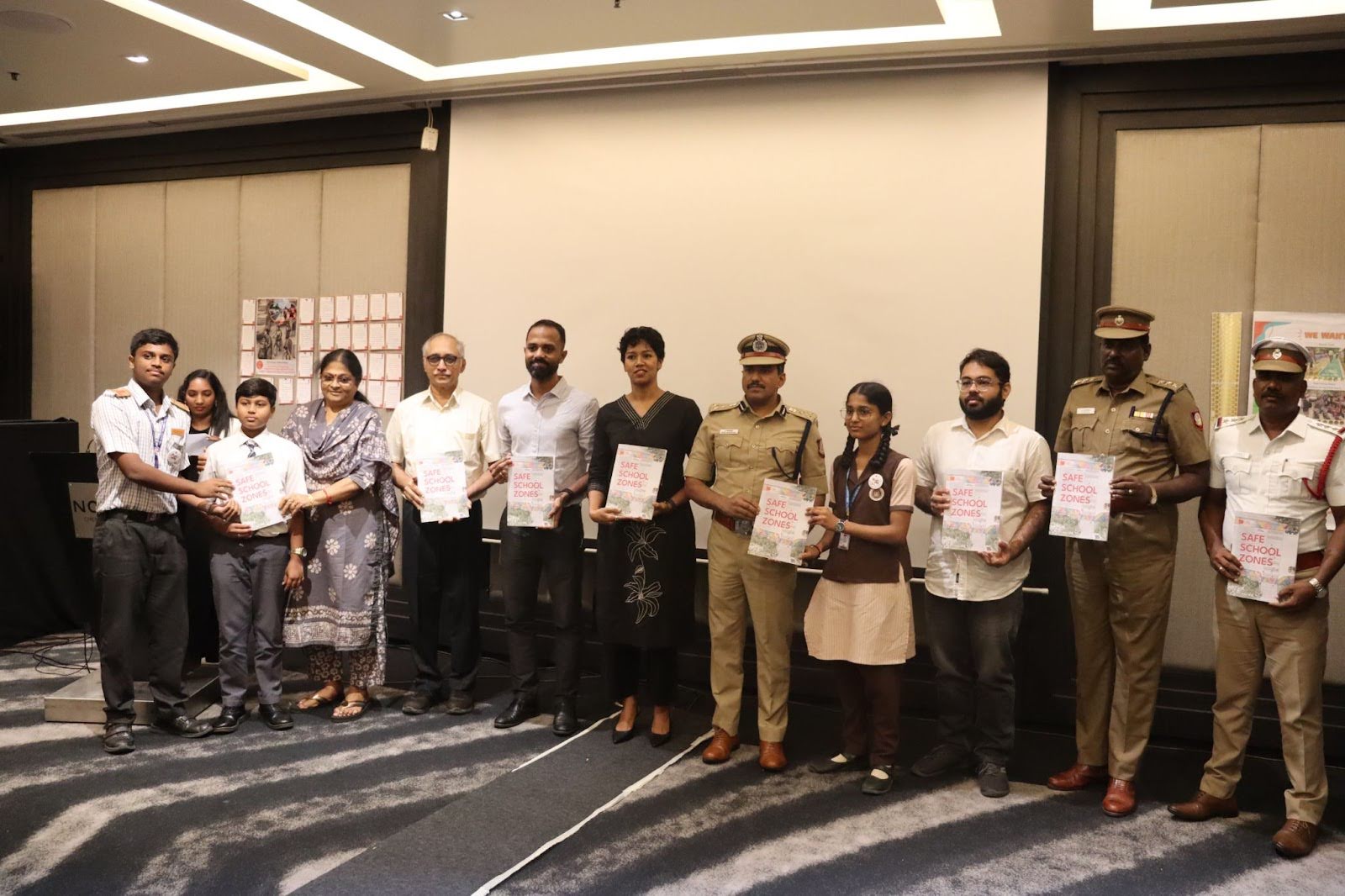
Launch of the report ‘Safe School Zones - Enhancing Sustainable Mobility & Creating Safe School Routes in Chennai’.
Mr. Bandi Gangadhar, IPS, Joint Commissioner of Police (Traffic), Chennai, delivered the special address, emphasising the urgent need to protect vulnerable road users. He noted that Chennai has recorded 1,000 road crash deaths so far this year, and 35% of these fatalities, that is about 350 lives, are pedestrians. Given that many school children walk to school, he urged that their safety must be prioritised in planning and enforcement. He also shared that the Greater Chennai Traffic Police has identified 25 schools across the city for implementing safety improvements as part of their ongoing initiatives. During the discussion, CAG’s Executive Director, Ms. Saroja, enquired whether the schools covered in CAG’s study and the report’s recommendations could be integrated into this list. Mr. Gangadhar responded positively, expressing openness to considering these schools under the initiative.
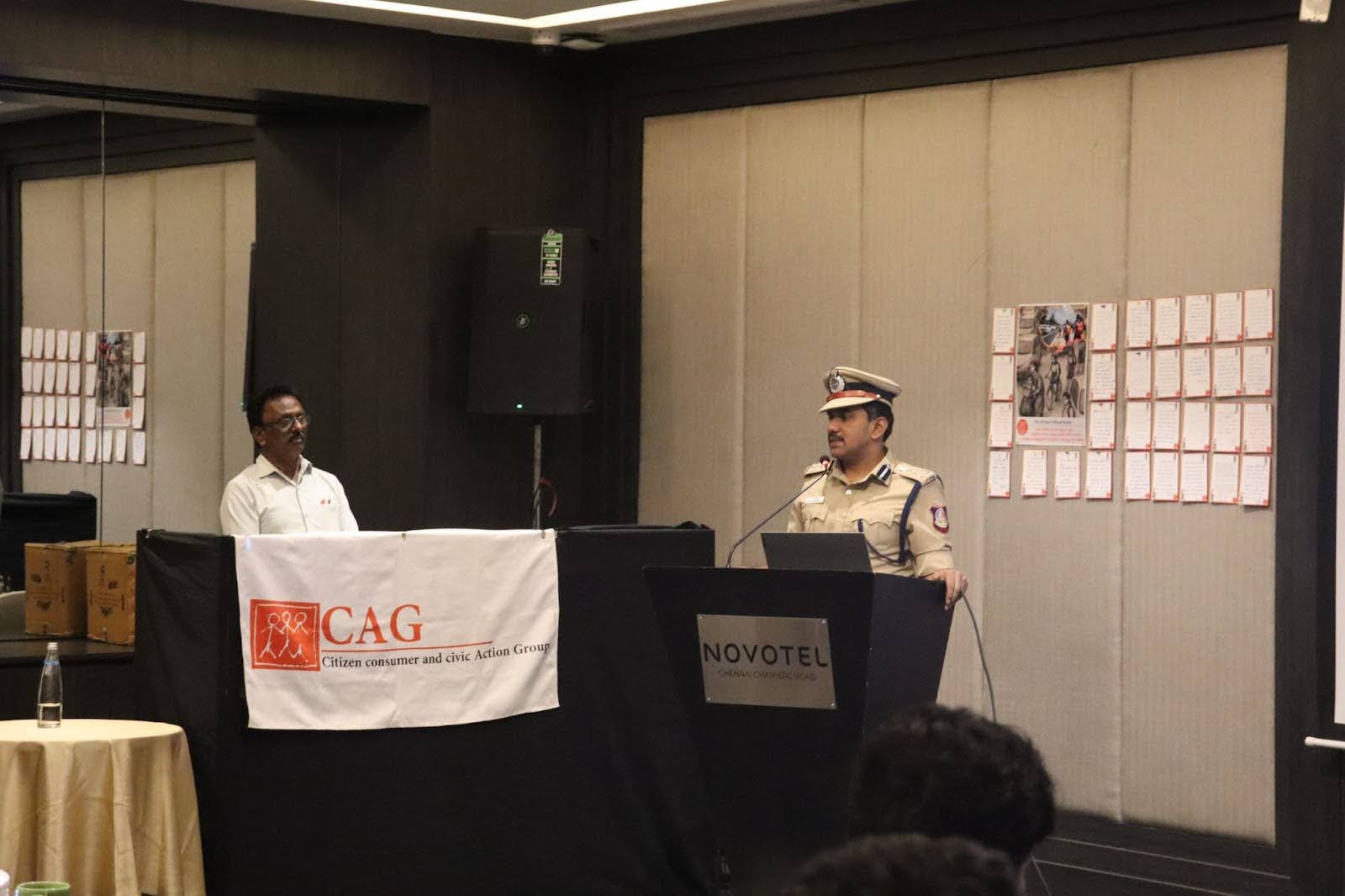
Mr. Bandi Gangadhar, IPS, Joint Commissioner of Police (Traffic), Chennai, delivering the special address
The students from the five participating schools presented their findings from the workshop, sharing challenges and suggesting improvements for their school zones. This not only amplified children’s voices but also highlighted their first-hand perspectives on what safety means to them.
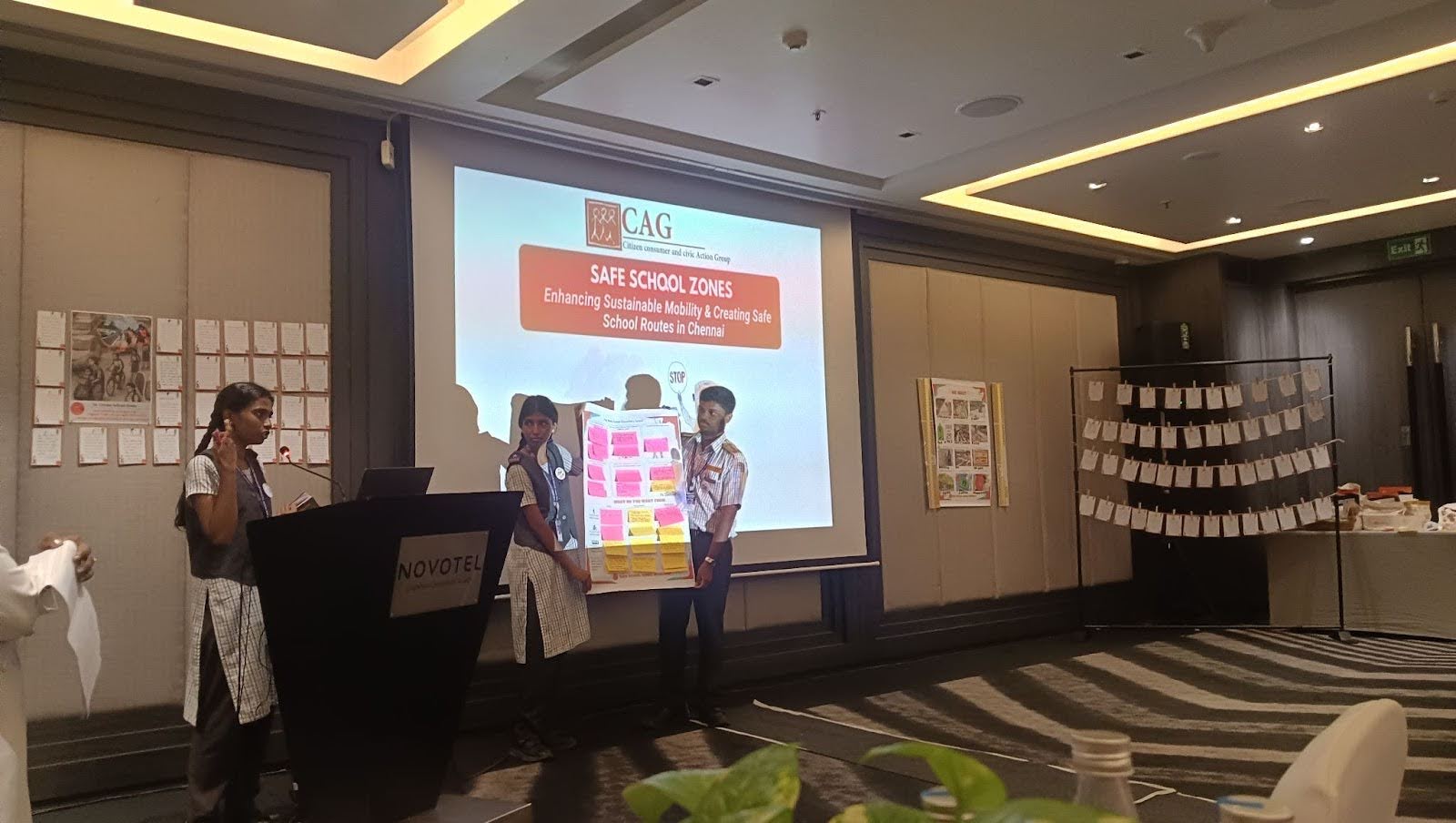
School students presenting the key issues identified in their school zone.
This was followed by insights from expert speakers. Mr. A.V. Venugopal, Programme Manager at the Institute for Transportation and Development Policy (ITDP), spoke about ITDP’s work in Chennai and Coimbatore on safe school zones. He stressed that children’s voices must guide interventions, as they experience risks firsthand.
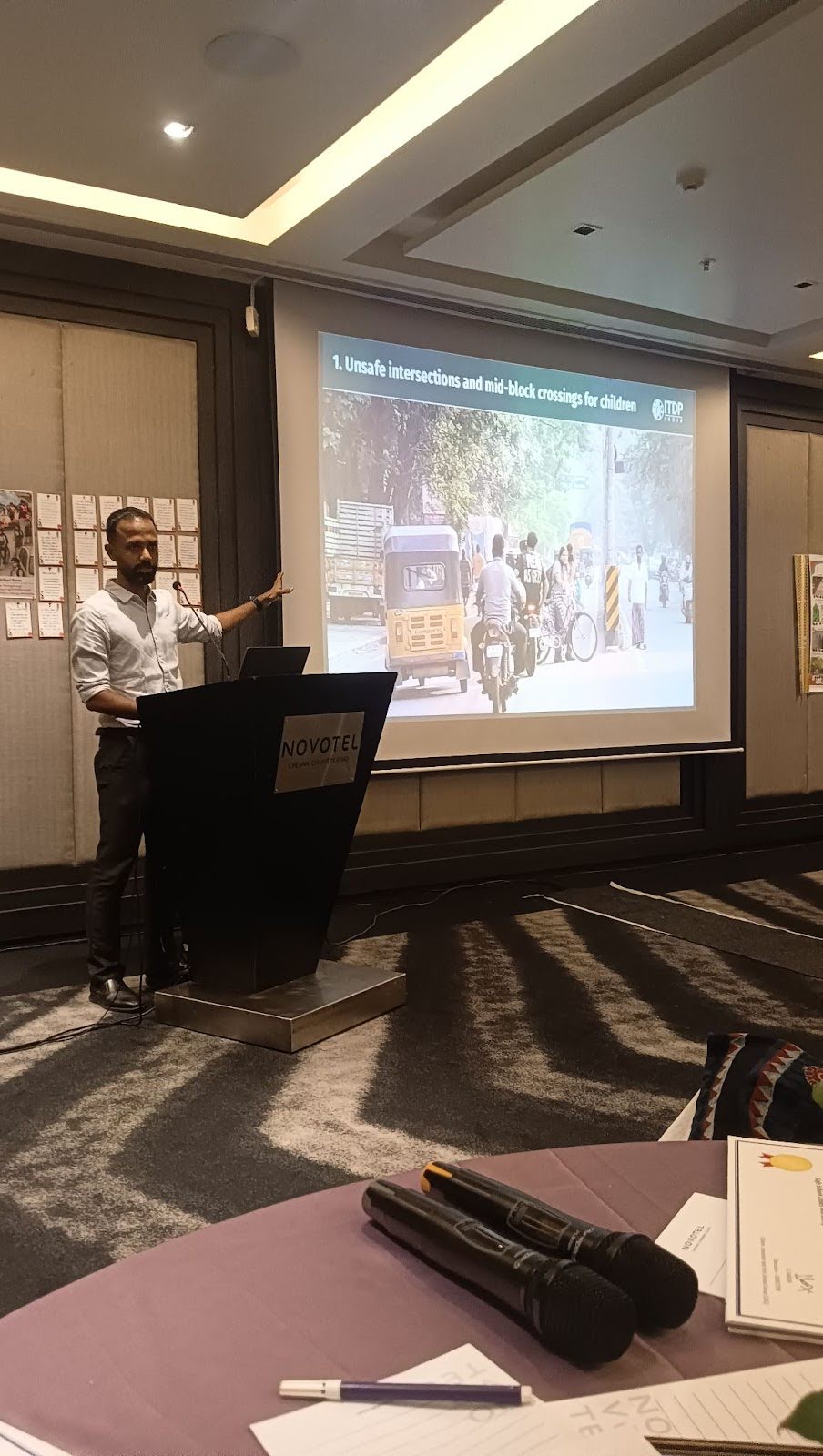
Mr. A.V. Venugopal from ITDP speaking about ITDP’s initiatives on improving school zones.
Mr. G. Ananthakrishnan, senior journalist and former editor with The Hindu, underlined that student safety is a global priority and should be treated as such in India. He reminded participants that Article 21 of the Constitution, the Right to Life, guarantees the right to unhindered pavements. He advocated for continuous, walkable footpaths, zero-tolerance policies for traffic violations and adoption of technology-based solutions to strengthen enforcement.
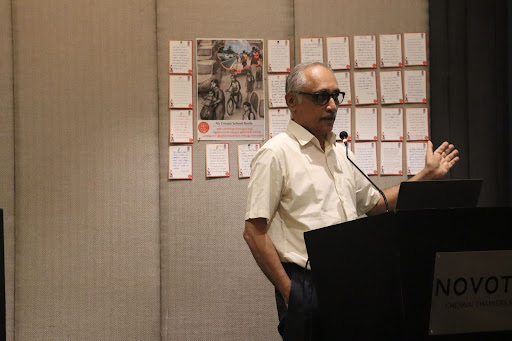
Mr. G. Ananthakrishnan delivering a presentation on the importance of safe school zones.
CAG’s study also focused on air quality around schools, recognising that children are disproportionately affected by air pollution. Vehicular emissions account for nearly one-third of particulate matter pollution in India. Children spend anywhere between a few minutes to over two hours commuting to school, increasing their exposure to pollutants. Children from middle- and low-income families face greater risks as they are more reliant on walking and cycling in unsafe conditions.
Dr. Divyalakshmi, Assistant Professor at Sri Ramachandra Medical College, during her presentation said that children are more vulnerable than adults to air pollution, as their bodies are still developing and their immune systems are weaker, making them more prone to its harmful effects.
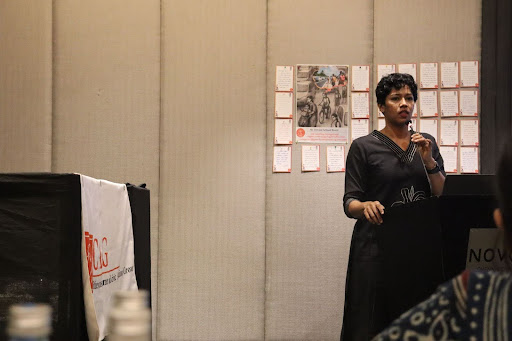
Dr. Divyalakshmi presenting on the impact of transportation on air quality.
Recognising that walking and cycling are perceived as unsafe, many parents opt for private vehicles, contributing to traffic congestion and higher emissions. To break this cycle, Mr. Bhaskaran, Assistant Commissioner (Planning, Traffic), stressed that promoting shared transport modes for school commutes, declaring school zones as non-vending areas to remove encroachments and ensuring clear, accessible pedestrian spaces are essential.
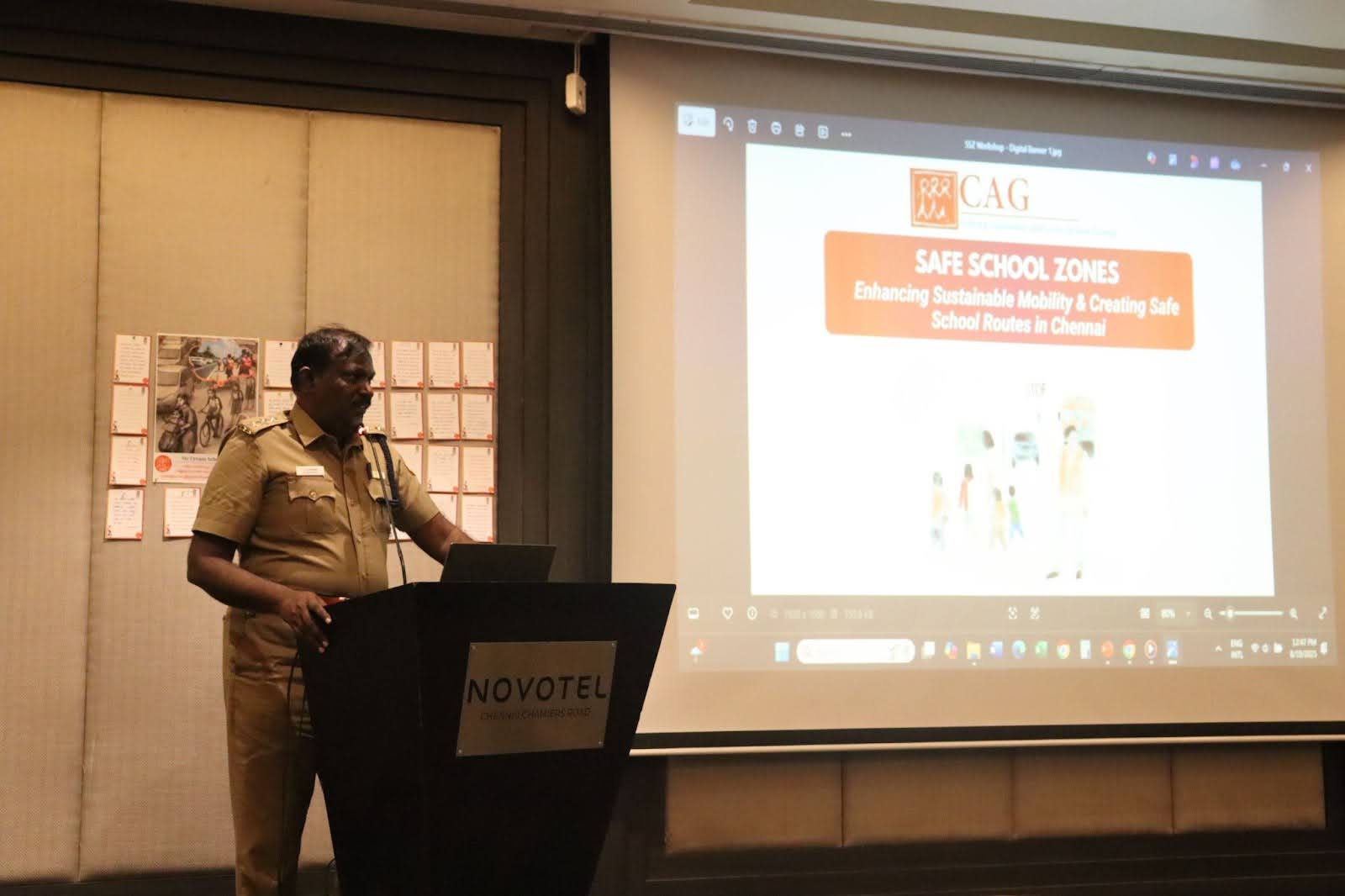
Mr. Bhaskaran speaking about the Traffic Police’s recent initiatives.
To make awareness-building more child-friendly and engaging, CAG has created a comic book designed for school children called ‘Superheroes on the move’. The comic encourages the use of sustainable transport modes and explains the actions students can take to reduce congestion and pollution. The comic book was launched during this event.
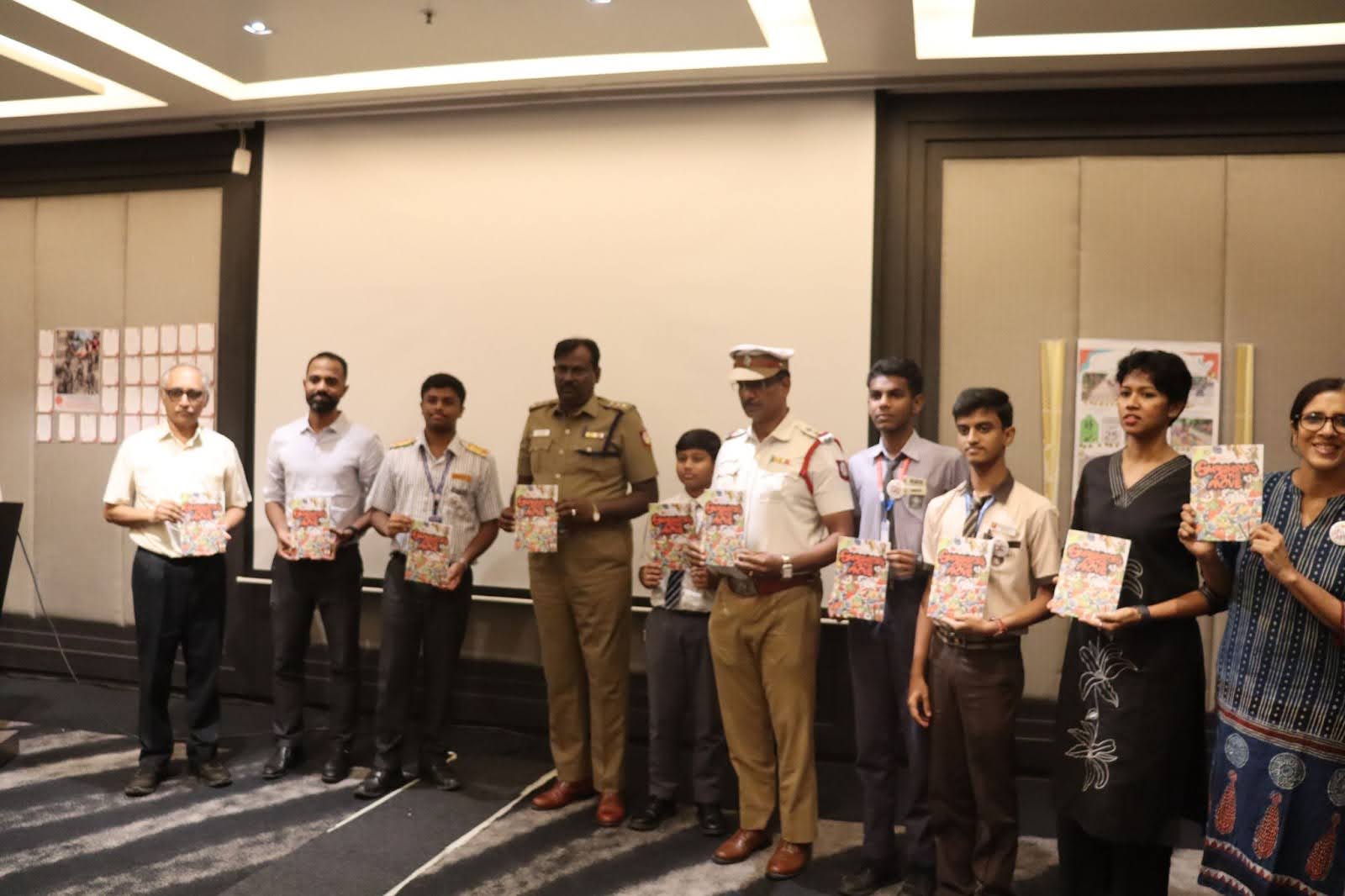
Launch of the Comic, ‘Superheroes on the move’
While the report itself outlined practical, actionable measures to improve safety and sustainability, CAG has also released a toolkit to help schools with step-by-step guidance on identifying risks, planning interventions, and implementing effective measures through education, enforcement, engineering, and encouragement.
The event concluded with a vote of thanks by Ms. Divya Arvind, Researcher at CAG and successfully brought together multiple stakeholders - students, teachers, traffic authorities, urban planners, health experts, and policymakers- to discuss challenges and co-create solutions for safer school zones.
This event marks an important step towards transforming Chennai’s school zones into safer, healthier, and more sustainable environments for children.