Citizen consumer and civic Action Group (CAG), in collaboration with Solar Advisory Units of Madurai, Dindigul, Salem and Thiruvarur organised outreach meetings on rooftop solar PV systems. The Solar Advisory Unit is an initiative by CAG, comprising a solar expert and a coordinator, aimed at guiding consumers on solar system-related enquiries.
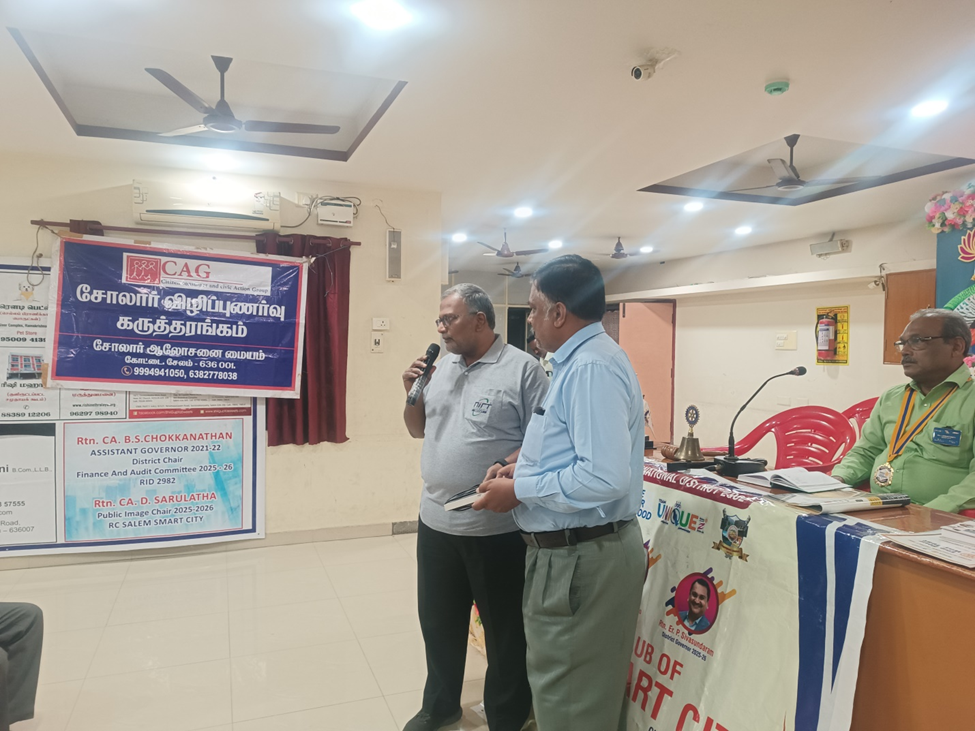
Mr. Khaja, Solar Expert, Solar Advisory unit - Same explaining about RTS at the Salem meeting
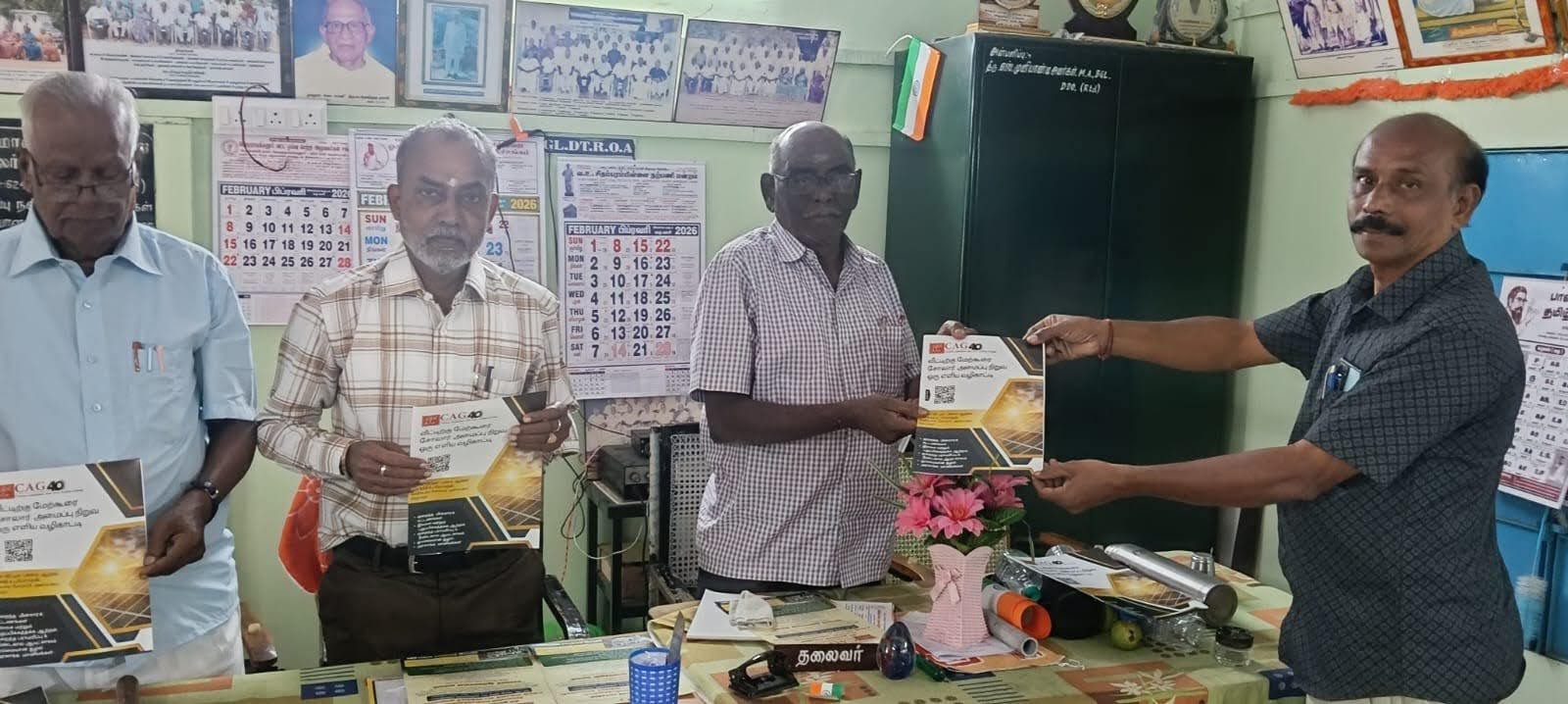
Mr.Suresh Kumar, Coordinator, Solar Advisory Unit - Dindigul with the CAG’s RTS brochure at the Dindigul meeting
The meetings were conducted on
- 03rd February 2026 at Grocery Traders Association Building, Nethimedu, Salem District
- 5th February 2026 at Pensioners Association office, Dindigul
- 07th February 2026 at Sashti Mandapam, Madurai East, Madurai district
- 23rd February 2026 at Traders’ Association Hall, Muthupettai, Thiruvarur District
- 27th February 2026 at Rishi Mahal, Maravneri, Salem District.
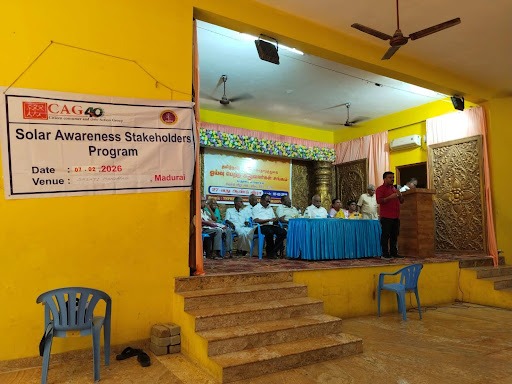
Mr. Shankar, Solar Expert, Solar Advisory Unit - Madurai during the meeting at Madurai
The outreach meetings brought together a diverse group of participants, including representatives from residential welfare associations, teachers, local business leaders from commercial associations, farmers, and consumers.
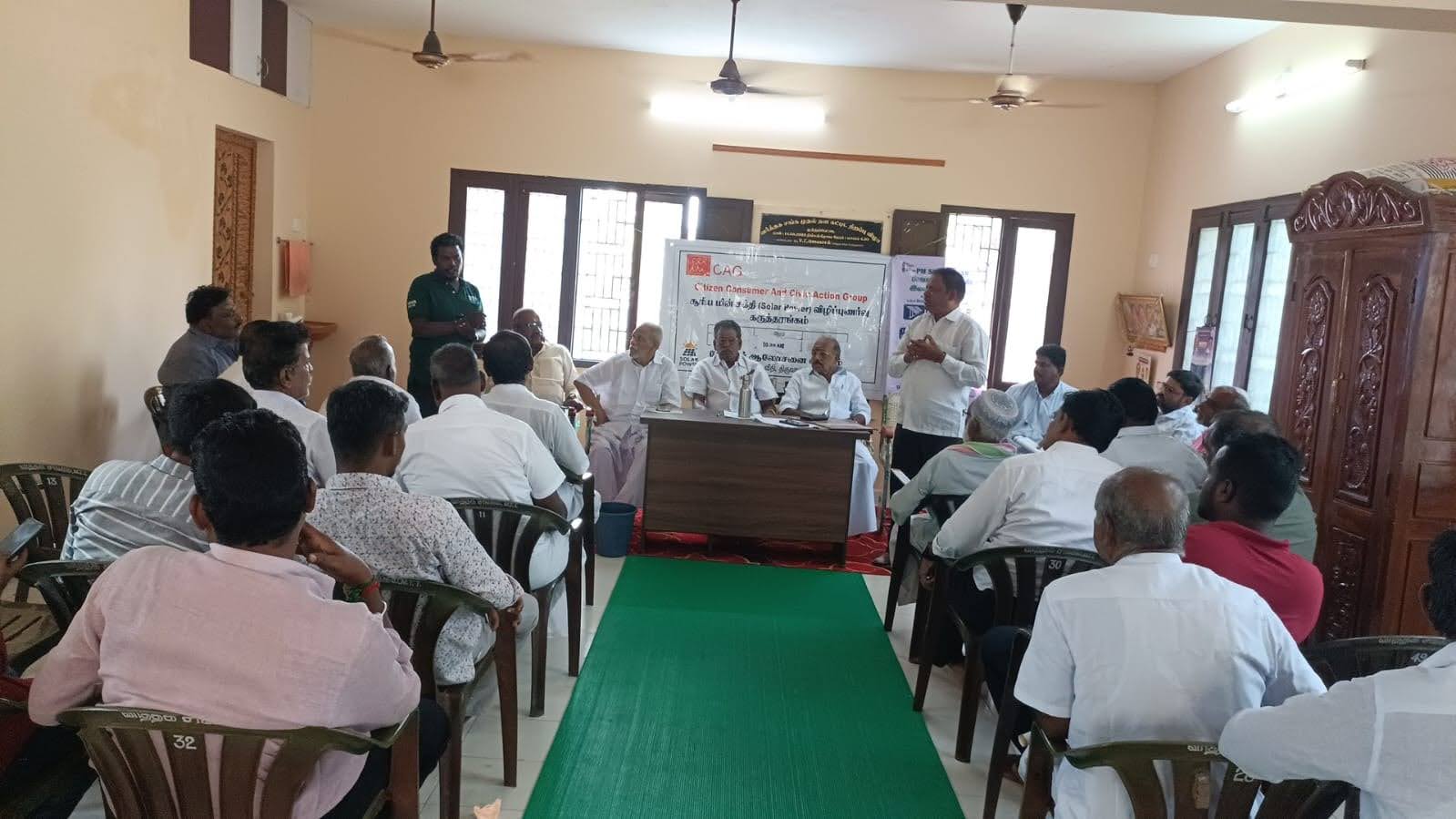
Prosumer sharing his experience during the Thiruvarur meeting
Further, the meetings aimed to raise awareness about solar energy, by offering comprehensive information on rooftop solar PV systems, covering system types, capacity requirements, space needs, investment costs, available subsidies based on tariff categories, payback period calculations, and key installation guidelines.
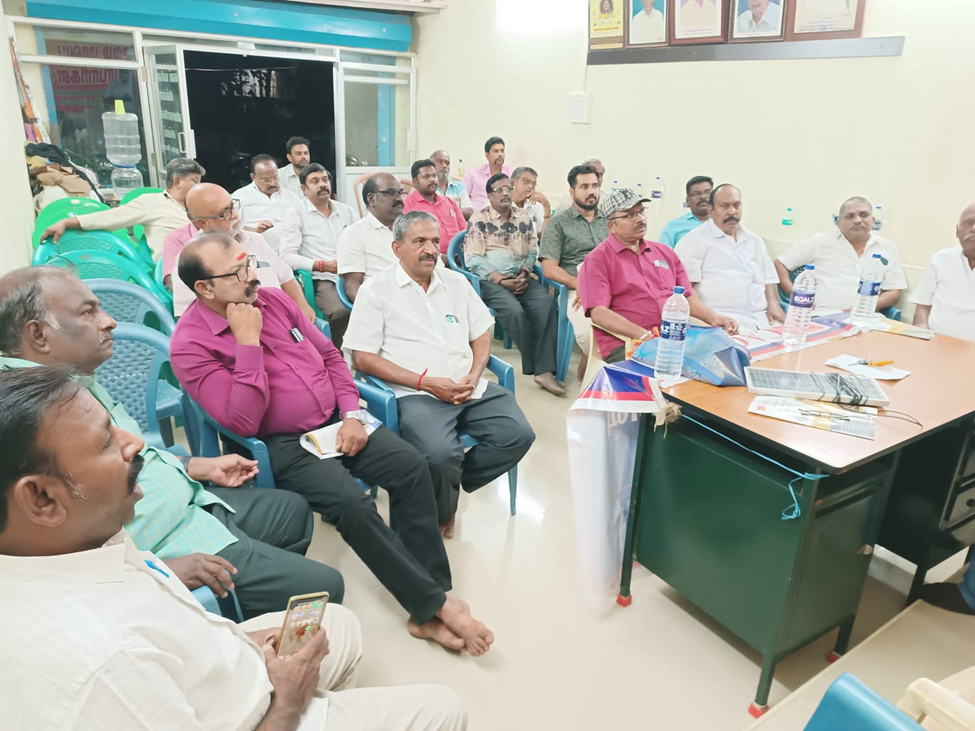
Participants during the outreach meeting
Participant Queries
Participants inquired about the technical and financial aspects of rooftop solar as briefed below.
- My consumption is 600 units bi-monthly. How much solar PV system capacity and area do I need ?
If your consumption is 600 units over two months, this translates to about 10 kWh per day. Since a 1 kW rooftop solar system generates around 4.5 kWh per day, you would require approximately a 3 kW system to meet this demand. To install a 3 kW system, you would need about 300 to 350 square feet of shadow-free rooftop space.
- What is the difference between net metering and net feed in rooftop solar PV systems?
The main difference between net metering and net feed-in in rooftop solar PV systems lies in how the electricity you generate and export to the grid is accounted for in your bill. Under net metering, the electricity produced by your solar panels first meets your own consumption. If there is surplus electricity, it is exported to the grid, and the exported units are subtracted from the units you import from the grid. Your bill is calculated based on the “net” consumption. For example, if you consume 300 units from the grid but export 100 units from your solar system, you will be billed only for 200 units. It is applicable to the consumers under domestic category LA1A, LA1D / LA1E - common service connections in multi tenements.
- If I live in a rental building, can I install a rooftop solar system ?
Yes, you can install a rooftop solar system in a rental building, but only with the permission of the building owner, as it involves using the rooftop space and integrating with the electrical service connection. If you move to another location in the future, the solar PV system can be dismantled and reinstalled at the new premises.
- Can we operate air conditioners with Solar PV panels?
When using an on-grid solar PV system, we can operate any electrical appliance. During the daytime solar electricity is produced and it is utilized for operating the appliances, with excess energy, if any exported to the grid. When sufficient sunlight is not available, energy will be imported from the grid.
- Why should we install a rooftop solar PV system now ?
At present, there are several favourable schemes and policies encouraging rooftop solar, particularly for domestic consumers. Government subsidies such as the PM Suryaghar scheme, low-interest loans from banks, and collateral-free loans for systems up to 3 kW have made it easier for households to adopt RTS. In addition, net metering allows consumers to export surplus electricity to the grid and reduce their bills. Domestic consumers also enjoy a significant reduction in network charges, with an 80% discount for systems up to 10 kW and a 20% discount for systems above 10 kW. The cost of solar PV has also come down to historically low levels due to large-scale production. Considering these benefits, this is the right time to invest in a rooftop solar system.
- Will my on-grid system work during a power cut?
An on-grid solar system does not function during a grid outage. Even if sunlight is available, the system automatically shuts down as a safety measure to protect line workers. If your premises have a backup power source like a battery or a diesel generator, this can be used to operate the appliances. However, in areas with frequent power cuts, the best option is a hybrid solar PV system, which can generate and supply electricity even when the grid is down.
Feedback:
Participants found the meeting to be highly useful and informative, gaining valuable insights into rooftop solar installations and expressing interest in adopting solar energy for their homes. The participants were informed about the Solar Advisory Unit, which is present in their respective districts, which will support consumers in accessing reliable information and raising grievances related to solar installations.
Solar enquiries obtained on the day:
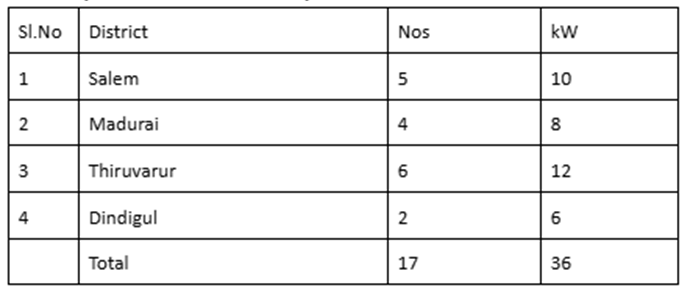
The Solar Advisory Units have guided a total of 17 inquiries, resulting in a combined solar capacity of 36 kW spread across four distinct districts. This initiative reflects a growing interest in renewable energy solutions and showcases the potential for sustainable development in each of these areas.