As part of its efforts to strengthen green skills among young people, Citizen consumer and civic Action Group (CAG) organised a Solar Orientation and Career Awareness Programme at Thakkar Baba Industrial Training Institute (ITI), T. Nagar, Chennai, on Wednesday, 2 September 2026. The programme aimed to give students a basic understanding of rooftop solar technology, make them aware of job opportunities in the renewable energy sector, and encourage them to prepare for careers in one of India's fastest-growing industries.
Session details:
Date: Wednesday, 2 September 2026
Time: 1:00 pm to 4:00 pm
Venue: Thakkar Baba Industrial Training Institute, T. Nagar, Chennai
Participants: 30 students from the second-year and final-year Electrician trade classes
Session summary:
The session was conducted by Mr. Kirubakaran, Researcher, CAG, and Mr. Aswin, Consultant, CAG.
Mr. Aswin welcomed the participants and introduced CAG, explaining what the organisation does for citizens and consumers, including its work on electricity and rooftop solar. He then explained the objectives of the programme and informed the students that the orientation was the first stage of a structured skilling initiative, through which selected students would be invited to participate in an intensive two-day Master Class on Rooftop Solar Installation. In the Master Class, experts from the solar industry would share practical knowledge, discuss current trends, explain job opportunities and guide them on career growth in the sector. He also emphasised the growing demand for skilled professionals to support India's expanding rooftop solar market and encouraged students to consider renewable energy as a promising career option.
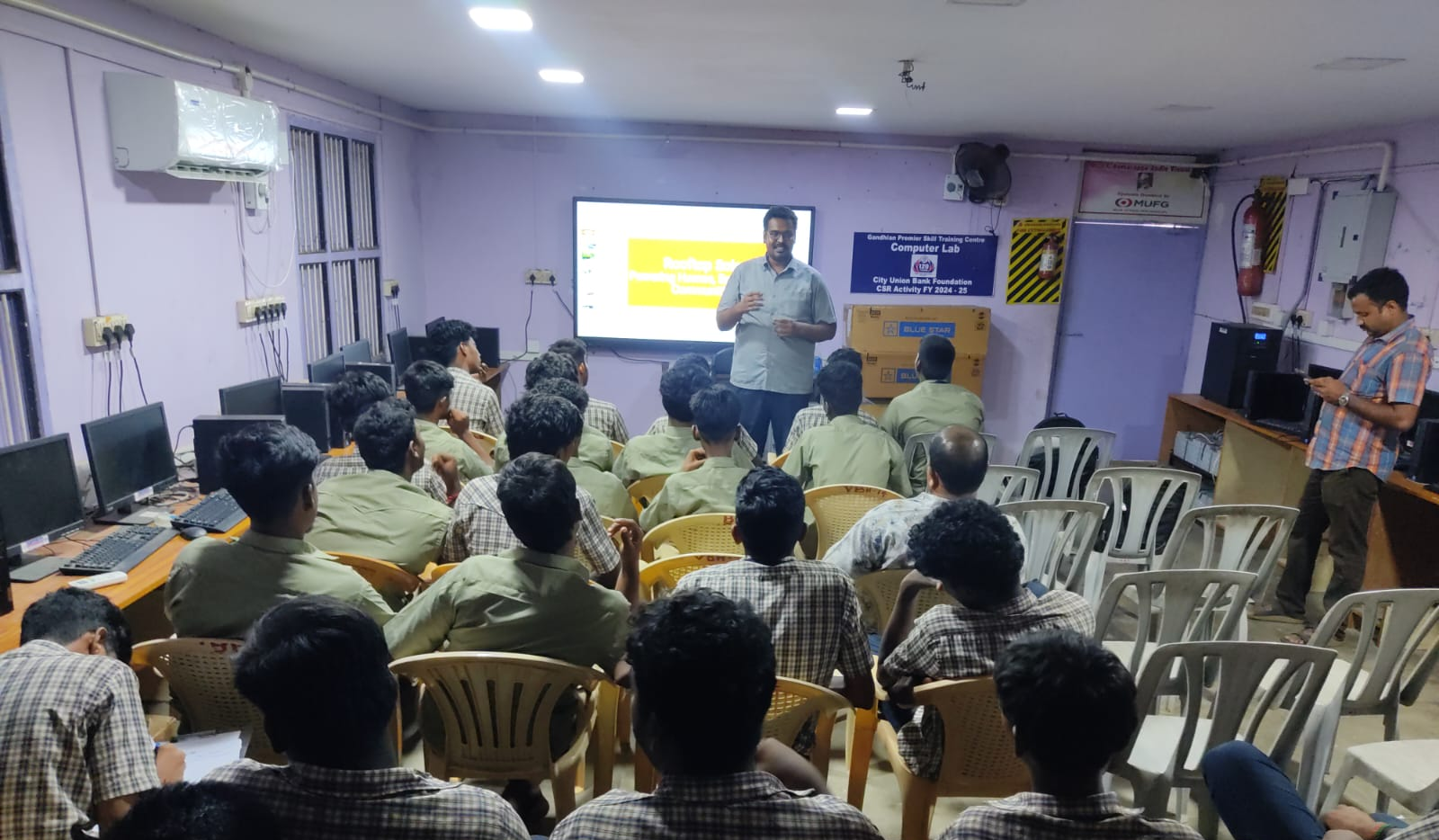
Mr. Kirubakaran, Researcher, CAG, explaining rooftop solar to the participants
The session covered the following topics:
- How a rooftop solar PV system works
- Key components and the types of systems (on-grid, off-grid and hybrid)
- Installation considerations and electrical safety
- Operation and maintenance
- Career opportunities in the solar sector
Mr. Kirubakaran then introduced the students to the basics of solar energy and explained how a rooftop solar photovoltaic (PV) system works: solar panels convert sunlight into DC electricity, which an inverter converts into AC for use in buildings, with surplus power exported to the grid under net metering. He explained the key components of the system, including the panels, inverter, mounting structure, cables, distribution boxes with surge protection devices (SPD) and miniature circuit breakers (MCB), and the earthing and lightning protection system. He also explained the differences between on-grid, off-grid and hybrid systems.
Next, he covered the main considerations for installation, such as shadow-free space, roof strength and south-facing panel orientation, along with electrical safety practices, including proper earthing, careful handling of DC circuits and the use of protective equipment while working at height. He then described the regular cleaning, inspection and monitoring needed to keep the system working well.
Finally, he spoke about career opportunities in the solar sector, including design, installation, maintenance, manufacturing and entrepreneurship, and encouraged the students to build the technical and safety skills employers look for and to take part in the two-day Master Class on Rooftop Solar Installation.
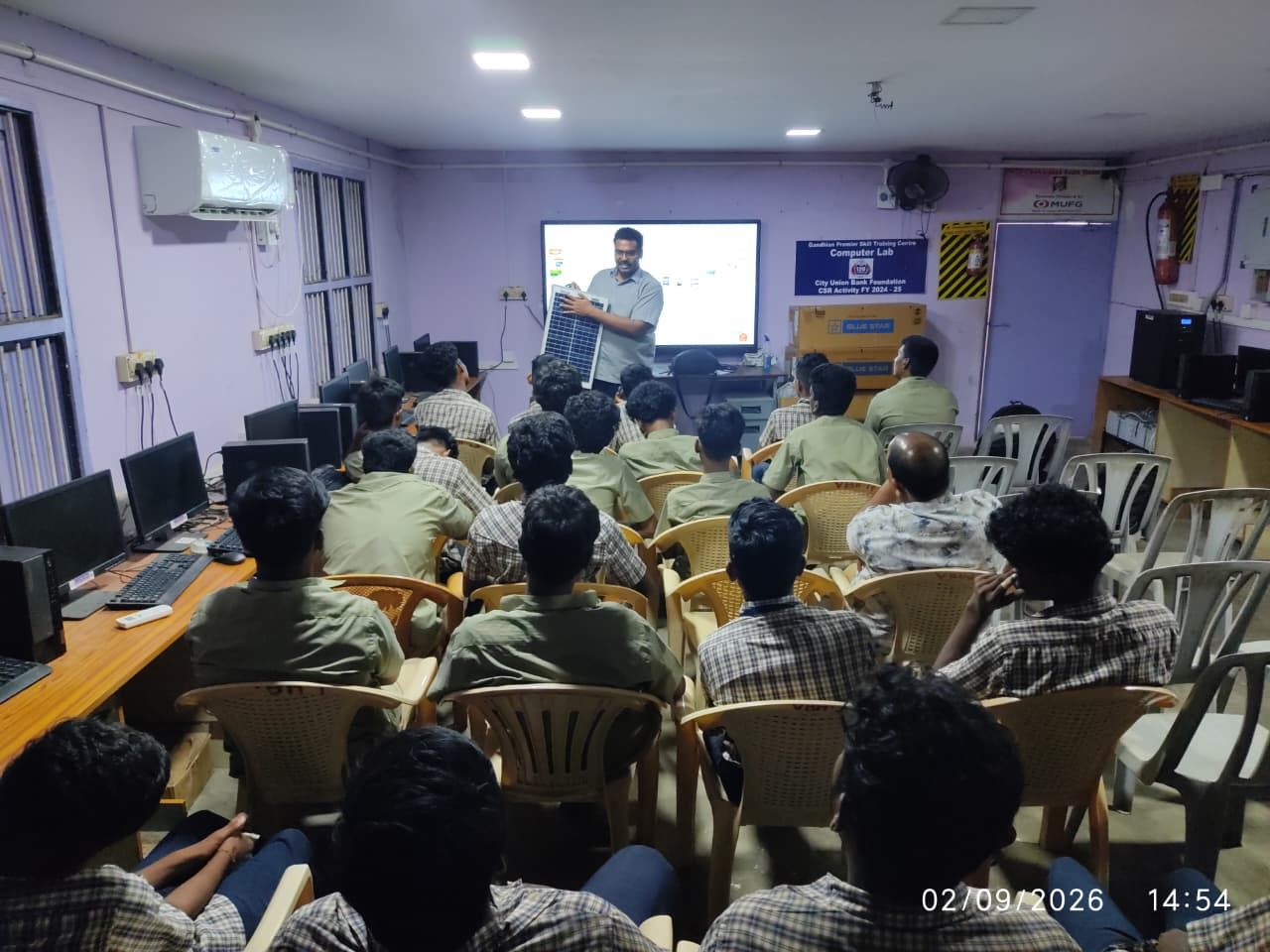
Mr. Kirubakaran explaining the working of a solar panel to the students using a sample panel
Throughout the programme, the students took an active part in the discussions and the question-and-answer session.
Questions asked by students:
1. What type of earthing should be provided in a rooftop solar system?
Separate earthing is provided for the equipment (panel frames, mounting structure, inverter and distribution boxes) and for the lightning arrester. The earth pits are interconnected, and the earth resistance should be kept low and checked periodically with an earth tester, as per the applicable standards.
2. How are solar panels connected in series and in parallel, and what is the effect on voltage and current?
When panels are connected in series, the voltages add up while the current remains the same. When they are connected in parallel, the currents add up while the voltage remains the same. Panels are connected in strings so that the string voltage stays within the input range of the inverter and below its maximum input voltage.
3. What job roles are available in the rooftop solar sector for ITI electricians?
ITI electricians can work as solar installation technicians, wiremen for panel, inverter and distribution box wiring, operation and maintenance technicians, and service technicians with solar vendors. With experience, they can move up to supervisor, site engineer and system design roles.
4. What additional skills or certifications will help us get a job in solar?
Employers value hands-on training in solar installation, wiring, testing and safety practices, along with a valid electrician or wireman licence where required. Short skill certification courses in solar PV installation under Skill India and MNRE programmes, and the two-day Master Class on Rooftop Solar Installation, are good starting points.
5. Can we start our own business in the solar sector after completing the course?
Yes. Many electricians begin by taking up installation and maintenance work as sub-contractors for solar vendors, and later register as vendors themselves once they have enough experience, the required licences and the capacity to meet the standards followed by MNRE-approved vendors.
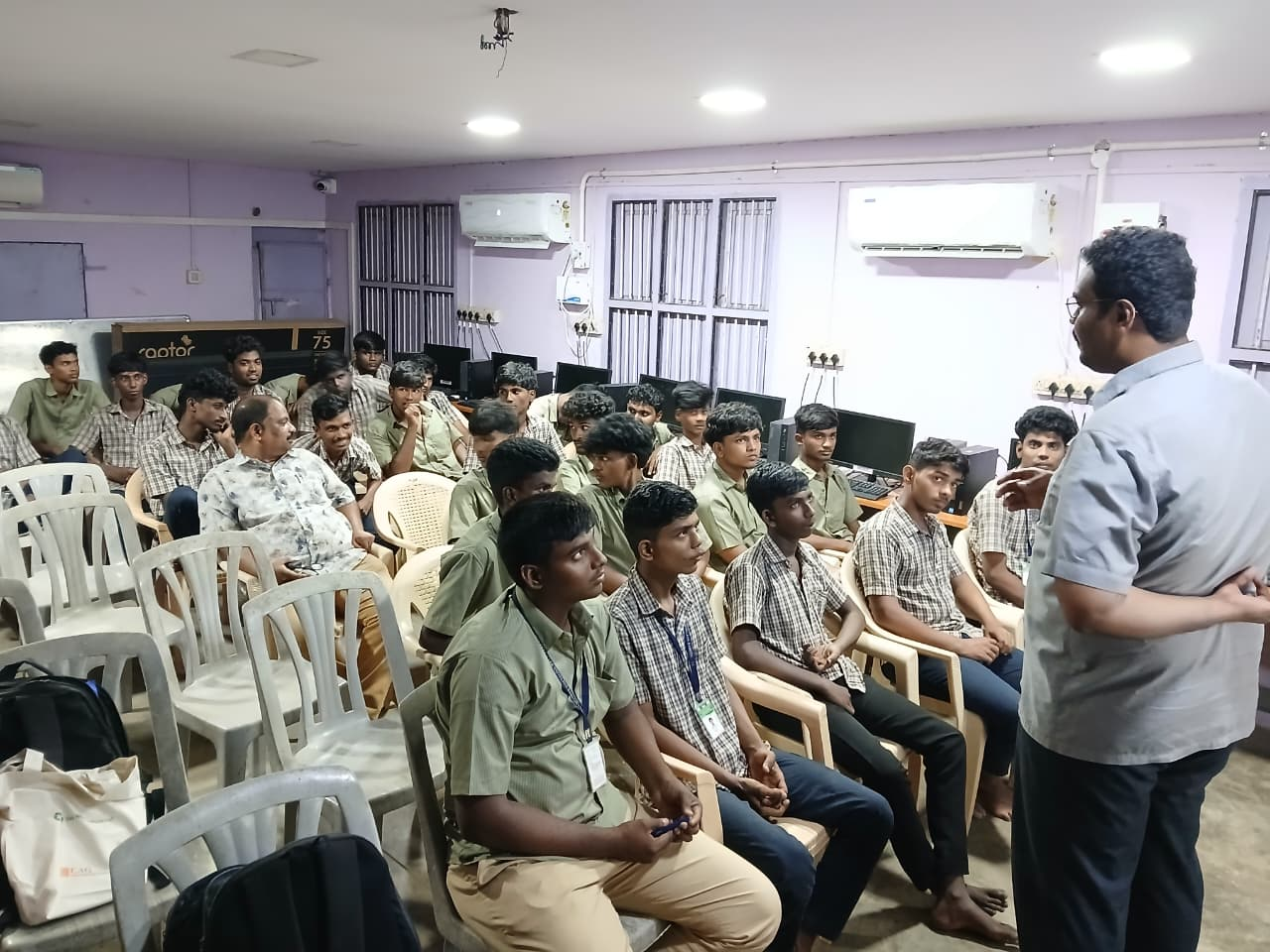
Students taking part in the session
Conclusion:
The orientation programme made the students aware of career opportunities in the renewable energy sector. It also showed that technical students are keen to learn the skills the industry needs. The programme pointed to the need for closer links between training institutes and the solar industry, so that what students learn matches what employers need. Through programmes like this, CAG aims to help build a skilled workforce that can support India's clean energy transition and to create livelihood opportunities for young people.