CAG in collaboration with Solar Advisory Unit - Madurai, organised a stakeholder meeting on the adoption of rooftop solar energy under the PM Surya Ghar Yojana which was held on 15th November 2025 at Hotel Hemala, Karur. The primary goal of this meeting was to inform consumers about solar energy, covering topics such as subsidy programs, financing options, and installation processes. Attendees included representatives from solar developers, financial institutions, and media representatives.
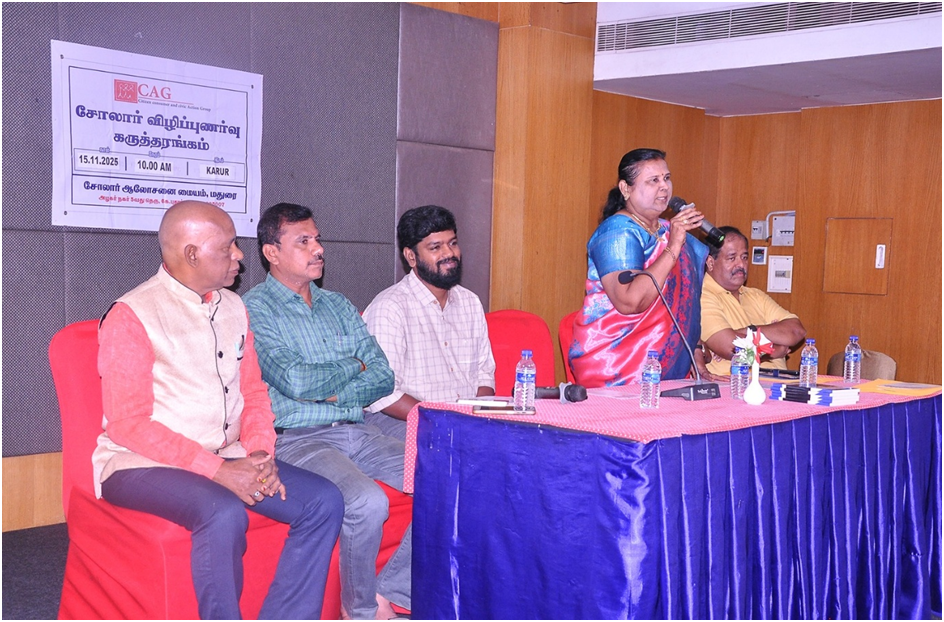
Dr. C. Packialakshmi, Coordinator, Solar Advisor Unit - Madurai, during the meeting
Dr. C. Packialakshmi, Coordinator, Solar Advisor Unit - Madurai, welcomed the participants. She emphasised the importance of solar power in today's energy landscape, recognising it as one of the most sustainable and reliable forms of renewable energy. She pointed out that the increasing electricity consumption among consumers has made solar energy an appealing solution for both residential and commercial users. She also mentioned that the Solar Advisory Unit - Madurai has been conducting awareness meetings in Madurai and Karur for the past six months. She added that during these meetings, it has been observed that many consumers are interested in installing solar energy systems but that they remain unclear about whom to contact and how to proceed with the installation process.
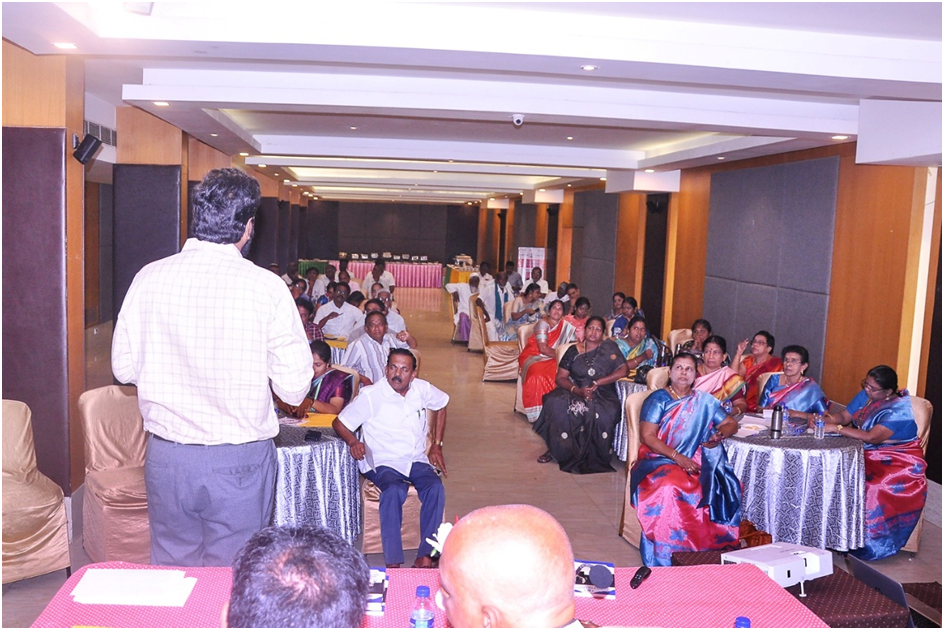
Mr.Bharath Ram, Senior Researcher, during the meeting
Mr.Bharath Ram, Senior Researcher, CAG presented an overview of CAG’s work and its current initiatives, with a focus on raising awareness about rooftop solar energy. He also emphasised that this project is being executed in six other districts with the same goal. He stated that the purpose of today’s meeting was to bring all the key stakeholders together to talk about the Rooftop solar, subsidy and installation.
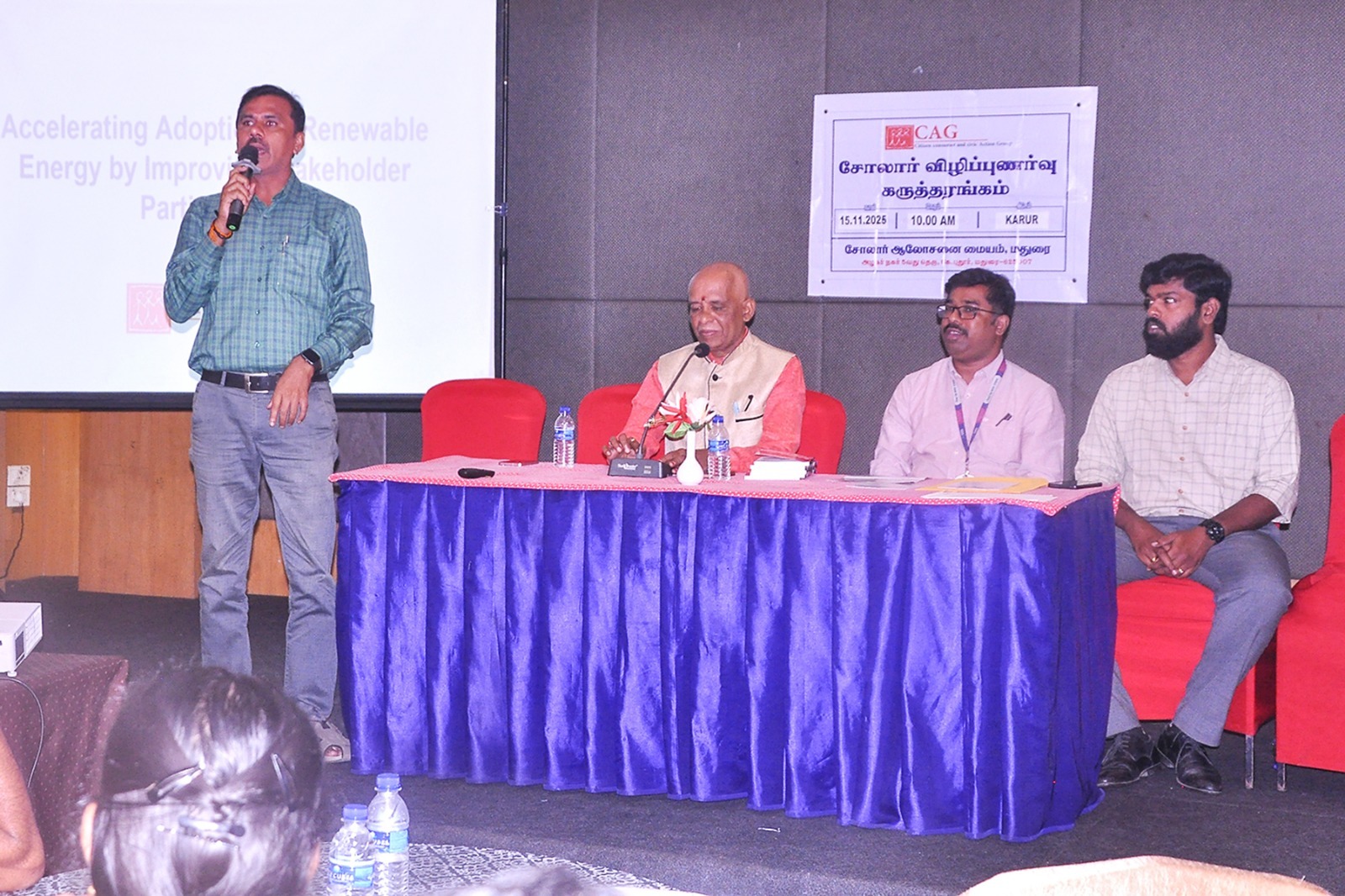
Mr. P. Senthil Kumar, Solar developer, during the meeting
Mr. P.Senthil Kumar, Solar developer, Karur, delivered a detailed presentation on rooftop solar photovoltaic (PV) systems, covering various system types such as grid-tied, off-grid, and hybrid options. The presentation addressed capacity requirements for typical households and the space needed for optimal installation. He also discussed investment costs, highlighting different components like solar panels and inverters, as well as available subsidies based on tariff categories to help reduce upfront expenses. Additionally, he explained payback period calculations to illustrate the return on investment through energy savings and increased property value. Lastly, he provided key installation guidelines to ensure safety, regulatory compliance, and long-term system efficiency. This overview aimed to empower the audience with the tools to make informed decisions about rooftop solar PV systems.
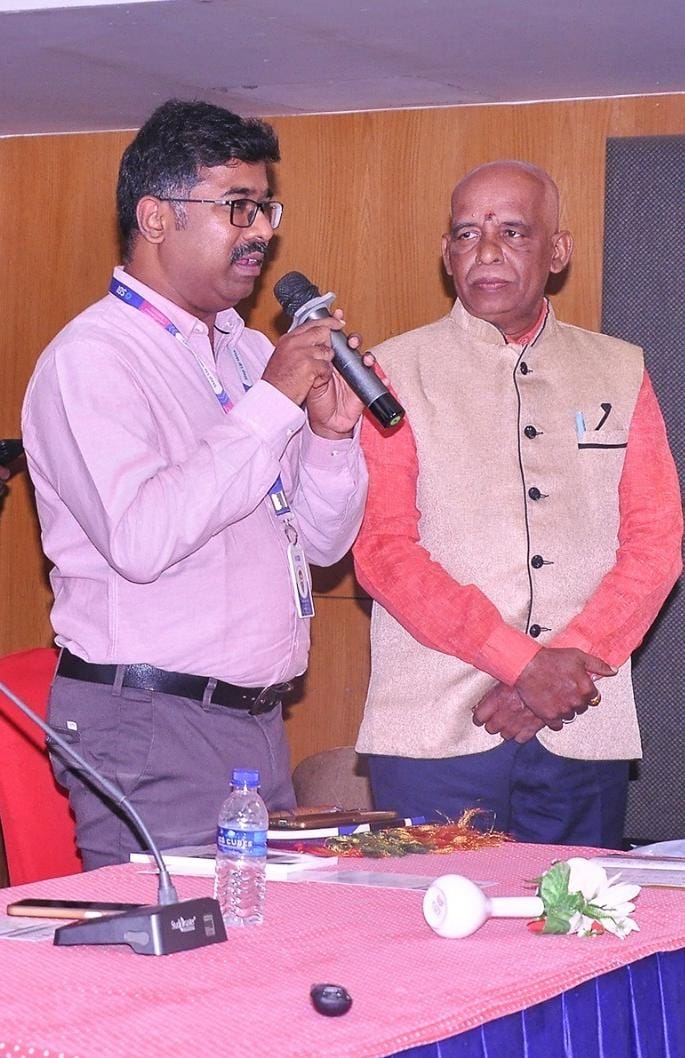
Mr. Karthikeyan, Relationship Manager, State Bank of India, during the meeting
Mr. Karthikeyan, Relationship Manager, State Bank of India, mentioned that the Government of India launched a rooftop solar scheme for domestic households in February 2024, with support from subsidies provided by the Ministry of New and Renewable Energy (MNRE). To support implementation and meet targets of the scheme, banks provide comprehensive support to residential adopters of solar energy. He said that they offer quick, collateral-free loans at reduced interest rates to facilitate adoption. For loans of up to ₹2 lakh, no proof of income is required. Accredited solar vendors assist consumers determine eligibility and guiding households through the application process.
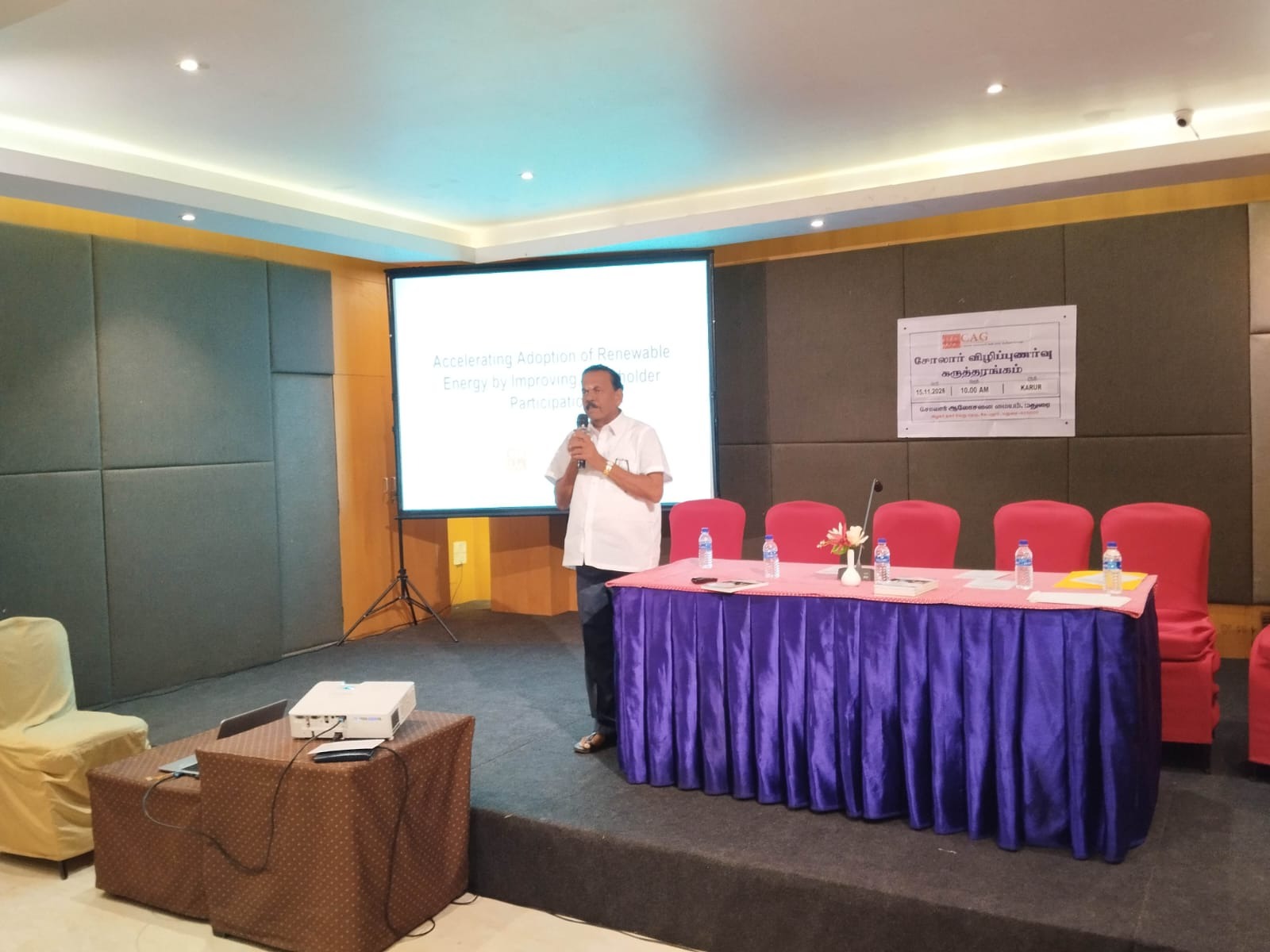
Mr. P. Narayanan, a prosumer, shares his experience during the meeting
Mr. P. Narayanan, a prosumer, stated that he was the first person to install a rooftop solar system under the PM Surya Ghar Yojana in Karur District. He shared his experience and explained the step-by-step process involved in the installation. He invested in a 5 kW rooftop solar system, and since then, his electricity bills have decreased by an impressive 90%. He emphasised the significant financial savings he has achieved by transitioning to solar energy.
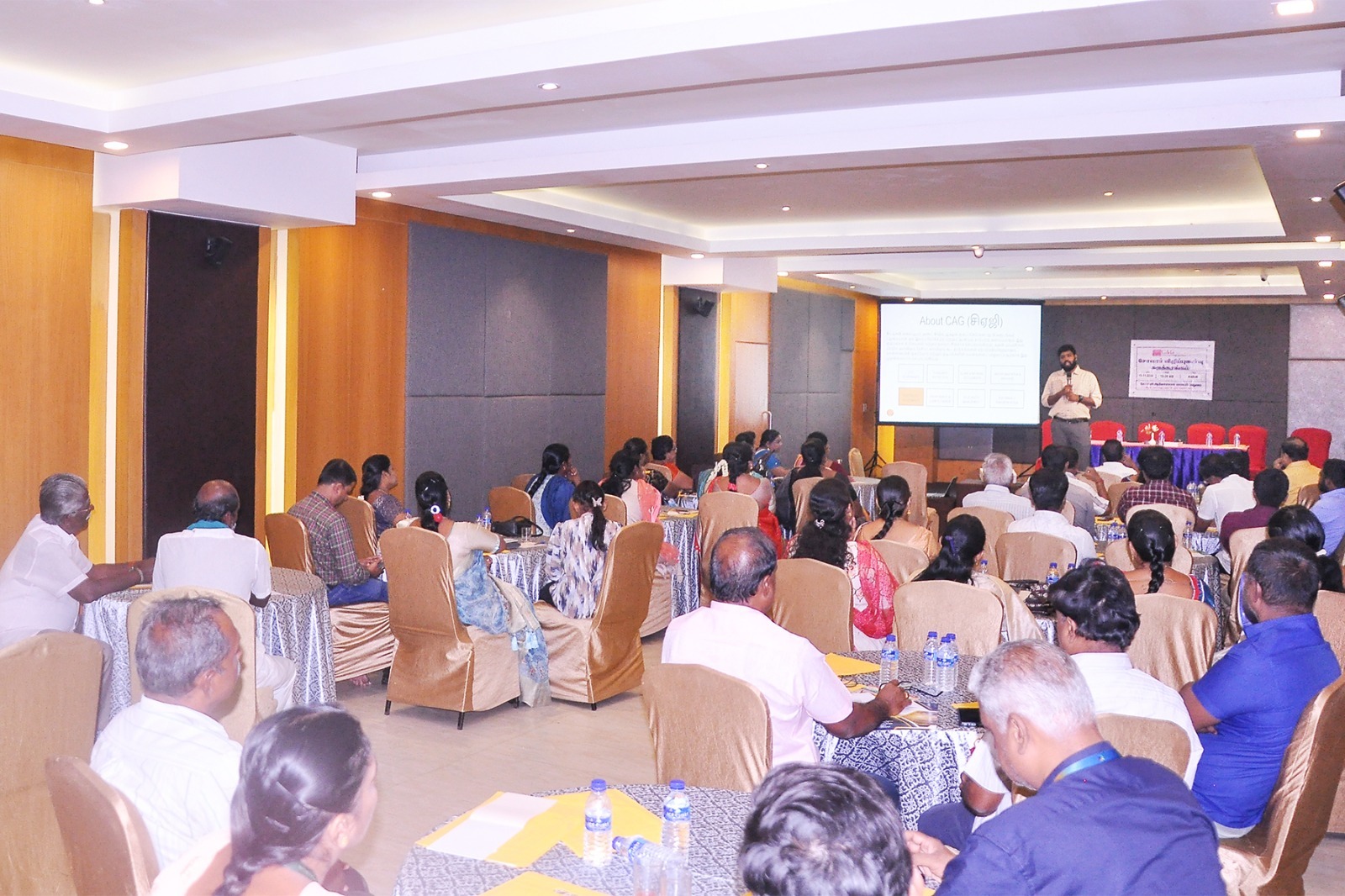
Participants at the meeting
Participants Queries:
During the stakeholder meeting, participants raised their questions and queries about the rooftop solar systems. The question-and-answer session was answered by the solar developers present at the meeting. The questions were
- If a consumer is interested in installing rooftop solar on their home, what would be the first step?
The first step is to understand your electricity consumption over the last two years. Studying your monthly electricity bills helps identify your consumption pattern, including the highest-use (peak) months and lower-use (off-peak) periods. This analysis gives a realistic picture of your average energy requirement. Based on these units and your load pattern, the solar developer can correctly determine the suitable rooftop solar system capacity for your home.
- What is the time period to complete the installation?
After selecting the vendor, rooftop solar installation usually takes about 7 to 15 days, depending on the system size, roof type, structural requirements, and site conditions. However, net metering approval from the DISCOM may require an additional 7 to 14 days, as it involves documentation, inspection, and meter replacement. Therefore, in most cases, it takes around 14 to 30 days to fully complete the installation process and begin using the rooftop solar system.
- Several participants sought clarity on the vendor selection process.
Vendors are chosen through the PM Surya Ghar Rooftop Solar Scheme, or empanelled vendor list is displayed in the TNPDCL website, which ensures quality standards and accountability. Under this scheme, empanelled vendors are mandated to provide a 5-year comprehensive warranty for the entire rooftop solar system and must address any service-related complaints during this period.
- Are all three types of rooftop solar systems eligible for government subsidies?
Solar Developers clarified that, currently, only on-grid rooftop solar PV systems are eligible for subsidies under the scheme. Off-grid and hybrid systems do not receive subsidy support at present.
- A participant sought more clarity on the bidirectional meter.
The Assistant Engineer mentioned that a bidirectional meter is mandatory for rooftop solar installations with net metering. If a household currently has a unidirectional (standard) meter, it must be replaced with a bidirectional meter to enable both import and export of electricity. In most new households, the TNPCDL now installs bidirectional meters by default, making the process easier for new consumers opting for rooftop solar.
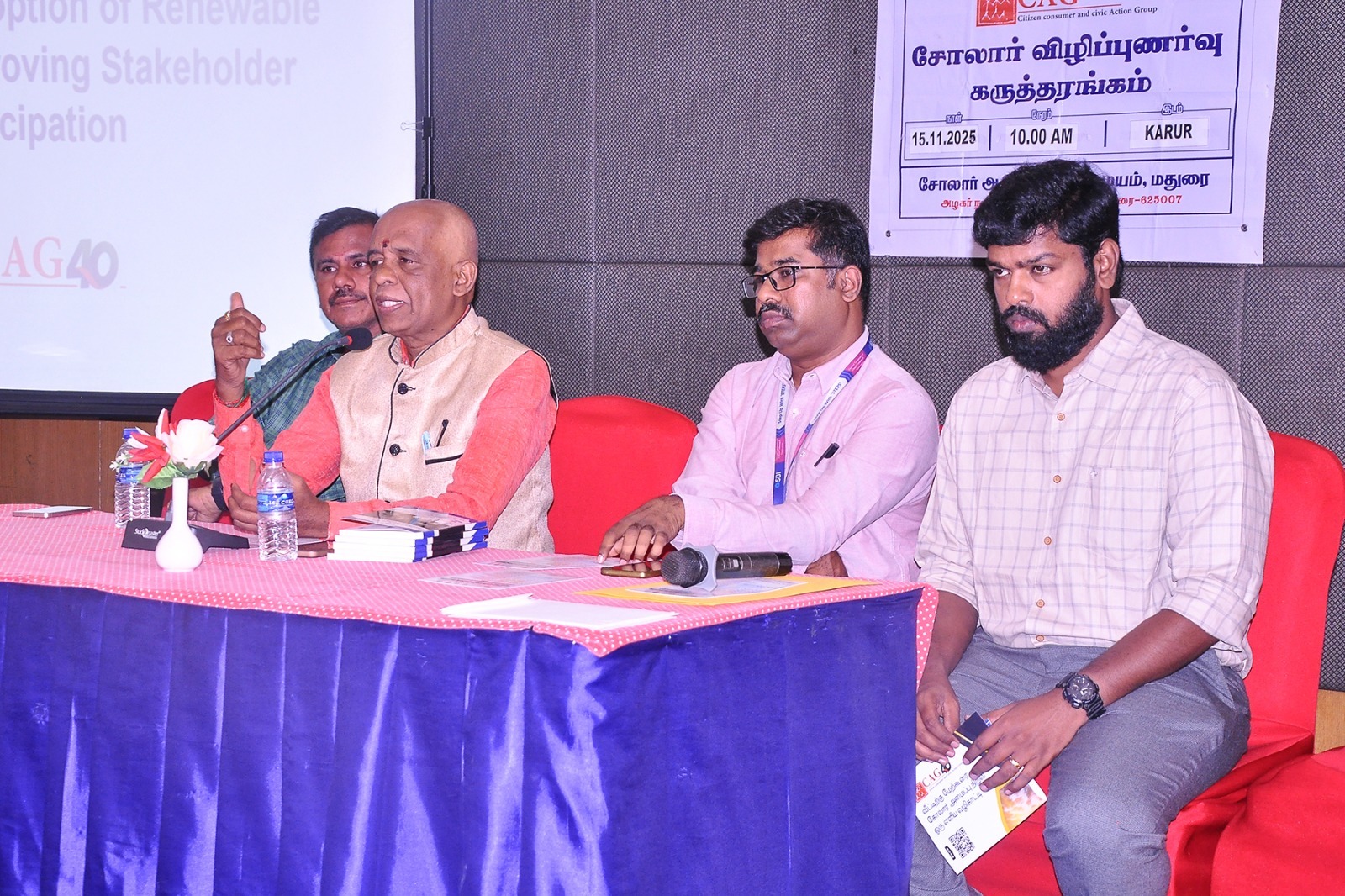
Mr.Chokkalingam, State President, FEDCOT,during the meeting
Mr.Chokkalingam, State President, FEDCOT, delivered the vote of thanks to all stakeholders and participants who attended the meeting. He highlighted that installing solar panels not only lowers electricity bills but also contributes to a greener and cleaner environment.