The other day I was watching a film called ‘Dude’ and no, this is not a movie review but I will say to watch it at your own peril. I was struck by a scene in which the hero and his friend are riding without helmets on a bike (mystifying because in earlier scenes they are shown wearing helmets) and are chased by a pack of dogs. While trying to avoid them, they both collide with a car, fly over the car and land on the road beyond. I winced watching this pretty sure that this would lead to a grave injury or at the very least a lot of pain. But lo! The hero seemed unfazed - no concussion, no disorientation, not even pain. Instead he had an epiphany where he realised that he was in love with his cousin and could not imagine life without her - I mean!!! What is this!!!
I decided to ask Chat GPT (who else) what it thought of this scene and here is its response.
My question after uploading the video: “is it credible for someone traveling at ~50 km/h without a helmet to fall and not suffer even a scratch?”
“Short answer: No - it’s extremely unlikely.
Why?
At 50 km/h, a rider hitting the ground without a helmet typically experiences:
- Major abrasions (road rash)
- Impact injuries to the head, face, and shoulders
- Fractures of the collarbone, wrist, or ribs are common
- High risk of traumatic brain injury, even without direct head-to-object impact.”
I verified this with Dr. Divyalakshmi from Shri Ramachandra Medical College who said, “Scenes like this might look cool on-screen, but they normalize risky behavior and feed the already low helmet compliance in Tamil Nadu. When the hero walks away unscathed, the message is: “Nothing will happen.” But the truth playing out on our roads every day is very different. Maybe the hero survives the crash on screen. But in real life, someone else pays the price for believing what the movies show. I lost my elder brother to a bike accident even though he had his helmet on. Road risks have to be taken seriously by everyone, including filmmakers.”.
Life imitates art?
We often say art imitates life, but it works the other way too. We start imitating what we repeatedly see on screen. A bunch of studies have actually looked at this, and the pattern is pretty clear. Films and TV shows usually under-represent basic safety behaviours like helmet use, seatbelts, child restraints… all the things we expect in real life but somehow never make it into the “cool” cinematic universe. Researchers like Cowan et al found that helmet use in movies is shown far less often than it should be, especially in scenes where characters ride casually or spontaneously. And when that becomes the norm we consume, people (especially teenagers and young adults) start to internalise that riding without a helmet is normal, stylish, or harmless. Their analysis showed that there was only 33% helmet compliance shown on screen for motorised vehicles, and that compliance was greater for children vs adults (26% vs 15% respectively) thus giving the message that it’s cool and okay for grown-ups to disregard the law and safety norms.
From the screen to real life
You may say, “Okay but this is just a film. Real people know better.” Except… they don’t. According to MoRTH 2023, 39,160 riders and 15,702 pillion passengers died simply because they weren’t wearing a helmet. Tamil Nadu ranks first in rider deaths without helmets (6,766) and fourth for pillion deaths (973). Shocked by how high non-compliance is here, I started clicking pictures of helmetless riders on my 30-minute commute. For every photo I caught, I missed at least four.
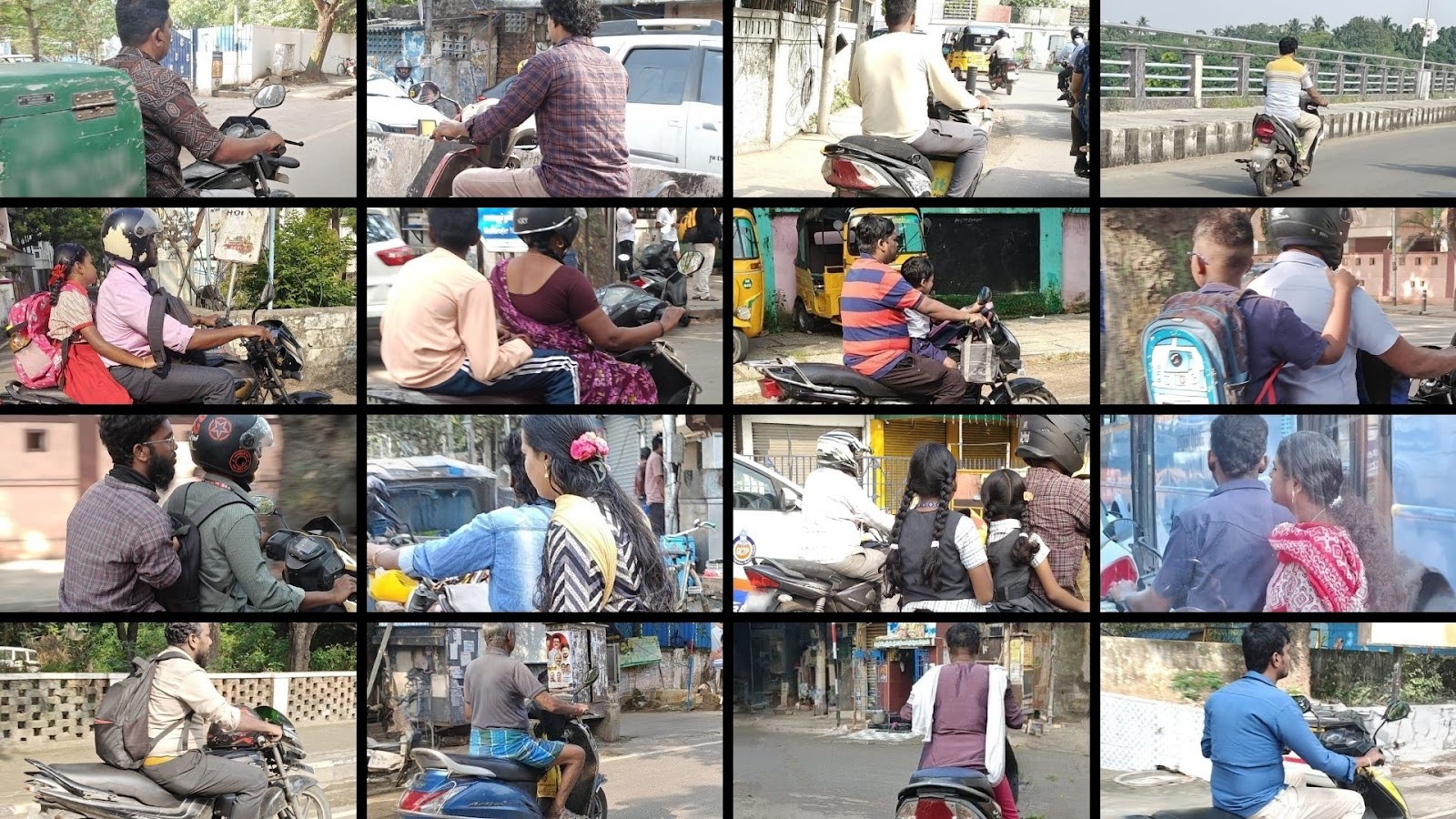
Look at these pictures and ask yourself why we don’t take this very preventable risk seriously? Is the Rs 1000 fine not a strong enough deterrent?
Why don’t we wear helmets?
MoRTH has mandated that from January 2026 onwards all new two-wheelers sold must be provided with two BIS certified helmets - one for the rider and one for the passenger. But will that stop people from holding their BIS-certified helmets in their hands instead of wearing them?
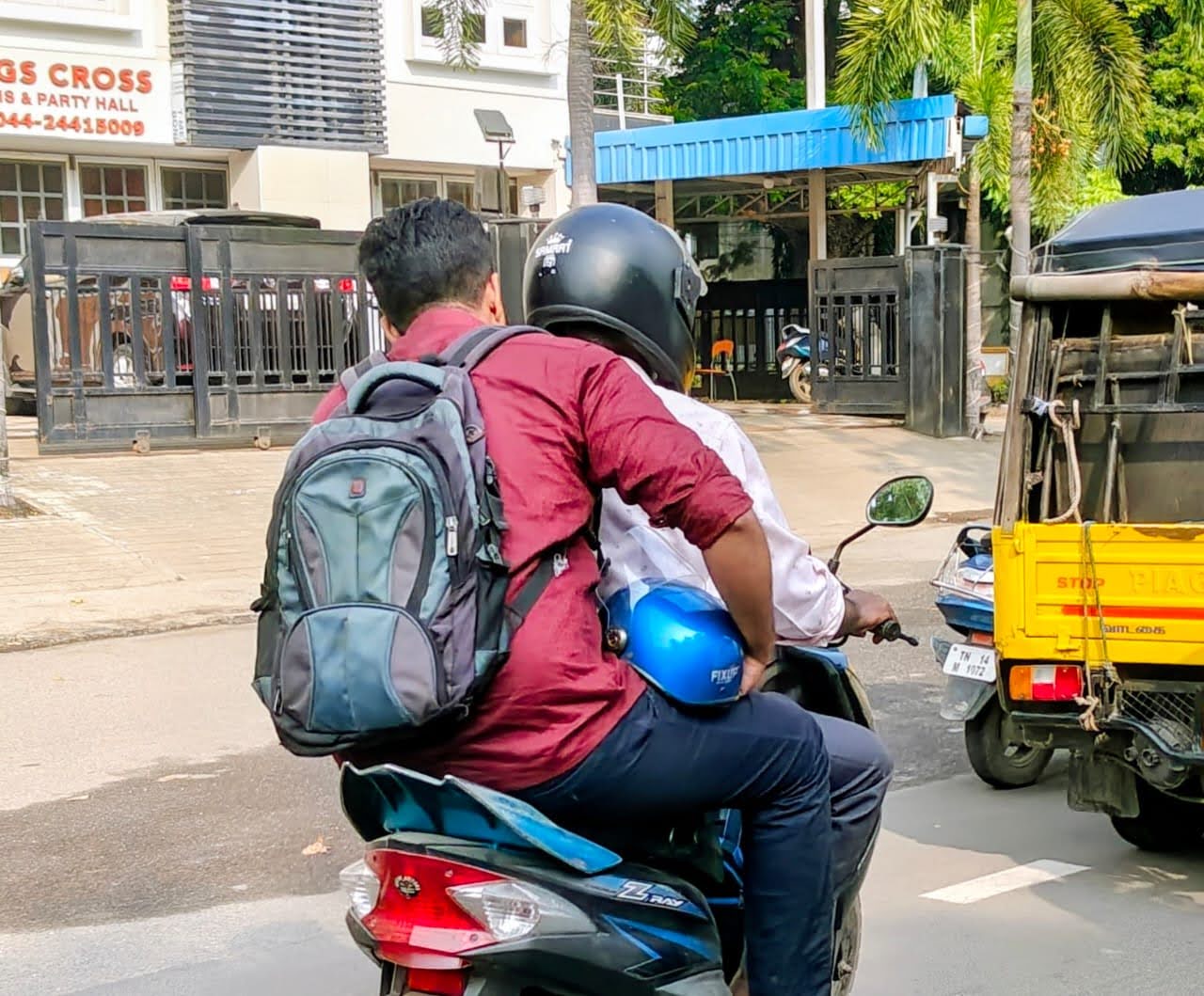
Caption: A helmet on the head is worth two in the hands.
Let’s go through a list of reasons people have for not wearing their helmets -
“It’s just a short ride.”
Sorry.Crashes don’t care about distance.
“My child’s school is right around the corner.”
Sorry. No distance justifies compromising a child’s safety.
“Nothing will happen.”
Could you say this to the 54,862 grieving families that lost a family member in 2023?
Worried about your hair? Here’s some excellent advice!
I googled why people don’t like wearing helmets and here’s what I found. Helmets and hair loss seems to be one of the top fears of wearing them.

Caption: Hair loss scarier than head loss.
This seems to be a widespread fear and so I reached out to Dr. Vaaruni Ravishankar, Consultant Dermatologist at MGM Healthcare/ MGM Malar. ”There is a growing concern on the usage of helmets contributing to hair loss, which sometimes is a deterrent for people to use a helmet- something which is non-negotiable and mandatory for protecting your life. The friction from the inner lining of the helmet, and trapping of sweat, can increase overgrowth of microbes on the scalp, all of which contribute to breakage of the hair shafts. This can easily be handled by:
Using a soft bandana or cloth over your hair before putting your helmet on. Wash the cloth everyday to prevent infection.
Cleaning your helmet regularly using helmet sprays available in the market. They absorb sweat and dirt from the inner sponge lining. You could also air out your helmet in the sun when you’re not out on your bike.
After a long ride, it is good to gently cleanse your scalp with a mild ketonoconazole pH balanced shampoo.
Leave in conditioners after shampoo help in strengthening the hair shafts, thereby reducing breakage.
Ensure your hair is dry before wearing your helmet.”, says Dr Ravishankar.
(I would have never believed that hair care advice would form a part of a road safety article - but hey! This is good advice and may motivate a reader to keep their helmets and hair on their heads!)
BIS compliant distracted driving?
I also have a problem with BIS certified helmets that have speakers and bluetooth compatibility. Granted - it's better than fitting a mobile phone inside your helmet and speaking but it’s still a distraction. With 7122 crashes and 2884 fatalities due to mobile phone use reported by MoRTH in the year 2023, we can see that distraction is a rising contributor to crashes, and unlike helmet use, it’s almost impossible to enforce externally.
Role Models in India and Beyond
Let’s look at the city of Kolkata which has an incredible 94% helmet compliance! This is the result of a mix of enforcement, inconvenience, and smart nudges. The police brought back the “no helmet, no fuel” rule at petrol pumps. At the same time, fines were made steeper and digital enforcement like ANPR cameras, e-challans, and real-time monitoring removed the old habit of negotiating with on-ground cops. The state also tightened the rules to allow only BIS-certified helmets, which pushed out the flimsy ₹200 half-shells people used just to “avoid fines.” All of this together made wearing a helmet the easiest and least annoying option.
And then there’s Vietnam, a great example of what happens when enforcement meets storytelling. In 2007, Vietnam introduced a universal helmet law, and within months helmet usage climbed from around 30% to more than 90%. Over the first decade, this switch didn’t just save lives, it saved money. According to a report by FIA Foundation and AIP Foundation, about 500,000 head injuries and 15,000 fatalities were averted thanks to the law, and the country saved an estimated US$ 3.5 billion in medical costs and lost economic output.
From a more technical, cost-effectiveness perspective, researchers estimated that in the very first year of the law’s enforcement, Vietnam prevented 2,200 deaths and 29,000 head injuries, while saving people about US$ 18 million in direct medical costs and another US$ 31 million in lost income. The model also shows it provided financial protection because, by preventing injuries, the policy helped avoid large out-of-pocket health expenses, which otherwise could push families into poverty.
How did Vietnam manage to change public behaviour? They first ensured that all their civil servants and government workers wore helmets while riding two-wheelers. The fine for non-compliance was increased steeply and the system was also made more effective. Loudspeakers, announcements, posters at intersections were used to increase awareness among the public till a perceptible change could be seen in their behaviour.
This is why filmmakers must do better in their everyday portrayals of characters we see and relate with on the screen. Wearing helmets, adhering to road rules is heroic, not riding madly weaving through traffic with no thought of one’s own safety or that of others. If films can show a warning when someone lights a cigarette, maybe they should also show one when someone rides without a helmet. The risk profiles are comparable so why is only one getting called out?
I’m ending this piece with images that show different attitudes to personal safety and road rules.
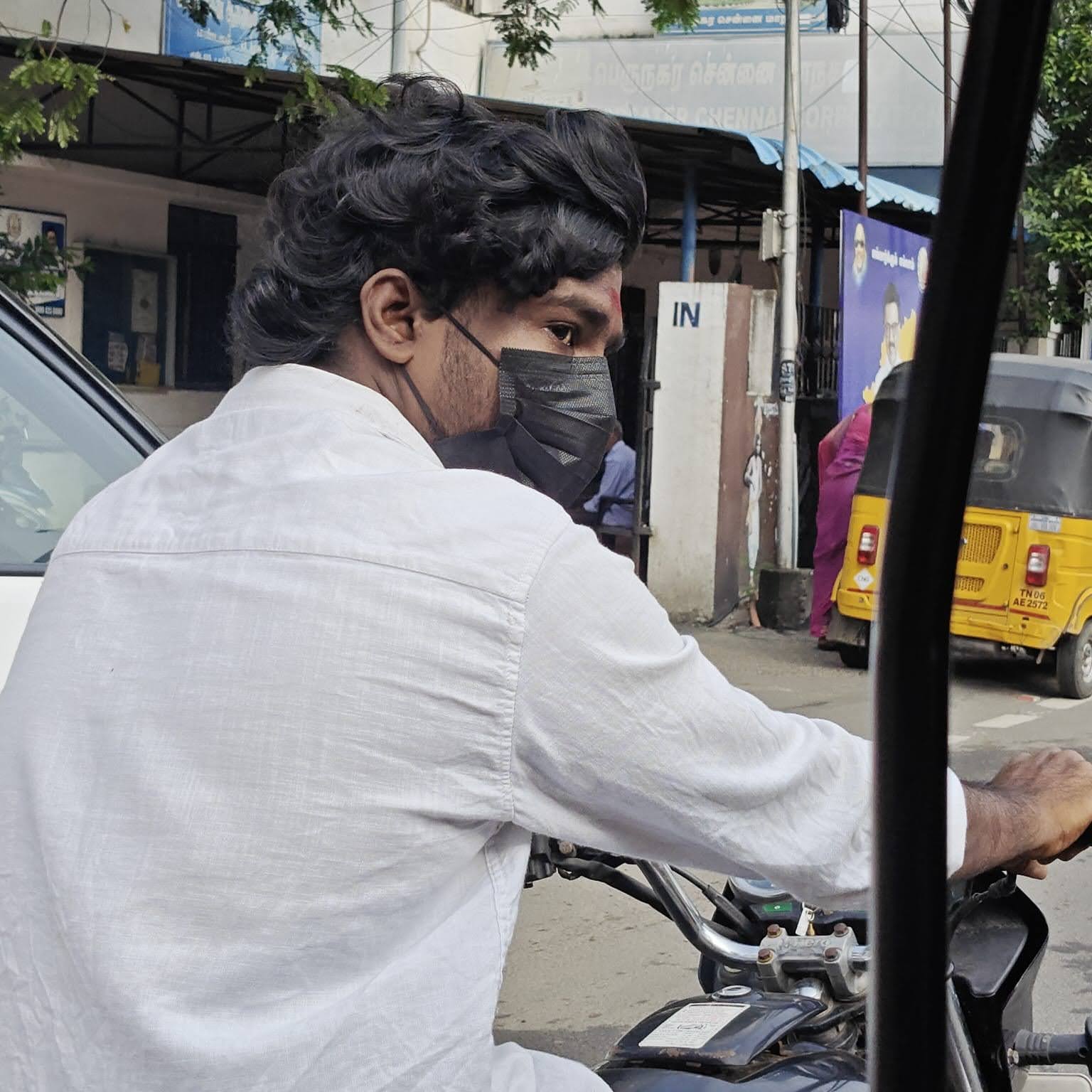
Caption: Mask on for better air quality but what about a helmet?
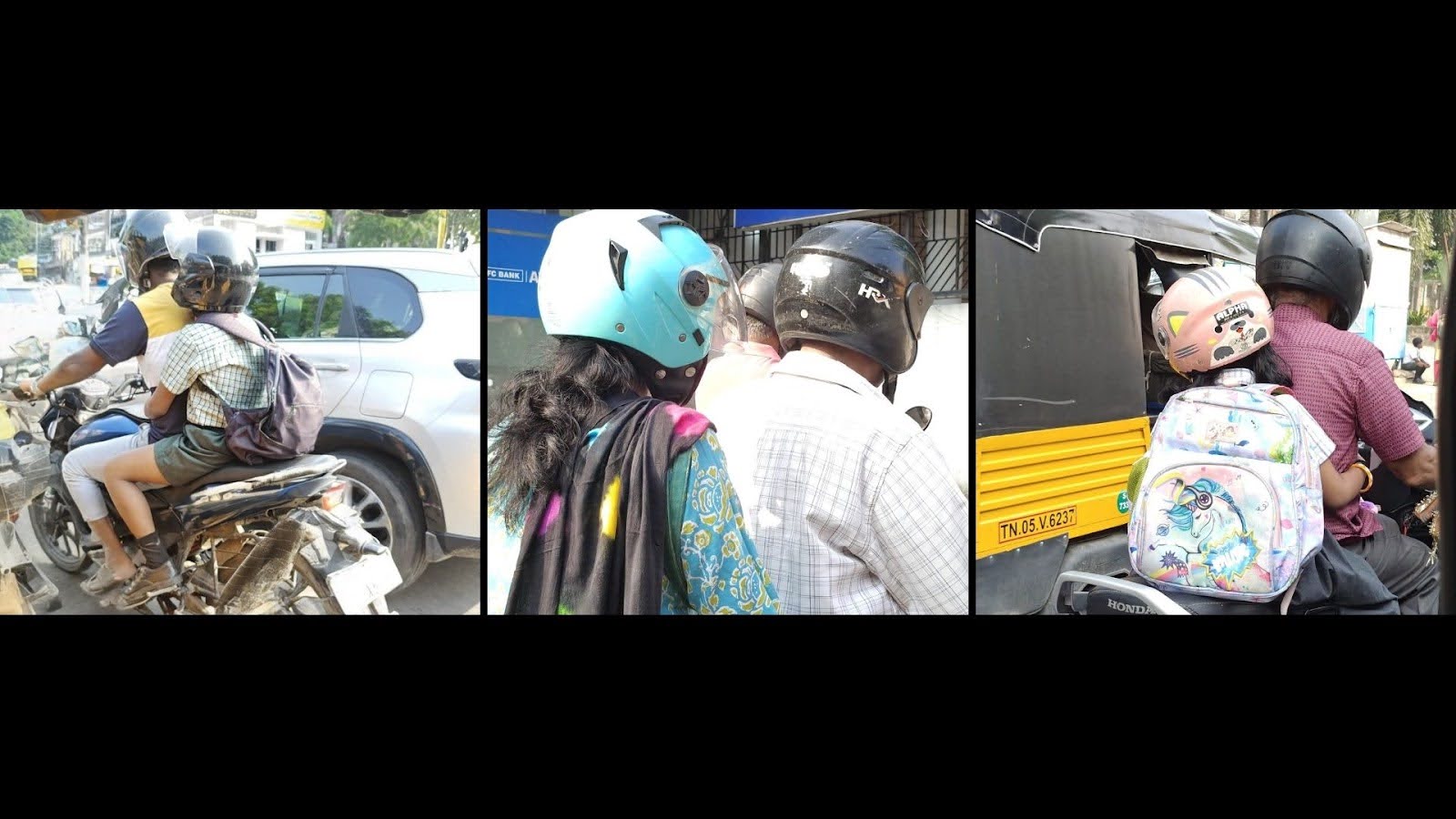
And here are the three shining stars from my commute the other day - both driver and passengers helmetted - may your tribe increase!
---
Add new comment