The Tamil Nadu 200 Units Free Electricity Scheme, announced in May 2026, provides eligible domestic consumers with 200 units of electricity free every two months for households whose bi-monthly consumption does not exceed 500 units. Consumers above this threshold will continue receiving 100 units free on a bi-monthly basis under the existing scheme.
Tamil Nadu has a total of 3.5 crore electricity consumers across categories. Of these, 2.46 crore are domestic consumers, and around 2.23 crore households consume less than 500 units in two months. This indicates that a majority of households are eligible for the enhanced subsidy.
How the Benefit Works:
Under the previous subsidy scheme, if a household consumes 220 units of electricity for 60 days, the Tamil Nadu Power Distribution Corporation Limited (TNPDCL) will charge the household for 120 units, deducting 100 units of free electricity.
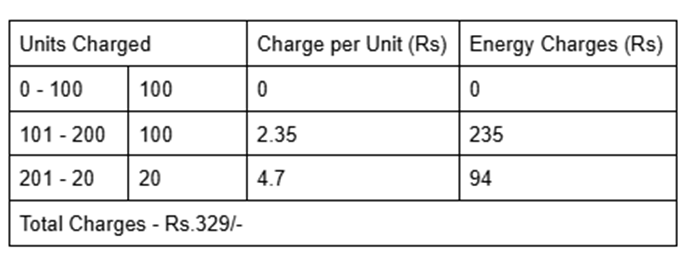
Table 1 - Calculation of units consumed in the previous subsidy scheme (Before May 2026)
Under the new subsidy scheme, the consumer will receive the first 200 units free; only 20 units are billed
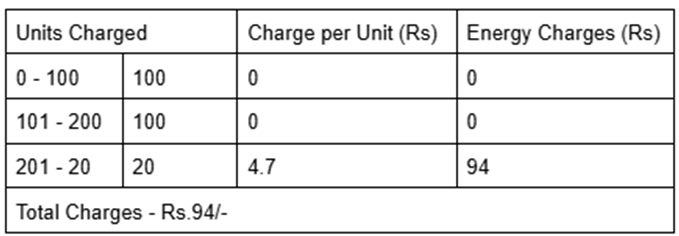
Table 2 - Calculation of units consumed in the new subsidy scheme (After May 2026)
For consumers consuming within the 500-unit limit, the new scheme substantially reduces electricity bills. In this example, a household consuming 220 units earlier paid around Rs.329, but under the revised scheme, the bill drops to approximately Rs.94. This represents meaningful savings for low and middle-income households, particularly within the context of rising living costs.
As per the new subsidy scheme, consumers exceeding 500 units in a two-month billing cycle continue to receive the existing 100 units of free electricity benefit. However, the scheme introduces a strict eligibility condition: 10 units (or even just one unit) above the 500 unit mark means you lose your eligibility for the free 200 units. This creates a sharp threshold in the tariff structure. The table below shows what happens when a consumer exceeds the threshold even by just 10 units.
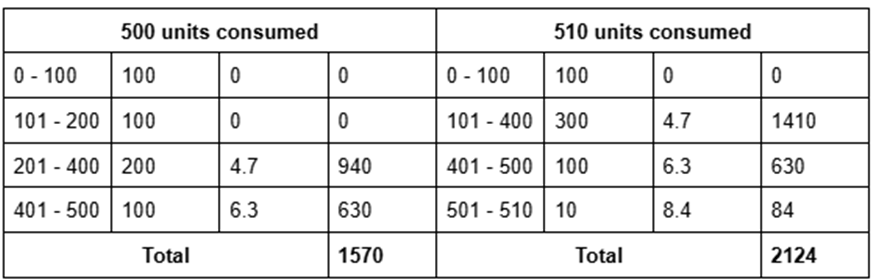
Table 3 - Comparison between 500 unit vs 510 unit consumer
A household consuming 500 units pays about Rs.1570, while one consuming just 10 units more (510 units) sees its bill rise to around Rs.2124. A marginal increase of just 10 units leads to Rs.554 higher bill.
What the impact on user behaviour is likely to be:
- The biggest winners are the households consuming well below 500 units. For them, the scheme is absolutely beneficial. Zero bills up to 200 units, and sharply reduced costs between 201 to 500 units.
- But the story becomes more complicated for households hovering around the 500-unit threshold. Electricity consumption is rarely constant across the year; it fluctuates between peak and off-peak seasons. During the summer months, households running a few fans, a refrigerator, and an air conditioner for limited hours can easily cross 500 units. Such households do not just lose part of the benefit - they lose it abruptly, resulting in a sharp increase in their electricity bills.
Conversely, during off-peak months, the same households may fall well below the threshold and fully enjoy the subsidy. This creates a cyclical pattern where households alternate between benefiting from the scheme and losing a significant portion of it. In effect, the policy produces a “seasonal lottery” of sorts - rewarding households in low-consumption periods while penalising them sharply during high-consumption months.
- The 500-unit cut-off creates a strong incentive for households to self-regulate consumption. People may think twice before switching on an air conditioner, adding a new appliance, or adopting electric cooking. In some cases, households may deliberately constrain electricity use to retain subsidy benefits.
---
Add new comment