Overview of Tiruppur’s Textile Industry
Tiruppur is one of India’s largest knitwear manufacturing hubs and a major contributor to the country’s export economy. The region hosts around 3,200 micro, small, and medium enterprises (MSMEs) involved in various stages of textile production such as knitting, dyeing, bleaching, stitching, and finishing. Today, nearly 60% of India’s knitwear exports come from Tiruppur, with annual export revenues of about ₹35,000 crore and an additional ₹25,000 crore from the domestic market. The industry supports around 8 to 9 lakh livelihoods, with women constituting more than 60% of the workforce. As the textile industry scaled rapidly over the decades, its supporting segments grew in parallel — most notably the dyeing and bleaching sector, which today comprises over 750 units across the Tiruppur region.
Dyeing Process : Chemicals and water used
At first glance, dyeing may seem like a simple process of adding colour to fabric. However, in reality, it is a multi-stage industrial operation. The fabric goes through a sequence of steps including pre-treatment, dyeing, after-treatment, and finishing. These stages involve cleaning the fabric, adding colour, fixing it, and enhancing the final texture and appearance. The entire process requires water that is heated up to 90 degrees Celsius, and controlled chemical reactions to ensure uniform and long-lasting colour.

Fig 1 : Chemicals used and waste discharge in each dyeing process | CAG
Textile dyeing is both water-intensive and chemical-intensive. For every kilogram of fabric (knit cotton) processed, about 250 to 300 litres of water is consumed, along with 400 to 500 grams of chemicals. These include alkalis such as sodium hydroxide and sodium carbonate, acids like acetic acid, salts such as sodium chloride and sodium sulphate, oxidizing agents like hydrogen peroxide, and various types of dyes which are complex organic compounds. In addition, finishing processes use chemicals such as softeners and resins. A significant portion of these chemicals does not remain on the fabric; for instance, only about 60 to 80 percent of dyes are fixed, while the rest is discharged along with wastewater.
The Real Challenge: Wastewater and Its Impact
The wastewater generated from dyeing units is one of the most challenging industrial effluents. It contains high levels of total dissolved solids (TDS) due to salts, high chemical oxygen demand (COD) from organic matter, strong colour, high pH, and traces of heavy metals and toxic substances. If discharged untreated, this wastewater can have severe environmental consequences. High TDS makes this water unsuitable for drinking and irrigation, while also causing soil salinisation that reduces agricultural productivity. Elevated COD levels deplete dissolved oxygen in water bodies, affecting aquatic life, with high Biological Oxygen Demand (BOD) leading to foul odour and septic conditions. Certain dyes and chemicals may release toxic or even carcinogenic substances, posing long-term health risks. Additionally, the discharge of hot effluents further reduces oxygen levels in water bodies.
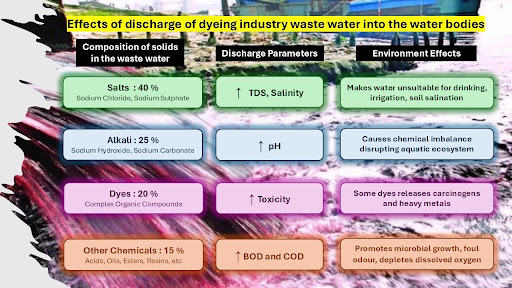
Fig 2 : Effects of dyeing industry waste water discharge into water bodies | CAG
Why Common Effluent Treatment Plants (CETPs) Became Essential
As the textile industry in Tiruppur continued to grow, the environmental impact reached a critical point. At one stage, the impact became so severe that effluents from dyeing units began polluting the Noyyal River, turning parts of it dark and unfit for use. A major turning point came when the Madras High Court ordered the closure of around 700 dyeing units due to environmental violations. The consequences were immediate and severe with around 50,000 workers losing their jobs, industrial operations coming to a halt, and the textile sector facing losses of nearly ₹ 50 crore per day. This crisis highlighted a crucial challenge—how to balance industrial growth with environmental protection.
Most dyeing units in Tiruppur are small and medium enterprises, and setting up individual effluent treatment systems was not economically viable for many of them. Effluent treatment requires advanced infrastructure, continuous operation, and significant energy input, making it difficult for individual units to manage on their own. Hence in order to make the effluent treatment operation technically sound and economically affordable, the dyeing units have embarked on a cluster approach for wastewater treatment.
Dyeing units have started forming clusters / groups, developing Common Effluent Treatment Plants (CETP) through shared cost contributions. . The member units are allocated a certain treatment quantity and charged accordingly for the treatment involved. The overall operational expenses that include Operation & Maintenance, salary component, etc are divided among the member units as per the quantity of effluent treated. Today, around 19 CETPs operate in the Tiruppur cluster, each serving approximately 40 to 50 dyeing units. These CETPs play a crucial role in reducing pollution, ensuring compliance with environmental regulations, and promoting water reuse.
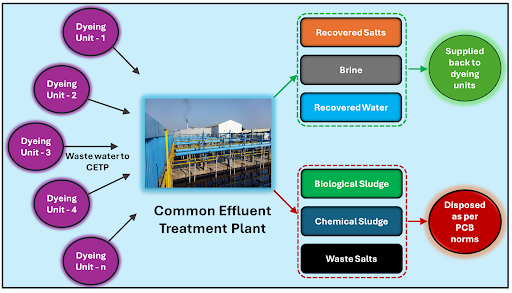
Fig 3 : Overview of CETP | CAG
A Common Effluent Treatment Plant (CETP) operates on the Zero Liquid Discharge (ZLD) principle, ensuring that no wastewater is released into the environment. Effluents generated from the dyeing industry containing a wide range of salts, dyes, and chemical residues are subjected to a combination of biological and chemical treatment processes, followed by advanced membrane filtration and multi-effect evaporation systems. Through this integrated treatment approach, water is effectively recovered from the wastewater stream, with ZLD systems typically achieving a recovery efficiency of more than 95%. In addition to water recovery, dissolved salts and concentrated brine are also separated and recovered during the process. The treated water, along with recovered salts and brine solution, is reused within the dyeing industry, promoting resource conservation and sustainability. Furthermore, the treatment process generates biological and chemical sludge, which is handled and disposed of in accordance with the prescribed norms of the Pollution Control Board.
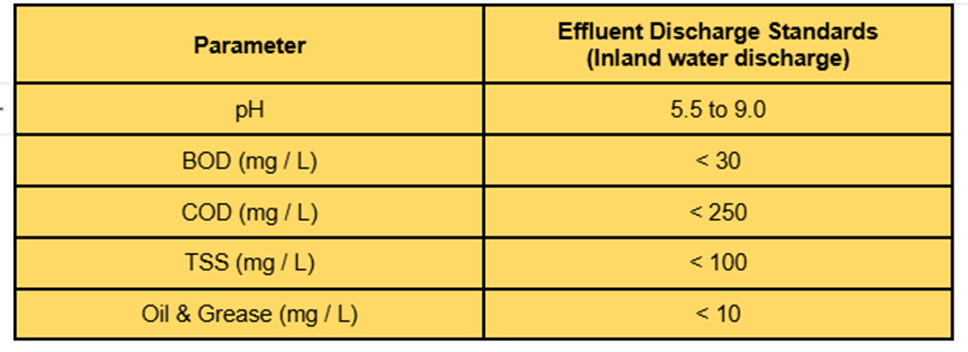
Table 1. General effluent discharge standards in inland water bodies
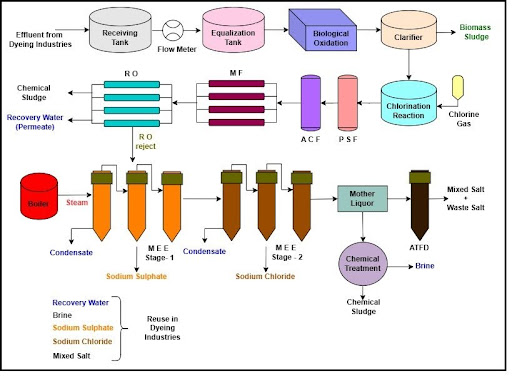
Fig 4 : Process involved in a typical CETP | CAG
Opportunity for energy audits and Green House Gas (GHG) mitigation
A typical CETP handles millions of litres of waste water per day guzzling significant amounts of electrical and thermal energy. Electrical energy is used to operate the pumps, blowers, compressors, clarifiers, and filter press. Thermal energy is used to produce steam which is used in the Multieffect evaporation process, an important step in the CETP process. Energy costs form the largest component of operational expenses, and inefficiencies directly increase the treatment cost per kilolitre of effluent, which is ultimately borne by the individual dyeing units.
Over the years, multiple agencies and schemes—including the Bureau of Energy Efficiency (BEE), State Government programmes, and industry associations—have implemented energy conservation measures, emission reduction initiatives, subsidies, and capacity-building programmes within the Tiruppur cluster. However, these interventions have largely focused on production-oriented MSMEs such as knitting, dyeing, compacting, embroidery, stitching, and finishing units. Despite their high energy consumption and environmental significance, CETPs have not yet been subjected to comprehensive energy audits.
This gap presents a significant opportunity from both economic and environmental perspectives. Conducting detailed energy audits and greenhouse gas (GHG) accounting in CETPs can help identify system-level inefficiencies, optimise energy use, reduce operational costs, and substantially lower CO₂ emissions. Improved energy efficiency will enhance the financial sustainability of CETPs, reduce the cost burden on participating MSMEs, and strengthen overall environmental performance. Beyond energy and emissions, CETPs deliver substantial social and environmental benefits. Collectively, CETPs in Tiruppur recover more than 12 crore litres of water per day through recycling, thereby reducing freshwater extraction, preventing pollution of rivers and water bodies, and contributing to long-term water security in the region.
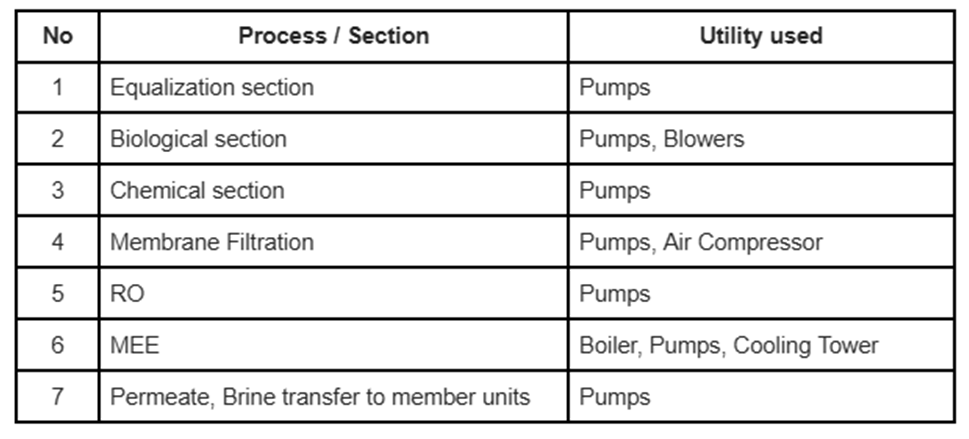
Table 2. Energy guzzling utilities used in various process in the CETP
Energy audit in Angeripalayam CETP by CAG
Recognising the significant potential for energy conservation in Common Effluent Treatment Plants (CETPs), the Citizen consumer and civic Action Group (CAG), under its project “Tamil Nadu Leadership in Energy Transition,” undertook a comprehensive energy audit of a CETP in Tiruppur. A team from CAG’s Electricity Governance division, along with three external experts — including one Accredited Energy Auditor and two Certified Energy Auditors — conducted a detailed assessment at the Angeripalayam CETP in Tiruppur. This facility is the third-largest CETP in the region, with a treatment capacity of 10 MLD catering to wastewater from dyeing industries. The detailed audit report, which will present the analysis of energy consumption patterns, highlight potential areas for energy savings, and propose practical, actionable recommendations for improving overall efficiency, is currently under preparation.
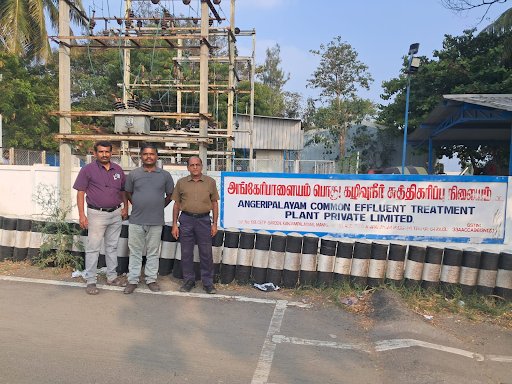
Fig 5 : CAG consultants with General Manager of Angeripalayam CETP
Way forward
Given their centralised nature, high energy intensity, direct linkage to environmental protection, and impact on a large number of MSMEs and livelihoods, CAG’s audits of CETPs represent a high-impact and strategic intervention point. They offer scalable and replicable benefits, as the learnings can be extended across all 19 CETPs and other individual ZLDs in Tiruppur and to similar clusters across the state and country.
---
Add new comment