Rooftop solar PV systems are often seen as a straightforward solution. Install a system at your home, and you get ZERO electricity bills. This is the popular tag line given how marketing is done. Often people misunderstand that rooftop solar panels are an alternate power backup. Additionally, CAG’s work with consumers also shows that the true value of rooftop solar is achieved only when people first choose the correct system for their needs, understand how it works, and how electricity billing changes after installation. Without this knowledge, rooftop solar can quickly become a case of over-expectation, followed by disappointment. At its core, rooftop solar generates clean electricity and reduces electricity charges when connected to the grid, and functions as a power backup only when supported by battery storage.
While reaching out to EcoKonnectors Trust, Mylapore, for a consumer awareness meeting, CAG learned that three apartment complexes in that area - Vrikshah Gurukulam in Abhiramapuram, Geeyam Kalyan and Manasva Tulive in R A Puram had already installed rooftop solar systems for their common service connections.
Despite having solar in place, residents in these apartments felt they were not benefiting from it. Their electricity bills remained high, even after installation. Many had been told that installing rooftop solar would result in zero or minimal bills, but the actual billing experience was very different. This gap between expectation and reality led to disappointment and frustration among residents. These experiences discouraged other residents and neighbouring apartments from considering solar, creating a wider sense of mistrust around the technology.
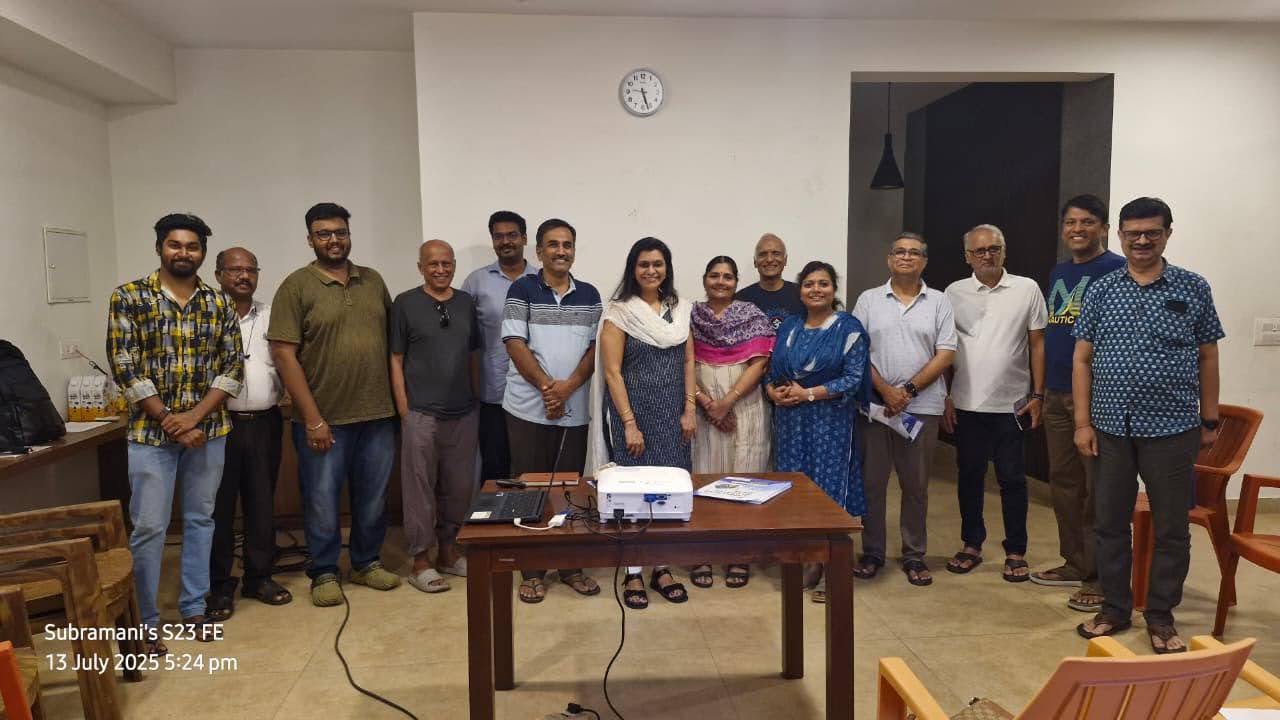
Consumer awareness meeting on rooftop solar PV systems with the members of EcoKonnectors Trust and RWA members from Mylapore
Instead of proceeding with a general awareness session, the members of EcoKonnectors Trust wanted CAG to examine the existing rooftop solar systems and explain what was going wrong. CAG began by collecting service connection details from the three apartments and reviewing their electricity bills, assessing consumption patterns, and examining the installed system capacities. The analysis showed that the issue was not a failure of rooftop solar technology. Rather, it stemmed from a lack of post-installation support, incorrect system sizing, and limited understanding of electricity billing after solar installation.
A major issue across all the apartments was the complexity of the electricity bill itself. After solar installation, bills became more complicated, including additional items like network charges and net metering adjustments. For most consumers, these terms were unfamiliar. Without the ability to read and understand the bill, residents had no way of evaluating system performance or savings.
At Vrikshah Gurukulam Apartments in Abhiramapuram, CAG inspected the installation of the 9,720W rooftop solar system for common facilities. It is a multi-tenant building (LA 1D) and falls under the net-metering scheme. However, the actual usable capacity was limited to 5,000W. Installing an additional 5,000W panel resulted in an unnecessary increase of ₹2,500 in network charges per billing cycle despite the residents' minimal usage.
At Manasva by Tulive in RA Puram, where CAG conducted an awareness session, a 9,715W solar system was installed for the building’s common facilities. The sanctioned load was 57kW, but actual usage ranged only between 5-7kW. This mismatch meant the residents were paying much more than necessary. CAG recommended reducing the sanctioned load to 15kW, which immediately resulted in monthly savings of ₹4,450. CAG also suggested increasing the solar capacity to 15,000W. This would enable maximal utilisation of solar energy, which could create additional savings of about ₹4,000 per month.
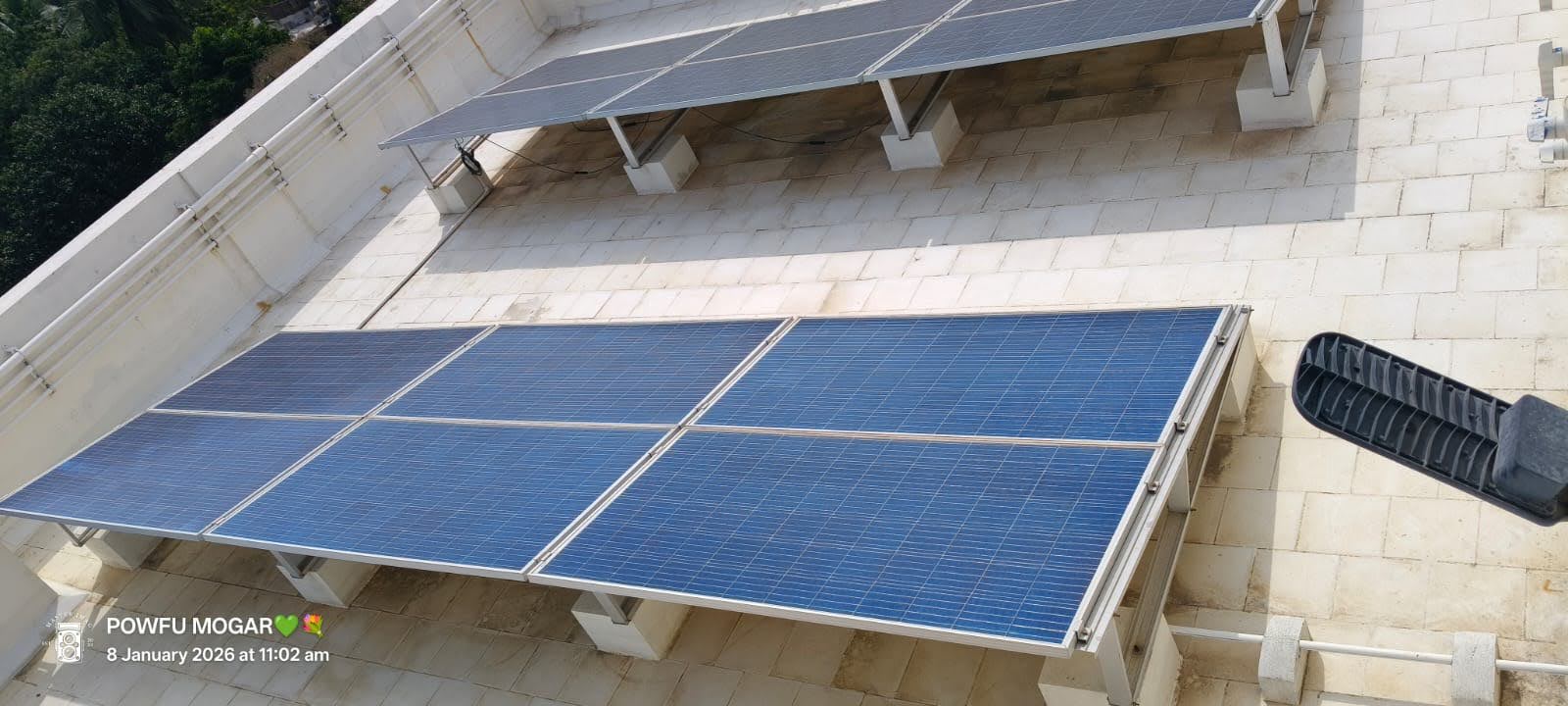
The 10kW rooftop solar installed at the Geeyam Kalyan Apartments, RA Puram
One successful outcome of CAG’s engagements with RWAs was observed at the Geeyam Kalyan Apartments, RA Puram. Previously, the apartment’s common service connection for multiple tenants (LA 1D) was billed under a net-feed-in mechanism (commercial tariff), with a bi-monthly bill of nearly ten thousand rupees. Following CAG’s advice, the association applied for a tariff change. After two billing cycles, the connection successfully switched to a residential tariff (net-metering scheme). Now, the apartment pays about five thousand rupees every two months, saving 50%. More importantly, residents understand how their system works and how to track savings through their electricity bills.
The shift in perception was remarkable. What was once seen as a failed investment became a valued asset. The association members shared their story with the media, leading to coverage in The Hindu. Following that, several other apartment associations contacted CAG for help with their own rooftop solar setups.
This information also reached individual consumers outside of apartment settings. A consumer from Velachery installed rooftop solar for his home and saw clear benefits. His 3kW residential connection resulted in bills of around three hundred rupees per billing cycle. Inspired by this success and a desire to give back, he decided to sponsor a 2kW solar system for Prasanna Venkatesa Perumal temple nearby in Taramani which he frequently visits. However, the results at the temple were the opposite of what he anticipated. Temples fall under the LM2C category, which has a commercial tariff (net-feed-in mechanism). The temple typically consumed only about 180 - 200 units per billing cycle, and previous bills were around two thousand rupees. After installing the 2kW solar system, the bill did not decrease. In fact, it increased!
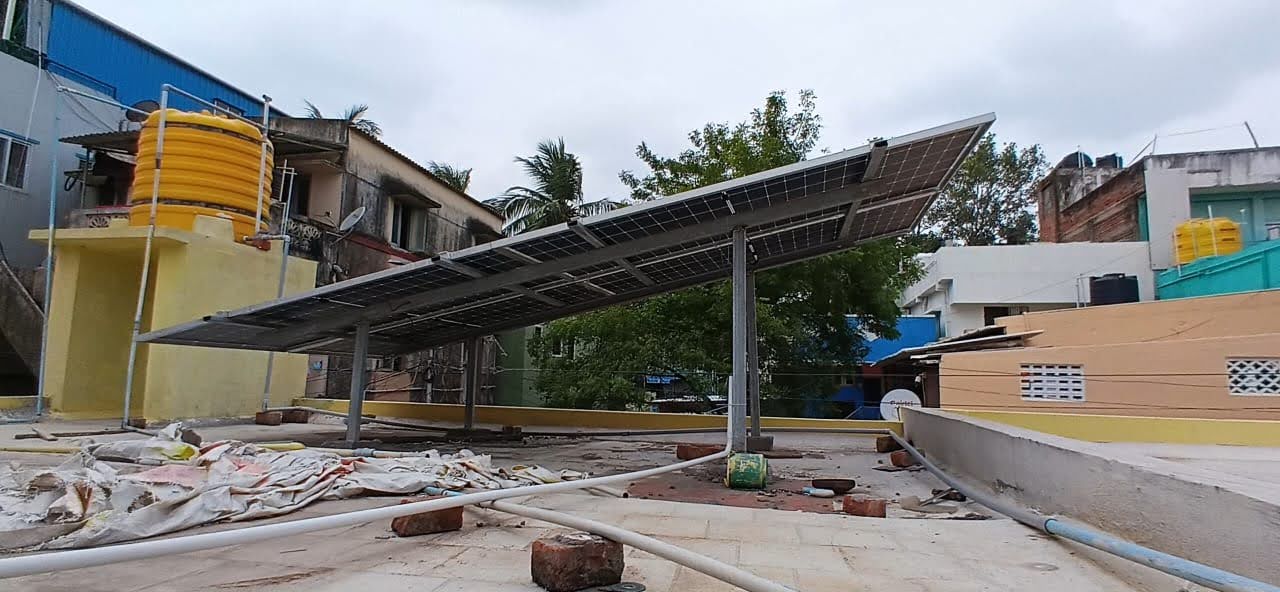
The 2kW rooftop solar installed at the Prasanna Venkatesa Perumal Temple, Taramani
When the consumer turned to CAG for help, CAG analysed the service connection and identified several issues. The system was too large for the temple's low usage. With commercial connections, network charges are Rs. 500 per kW, while residential connections charge Rs. 100 per kW. Consequently, the temple was facing about Rs.1100 in fixed charges and Rs.1000 in network charges alone. Since it was a net feed-in mechanism and daytime usage was very low, only about two hundred rupees was offset by consumption. The overall bill exceeded two Rs.2000, making the installation a financial burden rather than a benefit.
What was especially concerning was that the vendor had not provided guidance on how to size the system or the tariff implications and had installed the system as requested. CAG stepped in and explained several options to the consumer. These included downsizing the system to 1kW, increasing daytime electricity use, or adding battery storage to better use generated power at night. Each option was detailed with its costs and implications, leaving the final choice to the consumer.
These cases highlight an important lesson. When one solar installation appears to fail, vendors rarely face scrutiny. Instead, the entire technology gets blamed. This fosters fear and misunderstanding, particularly within communities like apartments and public institutions.
Through our work, CAG has found that consumer awareness must extend beyond just promotion and installation. It needs to include understanding electricity bills, tariff awareness, and ongoing support after installation. To assist with this, CAG has created several consumer-friendly resources, which can be accessed from the website:
- PM Surya Ghar Scheme - A Consumer Manual : https://bit.ly/SuryaGharManual
- Rooftop Solar PV systems - FAQs : https://bit.ly/RooftopSolarFAQs
- Rooftop Solar Installation - A Simple Practical Guide: https://bit.ly/RooftopSolarGuide
- Residential Rooftop Solar PV Systems Technical Guide: https://bit.ly/SolarTechnicalGuide
- Tamil Nadu's Solar Energy Policy and Regulations: A Consumer’s Guide: https://bit.ly/PolicyRegulations
Rooftop solar can provide real economic and environmental advantages, but only when consumers are well-informed and supported. These experiences show that energy transition is not solely about deploying technology. It is crucial to ensure that consumers understand it, trust it, and can fully benefit from it.
---
Add new comment