PM surya ghar scheme- A consumer manual

Author

This consumer manual provides a detailed, user-friendly walkthrough of the PM Surya Ghar Scheme—India’s flagship initiative to bring rooftop solar power to one crore households. Developed by CAG, the guide demystifies the scheme's eligibility, subsidy structure, and application process while outlining every critical step, from vendor selection to subsidy redemption. Aimed at empowering citizens, the manual ensures that consumers can confidently navigate the solar installation journey and contribute to a cleaner, more sustainable energy future.

Licence type
Resource Type

Rooftop solar installation- A simple practical guide

Author

This comprehensive guide by CAG equips residential consumers with clear, step-by-step instructions for installing rooftop solar systems under Tamil Nadu’s regulatory framework. It covers everything from assessing rooftop suitability and choosing quality components to understanding net metering, tariffs, and the PM Surya Ghar subsidy scheme. Designed for ease of use, the guide demystifies technical and procedural aspects, empowering households to adopt solar energy confidently and sustainably.

Licence type
Resource Type

Listening Workshop| RWA 9| Bharathiyar Social Welfare Society, Thiruninravur

Author

Citizen consumer and civic Action Group (CAG), in collaboration with the residents of Bharathiyar Social Welfare Association & Saraswathi Nagar Welfare Association organized a Rooftop Solar PV Awareness Workshop on Sunday,04 May, 2025, at Saraswathi Nagar,Thiruninravur. The event, held from 4:30 PM to 6:30 PM, saw the participation of 26 residents from Saraswathi Nagar, Thiruninravur. 

Workshop Overview  

Licence type
Resource Type

Listening workshop| Community Awareness 2 (Parents meet 1) | Kodambakkam

Author

Citizen consumer and civic Action Group (CAG), in collaboration with Poovulagin Nanbargal organized a Rooftop Solar PV awareness workshop on Saturday, May 10, 2025, at Padaippu hall, Kodambakkam. The event, held from 3:00 PM to 5:00 PM, saw the participation of 20 parents from all over Chennai. 

Workshop Overview   

Licence type
Resource Type

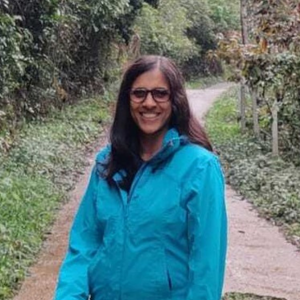
Nina Subramani

CAG

Nina’s work focuses on building safer roads and shaping a more equitable, sustainable mobility system for the city. Her role involves generating clear, data-driven insights to inform policies and practices that make urban travel safer, more accessible, and more inclusive for all. Her background as a filmmaker and educator enables her to communicate urgent issues at the intersection of environmental justice and human rights with clarity and impact. She brings experience from both television production and independent filmmaking.

She has an Undergraduate degree in Zoology and a Master’s in Mass Communication. 

Email: nina.subramani@cag.org.in 


Position/Summary
Senior Researcher - Sustainable Mobility and Road Safety

Listening workshop| Community Awareness 1 | Valluvam Organic Market

Author

Citizen consumer and civic Action Group (CAG), in collaboration with Valluvam Organic Market organised a rooftop solar PV awareness program  on Sunday, May 4, 2025, within the market premises in Tambaram. The event took place from 09:00 AM to 5:00 PM, and was attended by residents from Tambaram and nearby areas. 

Program Overview

Licence type
Resource Type

Current News: Volume X, Issue 4, April 2025

Highlights

  • Choosing A Rooftop Solar PV System Wisely - Part 2: What Makes A Solar Module?
  • Your next WhatsApp message could be an alert from EB
  • Renewable energy accounts for 86% of new power capacity addition in FY25: Report
  • 40% of world’s electricity from non-fossil sources but power sector’s carbon emissions at all-time high
  • Consumer Focus - Ombudsman Case

Plus Publications/Regulations:

Author

Road Safety- Phase IV

The project aims to strengthen the implementation and enforcement of key provisions of the Motor Vehicles Amendment Act (MVAA) 2019 by addressing four critical road safety risk factors—speed, helmets, seatbelts, and child safety. Despite national and global evidence highlighting the need for lower speed limits to reduce road fatalities, speed regulations in India continue to be set arbitrarily. With speeding contributing to 70% of road deaths, this project will engage with the Ministry of Road Transport and Highways (MoRTH), the Supreme Court Committee on Road Safety (SCCoRS), and other stakeholders to push for scientifically determined speed limits at the national and state levels.

Additionally, while the MVAA mandates helmet use for children above four years of age, the specific standards for child helmets are not referenced in the legislation. The project will work towards integrating these standards into the legal framework. It will also advocate for broader amendments to the MVAA to close existing gaps and enhance road safety regulations.

At the national level, the project will collaborate with coalition partners to advocate for policy changes through strategic engagement with government bodies, media outreach, and joint actions such as letters and representations to policymakers.

In Tamil Nadu, the project will focus on improving MVAA implementation by engaging with state authorities to adopt scientific speed management guidelines and develop a data-driven State Road Safety Action Plan (SRSAP). This will involve working with academic institutions to create evidence-based speed regulations. Additionally, the project will drive public awareness campaigns, stakeholder consultations, and media engagements to ensure sustained focus on road safety priorities.

Through these interventions, the project seeks to bring about policy shifts that align with global best practices, ultimately contributing to reduced road crash fatalities and safer roads across India.

Road traffic crashes are a leading cause of death and injury in India, with speeding identified as a major contributing factor. According to MoRTH, speeding accounts for nearly 70% of road fatalities, yet speed limits in the country are often set arbitrarily without scientific justification. Additionally, while the Motor Vehicles Amendment Act (MVAA) 2019 introduced crucial provisions to improve road safety, gaps remain in its implementation and enforcement. One such gap is the absence of a legally mandated standard for child helmets, despite the existence of an Indian standard (IS-4151-2015). These deficiencies highlight the need for a structured, evidence-based approach to strengthening road safety policies at both the national and state levels.

Tamil Nadu, one of the most urbanized states in India, consistently records high numbers of road traffic crashes. The state government has initiated efforts to revise speed limits in urban areas, but these revisions lack a standardized, scientific approach. Addressing these challenges requires coordinated engagement with policymakers, enforcement agencies, research institutions, and the public to ensure the adoption of best practices in speed management and other critical safety measures.