Unsolicited calls, spam messages, and digital fraud have become common concerns for mobile phone users. While many consumers recognise spam and activate Do Not Disturb (DND) features on their phone, few are aware that strong regulatory protections already exist. The real gap is not regulation, but consumer awareness on how these protections can be used effectively.
Citizen consumer and civic Action Group works with the Telecom Regulatory Authority of India to bridge this gap through consumer awareness programmes across Tamil Nadu. As a member of TRAI’s Consumer Advisory Group, CAG focuses on helping consumers understand their rights, identify violations, and take informed action to keep themselves safe. Over the last year, CAG, in collaboration with TRAI, conducted 6 such digital awareness programmes, across the state. Each of these meetings is attended by as many as 100 participants. Representatives from all the main telecom service providers serve as resource persons in these programmes. Apart from building awareness among consumers, these programmes also help service providers and consumer protection organisations such as CAG, hear from the ground.
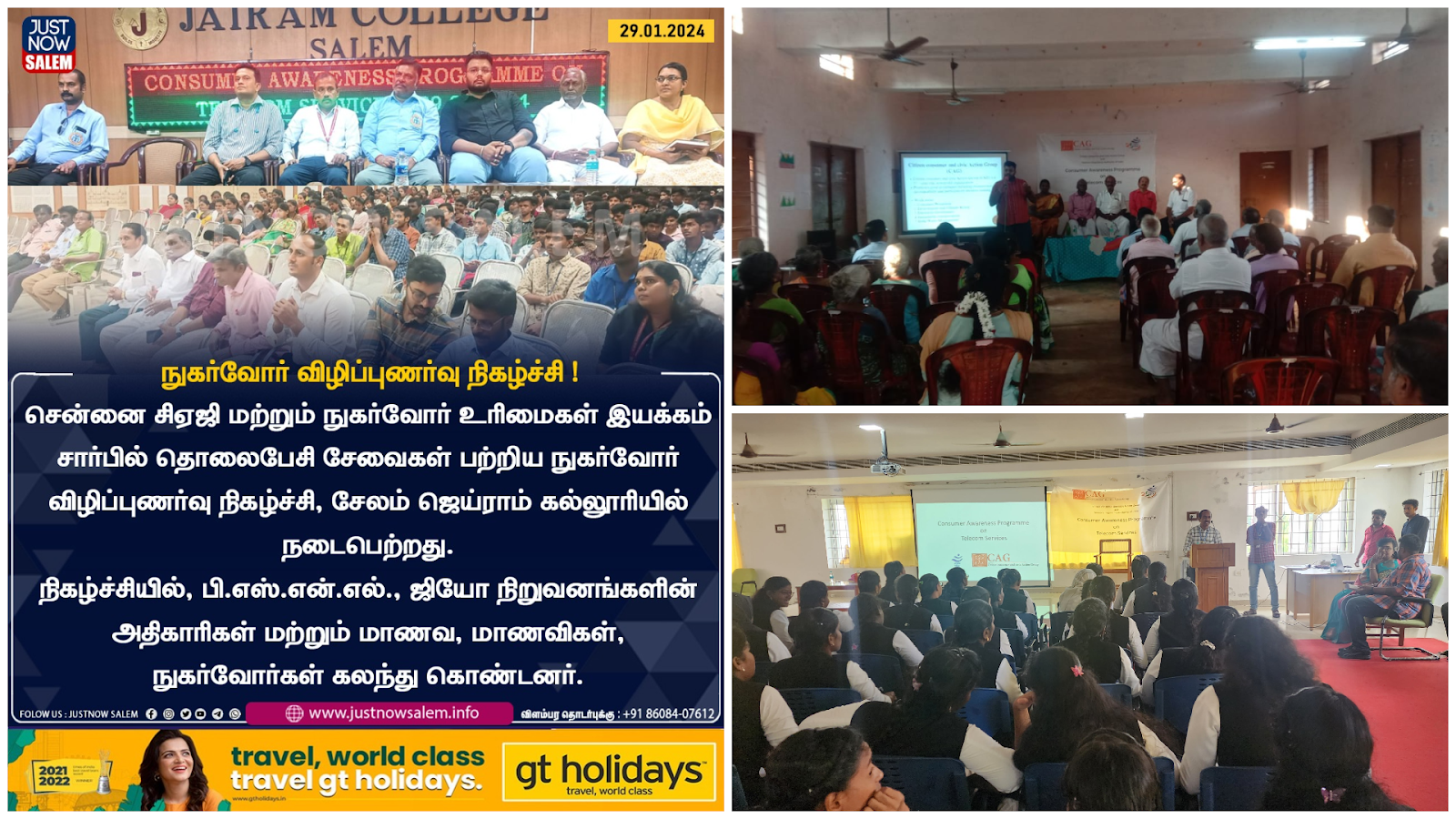
Images of Consumer Awareness Programmes on Telecom Services by CAG
A recurring issue typically heard from consumers, during these programmes, is unsolicited commercial communication. By law, promotional calls are permitted only through registered telemarketers and must not originate from personal (ten-digit) mobile numbers. However, many agencies misuse prepaid SIM cards for marketing, often after consumers share their numbers during product enquiries, exhibitions, or online searches. Because these calls appear to come from personal numbers, consumers often ignore them instead of reporting violations.
When faced with nuisance calls, consumers can choose to fully block or selectively block specific categories. These telemarketing calls could fall within any sector, and include: Banking, insurance, and financial products including credit cards; Real estate; Education; Health; Consumer goods and automobiles; Communication, broadcasting, IT, and entertainment; Tourism and leisure and Food and beverages.
Consumers who opt for full blocking will still receive essential service messages such as OTPs, transaction alerts, and service updates.
To make identification easier, all commercial messages now carry standardised headers: -P for Promotional; -S for Service; -T for Transactional; -G for Government messages. A separate category for government messages ensures that consumers do not miss important official communications.
Commercial callers should not use regular 10-digit mobile numbers. Registered Telemarketers calls will come only from the 140 series (ie, the number will begin with 140), while service and transactional calls will use the new 160 series (the number will begin with 160). This helps consumers easily identify commercial calls and prevents them from being disguised as personal numbers.
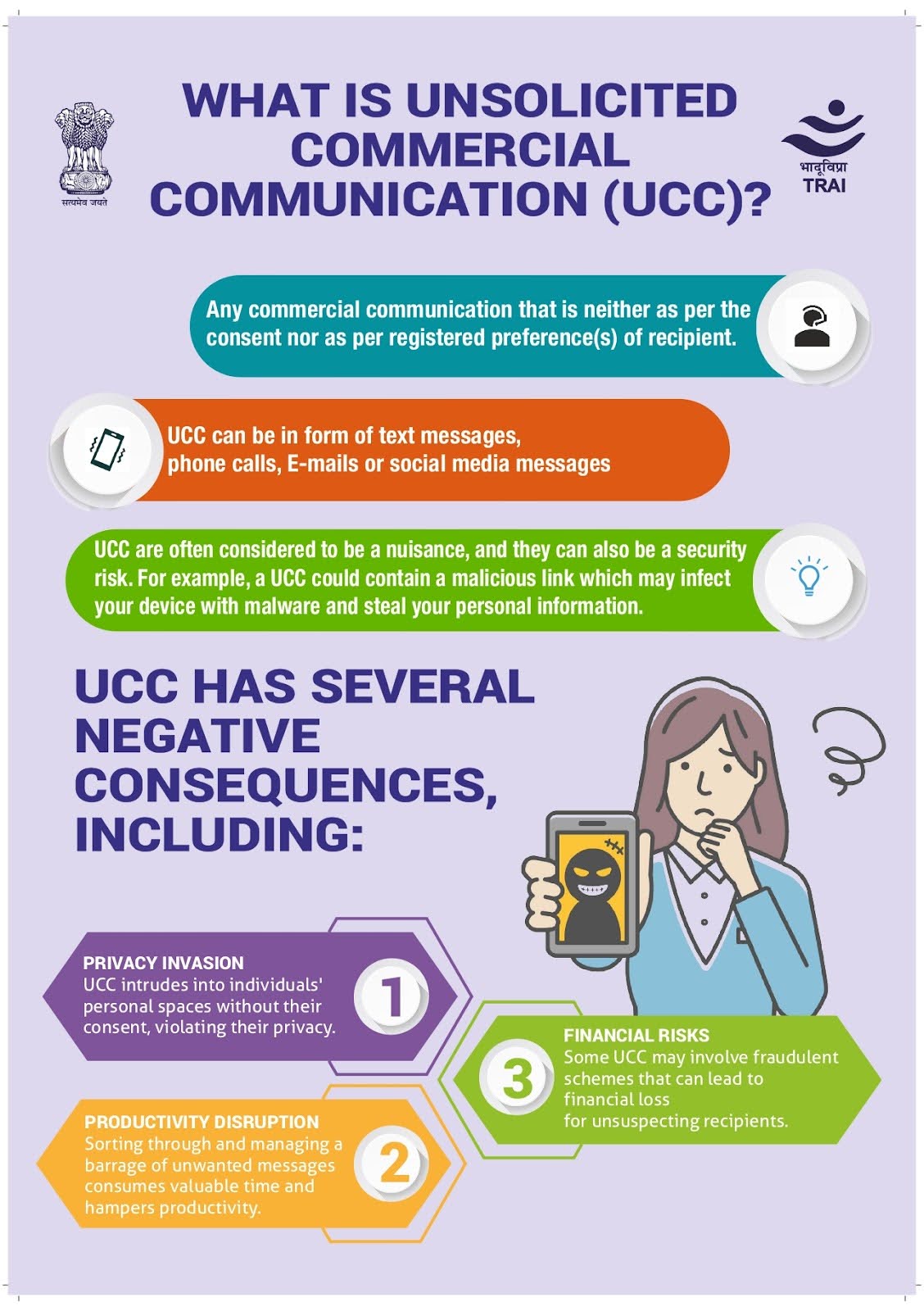
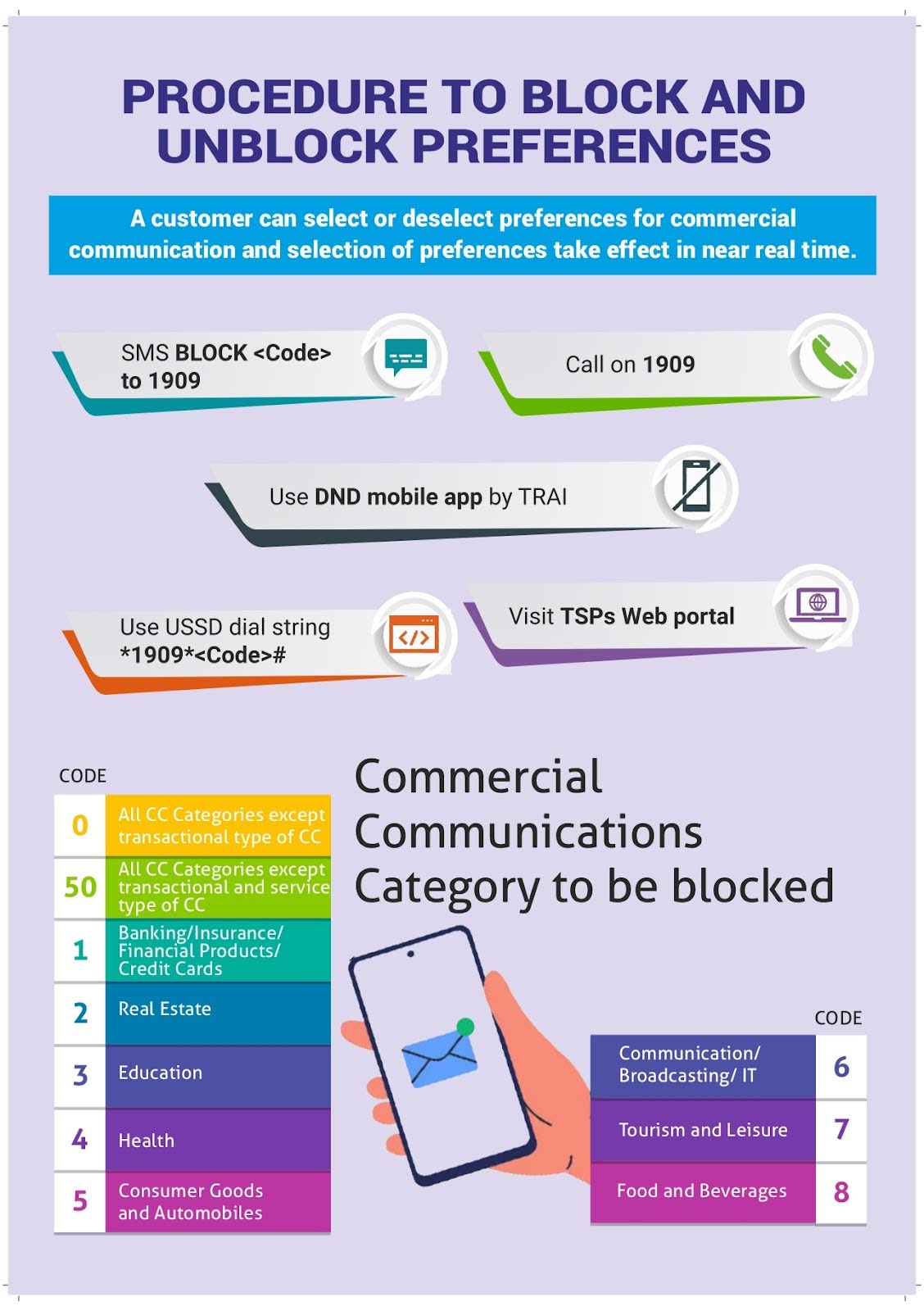
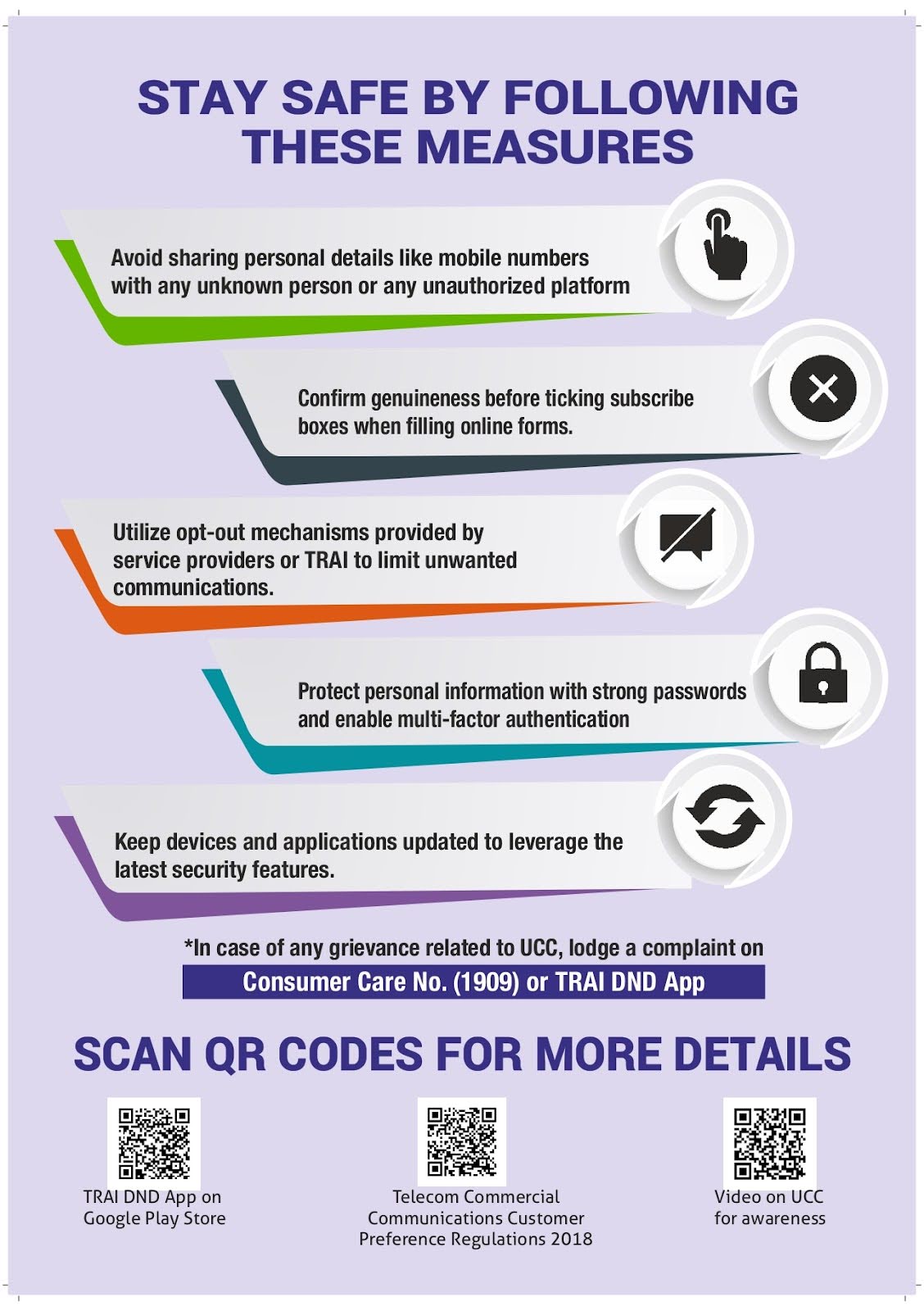
Awareness materials on UCC by TRAI
CAG’s awareness sessions emphasise that activating DND alone is not enough. Reporting violations is essential for enforcement. Useful steps for a consumer are as follows:
Step 1: Activate DND
- Call or SMS 1909, or
- Use the TRAI DND 3.0 app
Step 2: Identify a violation
- Promotional or business calls from regular mobile numbers
- Repeated calls despite opting out
- Messages without proper identification
Step 3: Report the complaint
- Report within 7 days of receiving the call or message
- Use the TRAI DND 3.0 app or your service provider’s app or website
- Apps can auto-capture call logs or SMS details with your permission
- Complaints can also be filed using screenshots
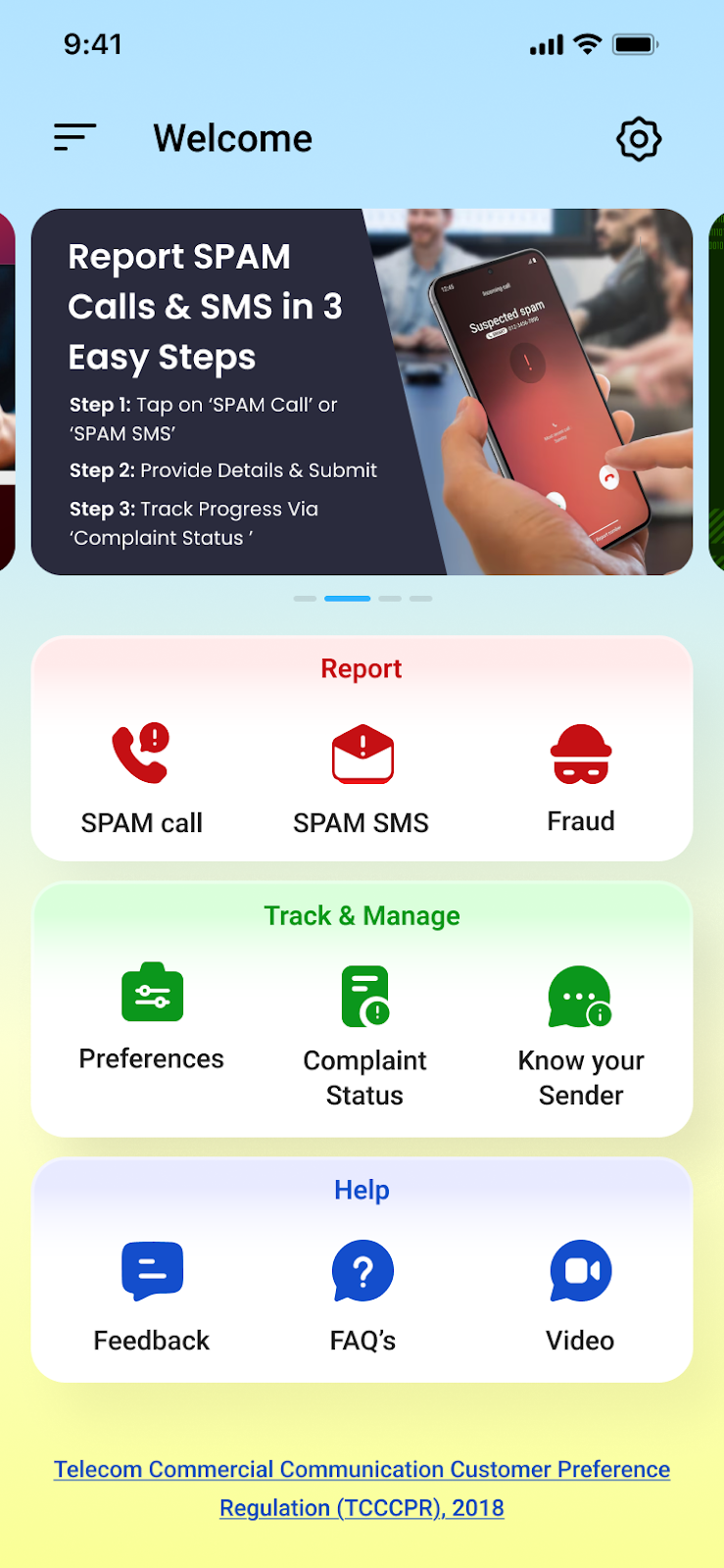
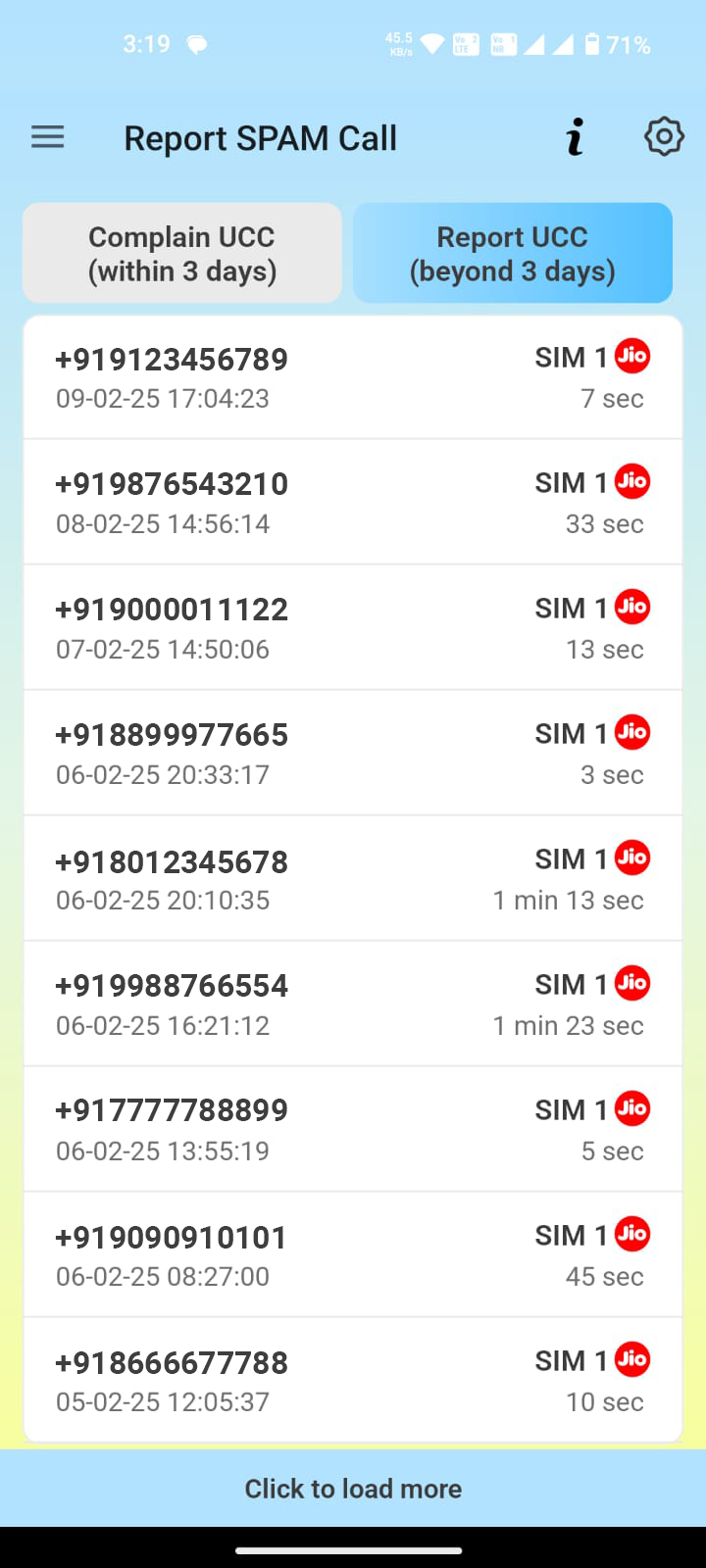
Screenshot of the TRAI DND application. (Picture: Google Play Store)
- For a first instance of violation, the sender’s outgoing telecom services may be temporarily barred for up to 15 days.
- For second and/or repeated violations, the sender’s telecom resources may be disconnected for up to one year and placed on a blacklist, with no new telecom resources allotted during this period.
These actions ensure that repeat violators are effectively removed from telecom networks, strengthening consumer protection.
Sanchar Saathi
Apart from using the TRAI DND 3.0 app, consumers can also use the Sanchar Saathi app. The app requires user authentication to ensure that the information provided is accurate and relevant to the individual consumer. The app has the following features:
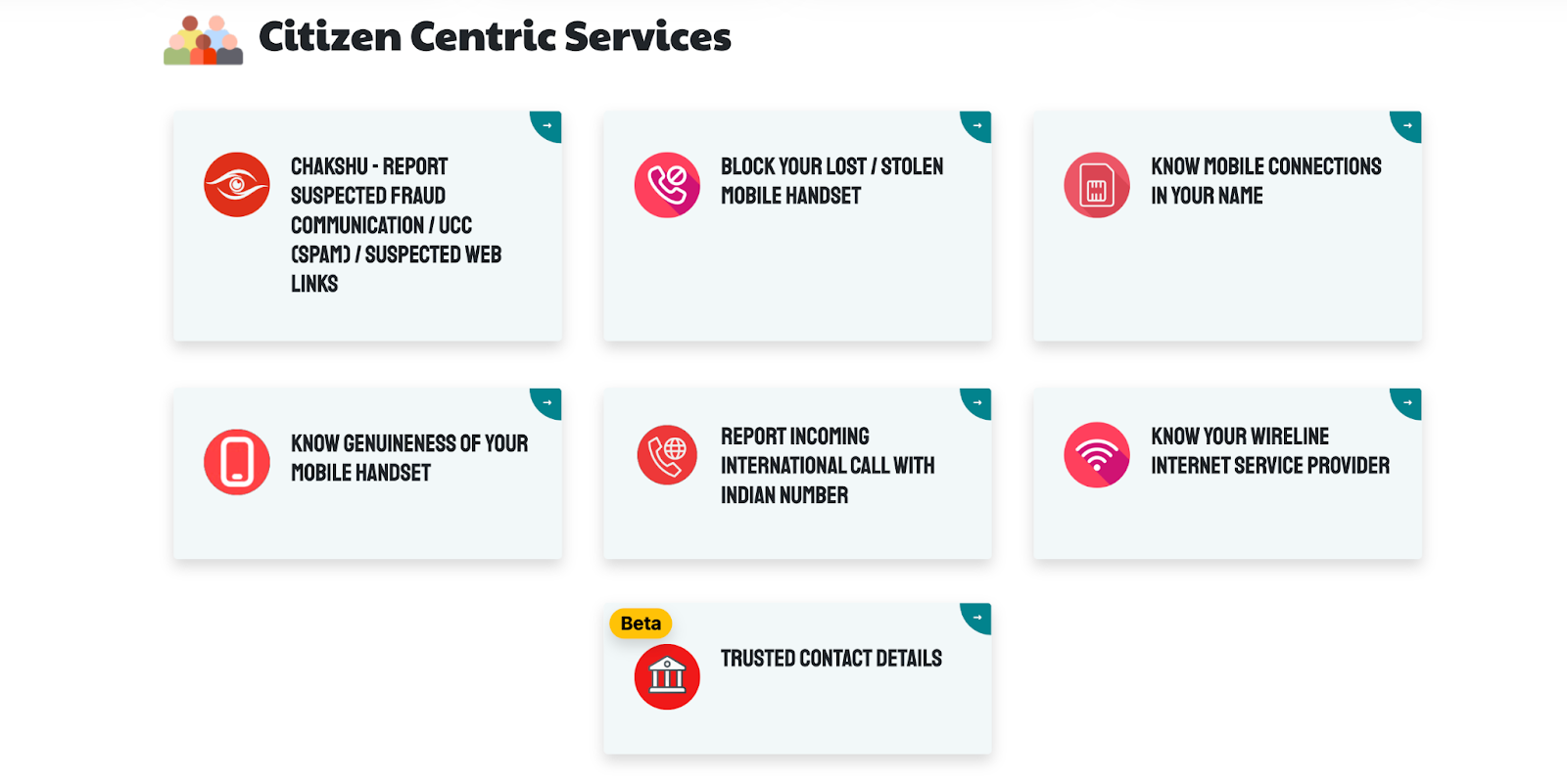
Screenshot of Sanchar Saathi web portal
- Chakshu – Report Suspected Fraud & Unsolicited Communication
This feature lets you report suspicious calls, SMS, or messages (including scam links, fake KYC requests, digital arrests, impersonation, or spam) through the Sanchar Saathi portal or app by verifying your mobile number and submitting details or screenshots. Reporting helps authorities identify and act against misuse and cyber-fraud.
- Block Your Lost or Stolen Mobile Handset (CEIR)
If your phone is lost or stolen, you can use its IMEI number to block the device across all telecom networks so it cannot be misused. You can also check the status of your request or unblock the phone if recovered. This protects your identity and prevents unauthorised use. - Know Mobile Connections in Your Name (TAFCOP)
This facility allows you to check all mobile connections registered against your identity by logging in with your mobile number and OTP. You can report or remove unknown or unnecessary SIMs, helping prevent SIM fraud and identity misuse. - Know Genuineness of Your Mobile Handset (IMEI Verification / KYM)
Using your phone’s IMEI number, you can verify whether a handset is genuine, blacklisted, or potentially fraudulent. This is especially useful when buying second-hand phones or ensuring that your device hasn’t been compromised. - Report Incoming International Call With Indian Number
This tool lets you report incoming international calls that are disguised as local Indian numbers. Such calls often originate from illegal exchanges and can lead to financial loss or security issues. Reporting them helps regulators take action. - Know Your Wireline Internet Service Provider
By entering a PIN code, address, or ISP name, you can find details of wireline internet service providers operating in your area. This helps you verify service availability and choose the right provider with confidence. - Trusted Contact Details
This feature provides verified customer care numbers, toll-free helplines, email IDs, and official web addresses of banks, telecom companies, and other service providers. It helps you avoid potential fraud by ensuring you are contacting authentic support channels.
Appellate Authority
When consumers face service deficiencies such as call drops, billing issues, or poor service quality, they should first raise a complaint with their telecom service provider. If the complaint is not addressed within the prescribed time or if the consumer is not satisfied with the resolution, they have the right to escalate the matter to the Appellate Authority.
The Appellate Authority is a formal grievance redressal mechanism mandated under telecom regulations. It functions through a committee structure that includes representatives from consumer organisations and the telecom service provider, ensuring that consumer concerns are examined fairly and independently. Details of the Appellate Authority, including contact information and procedures, are available on individual telecom operators’ websites as well as on the website of the Telecom Regulatory Authority of India.
CAG serves as a member of the Appellate Authority for the Chennai circle of BSNL, Bharti Airtel Limited, Reliance Jio Infocomm Pvt Limited, and Vodafone Idea. Awareness of the Appellate Authority is vital for consumers, as effective grievance redressal is central to consumer protection.
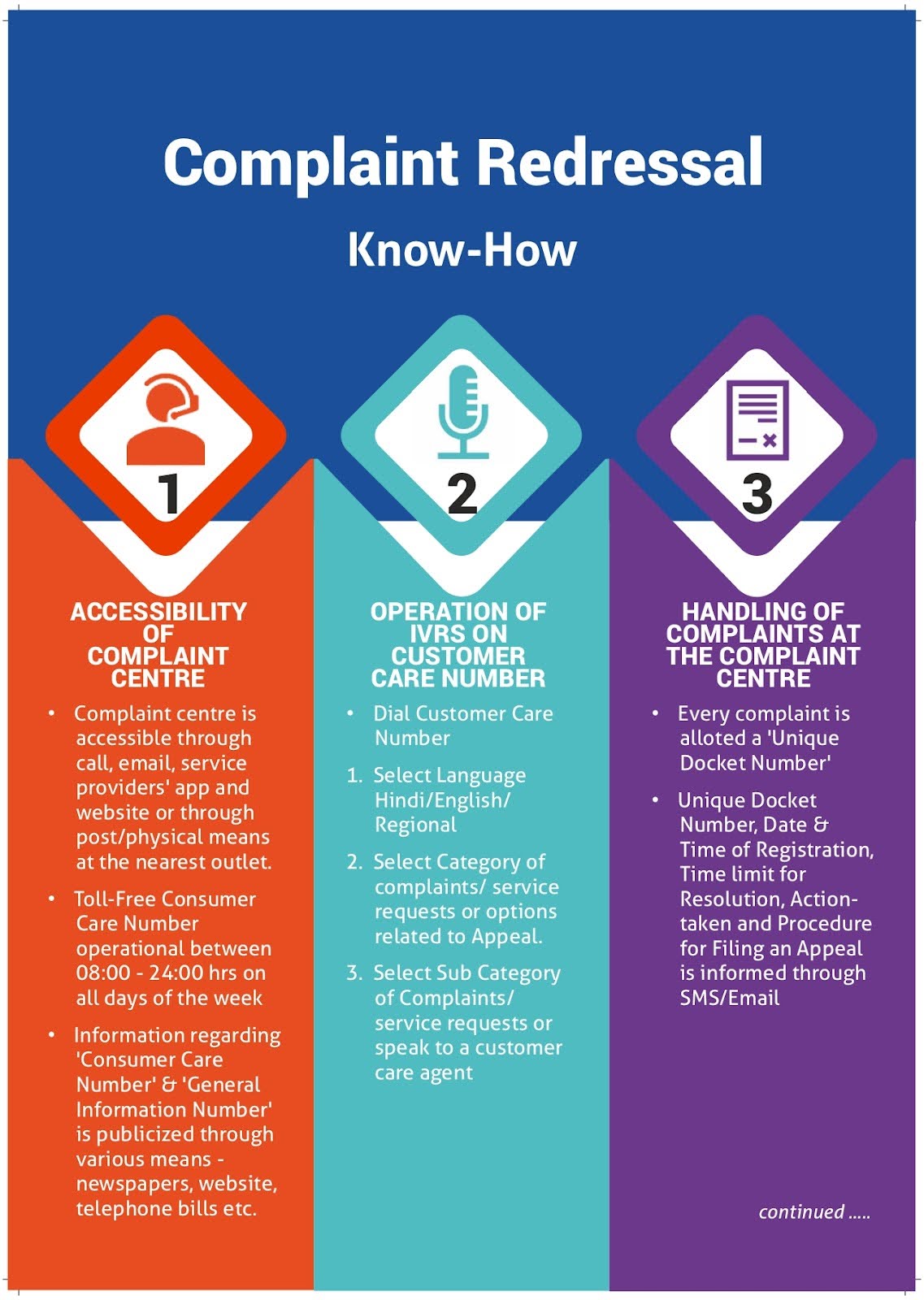
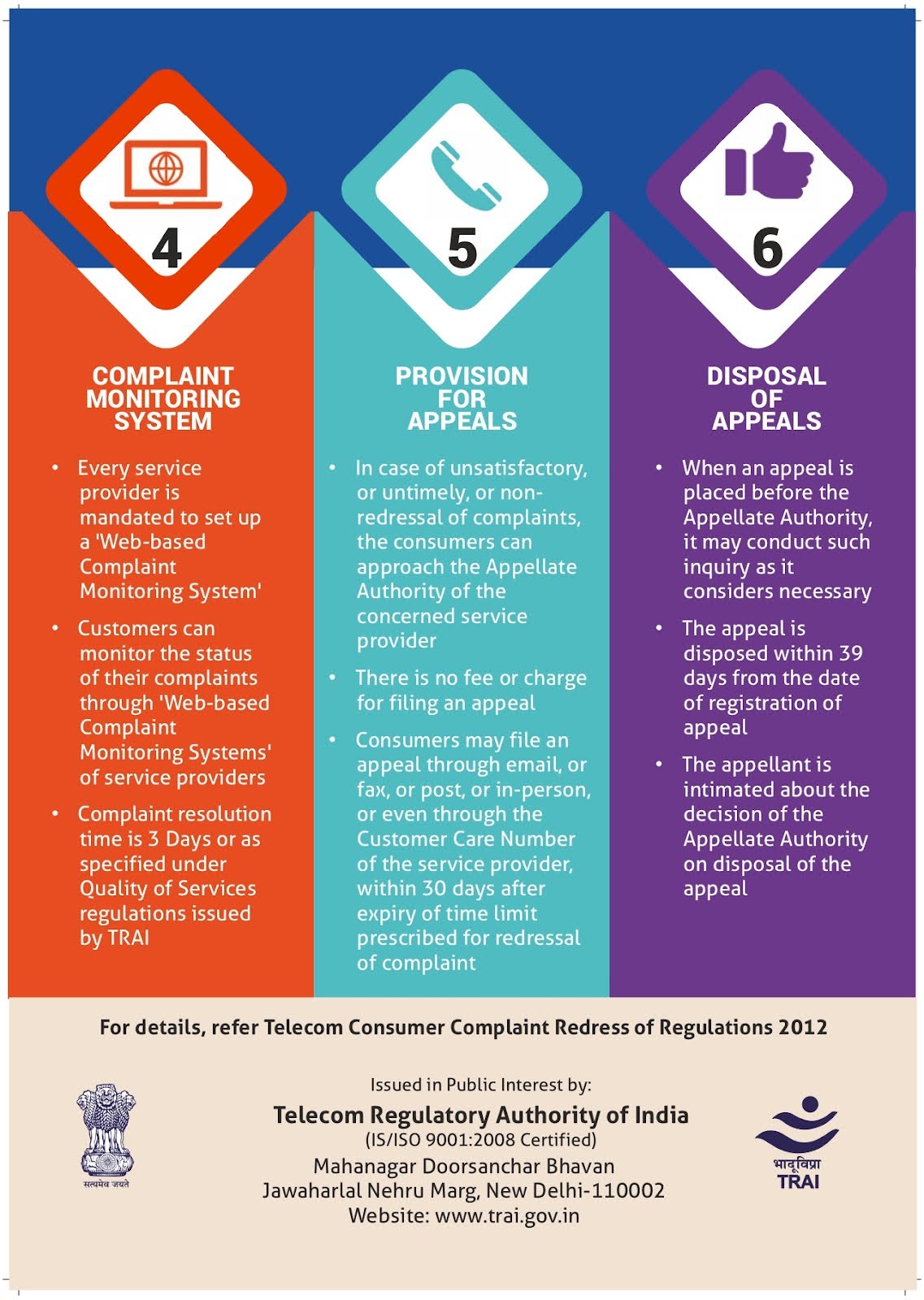
Awareness materials on Complaint Redressal by TRAI
CAG’s experience shows that consumer protection works best when people are informed and engaged. Supported by the regulatory framework of the Telecom Regulatory Authority of India, informed consumers can move from frustration to informed action, strengthening accountability and making telecom services safer and more consumer-centric.
CAG’s support is not limited to telecom issues alone. Consumers facing any consumer related problem can write to helpdesk@cag.org.in to share their complaint or seek guidance. CAG continues to stand with consumers to help them understand their rights and pursue effective grievance redressal.
---
Add new comment